Nusa Dua, Bali – The election victory of Donald Trump as President of the USA will cause energy policy change and uncertainty. Although not the main consumer of palm oil, the energy policy of USA will significantly impact the global market of palm oil, including in Indonesia.

Alvin Tai, analyst of Bloomberg said that diesel fuel in the USA is still the second biggest energy source in its transportation sector with a percentage of 22% of its total energy consumption, while biofuel only accounting for 6% of total consumption at transportation sector.
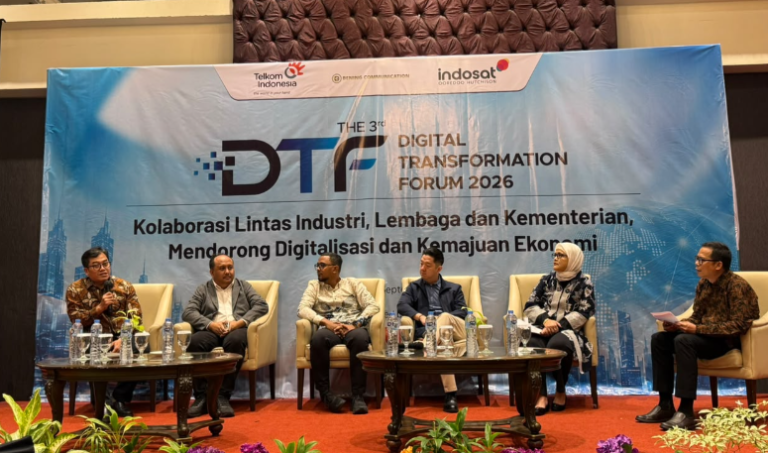
“But there has been a rising trend of renewable diesel and biodiesel, which is predicted to surpass the consumption of petroleum-based diesel fuel in 2024 with consumption reaching 4.5 million barrels per day,” Alvin said in a discussion as part of the 20th Indonesian Palm Oil Conference and 2025 Price Outlook (IPOC 2024) in Bali International Convention Center, The Westin Resort, Nusa Dua, Bali, on Friday (8/11/2024).
“The availability of the raw material rose from less than 10 million metric tons in 2021 to around 15 million metric tons in 2024. Despite potential further growth, the demand for biodiesel is projected to reach 25.7 million metric tons per year, causing many people pessimistic over the realization of the projection considering the limited raw material,” said Alvin Tai.
Currently, the feedstock of biodiesel and renewable diesel in the USA is mostly derived from soybean (44%), recycled oils and fats (33%), corn oil (15%), and canola oil (5%).
With the implementation of new policy of tax credit 45Z, applying the carbon footprints as a benchmark, the used cooking oil (UCO) is placed as the top list and Indonesian palm oil with the highest carbon value (4 Kg CO2 per kilogram).
Meanwhile, Deputy Minister of Agriculture (Wamentan) Sudaryono said Indonesia has been continually pushing for the expansion of renewable energy through the increase of biodiesel blending. By adopting biodiesel 35 percent (B35) in 2023, Indonesia had reduced its dependence on import of fossil fuels and saved more than US$7.9 billion in foreign exchange from reduction of fossil fuels imports.
“The target of B50 is a significant change in energy policy, which is aimed to reduce dependence on fossil fuels, reduce greenhouse gas (GHG) emission, and support local agriculture. But the expansion will increase food resilience and push up supply of palm oil, especially for exports,” he said during the first day of the 20th IPOC on Thursday (07/11/2024). (*)