JAKARTA – The Indonesian Ministry of Trade (Kemendag) has issued a new ministerial regulation (Permendag) to limit the export of palm oil mill effluent (POME), high acid palm oil residue (HAPOR), and used cooking oil (UCO).
Effective since 8 January 2025, the new regulation–Permendag No:2/2025, is an amendment to the trade minister regulation no.26/2024 which stipulates the exports of palm oil derivative products.
Trade Minister (Mendag) Budi Santoso said that the policy is aimed to ensure the availability of raw materials for the cooking oil industry in the implementation of the program of cooking oil for the general public. In addition, it is also aimed to support the implementation of mandatory program of palm oil-based biodiesel 40 percent (B40).
The B40 is a mixture of 40% fatty acid methyl ester (FAME) from crude palm oil (CPO) and 60% fossil diesel fuel. “Based on the direction of President (Prabowo Subianto), this time our main priority is to ensure the availability of crude palm oil (CPO) as raw materials for production of the cooking oil industry and support the implementation of B40,” said Trade Minister Budi in a written statement on Monday (13/1/2025).
“Of course, there will be impact resulted from the implementation of this policy. But we need to prioritize the interests of our domestic industry. It’s the most important thing for the time being,” said Budi.
In addition to the export policy for palm oil derivative products—POME, HAPOR, and UCO, the Permendag 2/2025 also regulates the requirements for obtaining Export Approval (PE).
Based on the new Permendag’s article 3A, the export policy for palm oil derivative products in the form of UCO and residues is discussed and agreed upon in a coordination meeting between ministries/non-ministerial government institutions that manage coordination, synchronization, and control of government affairs in the foods sector.
“The discussions at the coordination meeting include the presence or absence of export allocations, which are required to obtain export approval,” said Budi.
However, exporters who have obtained PE of Residue and PE of UCO which have been issued based on Permendag No: 26/ 2024 can still carry out exports. “The PE is still valid until its validity period ends,” said Budi.
From January to October 2024, POME and HAPOR exports reached 3.45 million tons. The export volume is greater than CPO exports during the same period which was only 2.70 million tons. Meanwhile, in 2023, POME and HAPOR exports reached 4.87 million tons.
The export volume is also much larger than CPO exports during that period, which was only 3.60 million tons. During the last five years (2019-2023), exports of POME and HAPOR grew by 20.74%, while CPO export volumes fell by an average of 19.54% at the same period.
Based on the data, Trade Minister Budi said that exports of POME and HAPOR were recorded as far exceeding the normal capacity or only around 300,000 tons. This justifies that the exported POME and HAPOR are not purely from residue or leftover of CPO processing, but are also a mixture of CPO with original POME or HAPOR.
“If this condition continues to occur, it will affect the availability of CPO supply as a raw material for domestic industry,” said Budi.
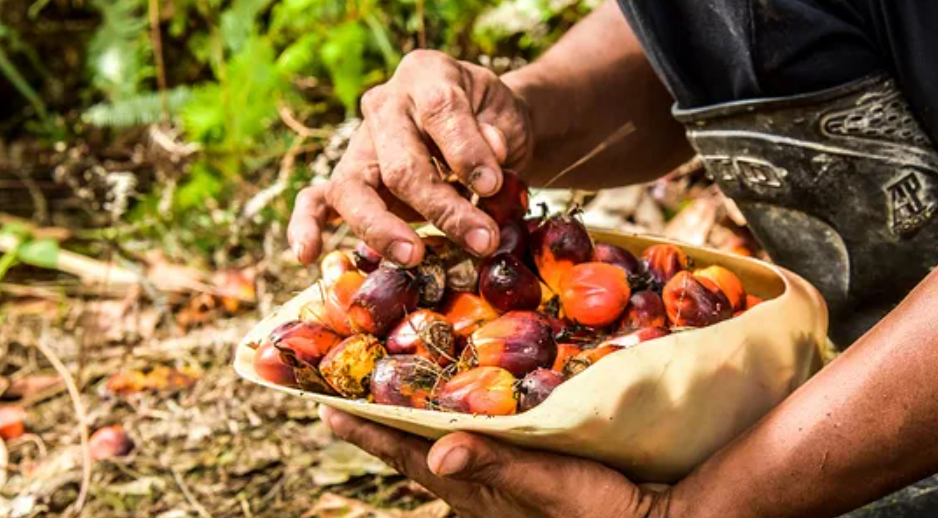
According to Minister Budi, the increase in POME and HAPOR exports can also be caused by the processing of fruit from Fresh Fruit Bunches (FFB) which are rotted directly into POME and HAPOR.
“This condition leads to a lot of FFB being diverted to be processed by Palm Oil Mills (PKS) or known as loose PKS. This makes it difficult for conventional PKS to obtain FFB,” he said. (*) Source: sawitkita.id