JAKARTA – The Indonesian government has targeted to upgrade the biodiesel mandatory program from the current B40 to B50 in 2026, as part of efforts to reduce reliance on imports of oil fuels, strengthen national energy resilience, and cut carbon emissions.

“We’ll start implementing our B50 mandatory program in 2026. Early this year (2025) we’ve upgraded it from B35 to B40,” Energy and Mineral Resources (ESDM) Minister Bahlil Lahadalia said after a press conference on ESDM performance 2024 in Central Jakarta on Monday (3/2/2025).
Bahlil said that in planning the B50 program in 2026, his ministry has considered all aspects of its implementation, including the national supply of crude palm oil (CPO) and other supporting factors. “We’ve considered all factors, including CPO production, in implementing the B50,” he said.
CPO Production
Commenting on the government’s B50 plan, the Indonesian Palm Oil Association (GAPKI) Chairman Eddy Martono said that oil palm industry players hope the government will thoroughly consider the B50 program before fully implementing it next year (2026). “Upgrading the current biodiesel program from the current B40 to B50 should be supported with the increase of CPO production. It should come to our special attention that our production is now stagnant. We see that this year we produce 15.62 million kiloliter under the B40 program, which is an increase from 12.09 million kiloliters under previous B35 program,” he said.
Eddy Martono said that oil palm players are committed to helping the government under President Prabowo Subianto to realize the target of national energy self-sufficiency. “But in our view the government needs to thoroughly consider our national problem of stagnant production of CPO and the decrease of our palm oil exports,” he said.
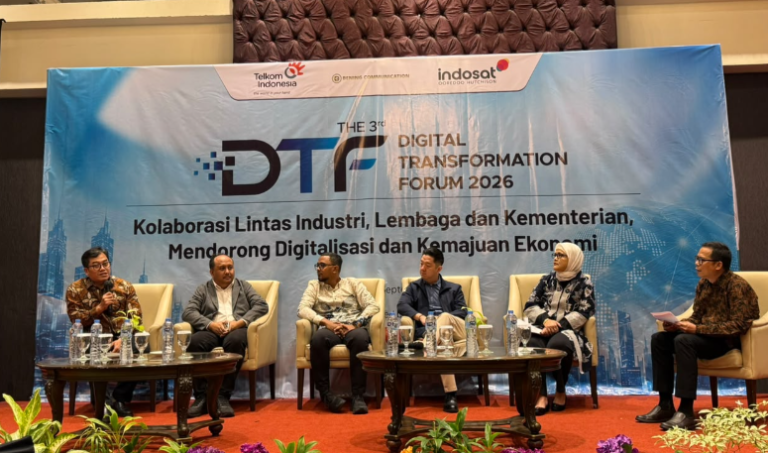
“We’re ready to support government’s biodiesel program, not only up to B50, but even up to B100. But we have to seriously consider the availability of CPO supply to support the B50 once it is implemented. We need to raise production as the biodiesel program will certainly affect our exports. We’ve seen our palm export decreased during the last few years,” Eddy said during Focus Group Discussion (FGD) on strengthening palm oil economy to strengthen Indonesia’s economic indepence in Jakarta on Tuesday (4/2/2025). The FGD was organized by NU Agriculture Development Institution (LPPNU) in conjunction with the 102nd anniversary of Nahdlatul Ulama (NU).
Eddy said that during the last five years Indonesia’s palm oil production were stagnant, and even inclined to decline. During the last two years alone, Indonesia’s palm oil production had decreased by 4.3% from 54.8 million tons in 2023 to 52.4 million tons in 2024. “The main cause is the slow implementation of replanting program for smallholders’ plantations (PSR). If the PSR is not accelerated, then certainly we’ll see supply problem when implementing the B50. The other factor we should consider is the fact that we’re the world’s largest producer and largest consumer of palm oil,” he said.
Based on data from Statistics Indonesia (BPS), in 2024 Indonesia’s export volume of palm oil products and derivatives reached 21.60 million tons, which decreased by 17.33% compared to 26.13 million tons in 2023. At the same period, its export value reached US$20 billion in 2024, which dropped by 11.78% compared to that in 2023 at US$22.7 billion.
B40 Program
Meanwhile, the ministry of energy and mineral resources (KESDM) reported that the implementation of B40 program since early this year is projected to reduce carbon emissions up to 41.46 million tons per year. The upgrading of the biodiesel program will further increase the capacity of carbon emissions.
“The biodiesel program has increased the capacity to decrease carbon emissions from 34.56 million tons of CO2 under B35 program to 41.46 million tons of CO2 under B40 program,” KESDM Director General of Renewable Energy and Energy Conservation, Eniya Listiani Dewi said after a press conference in Jakarta on Tuesday (7/1/2025).
She said that with the implementation of B35 in 2024, Indonesia managed to save foreign exchange by cutting oil fuel imports up to Rp122.98 trillion. Under the current B40 program, we’re potential to save foreign exchange up to US$9.33 billion or equivalent to Rp147.5 trillion during 2025,” she said.
She also said that the upgrading of B35 to B40 is potential to increase added value of biodiesel to Rp20.98 trillion as compared to added value under B35 at Rp17.49 trillion. (*) Source: sawitindonesia.com