JAKARTA — The Indonesian Palm Oil Association (GAPKI) hopes that the government’s efforts to resolve forest-related problems will help accelerate the implementation of replanting program for oil palm smallholders’ plantations.
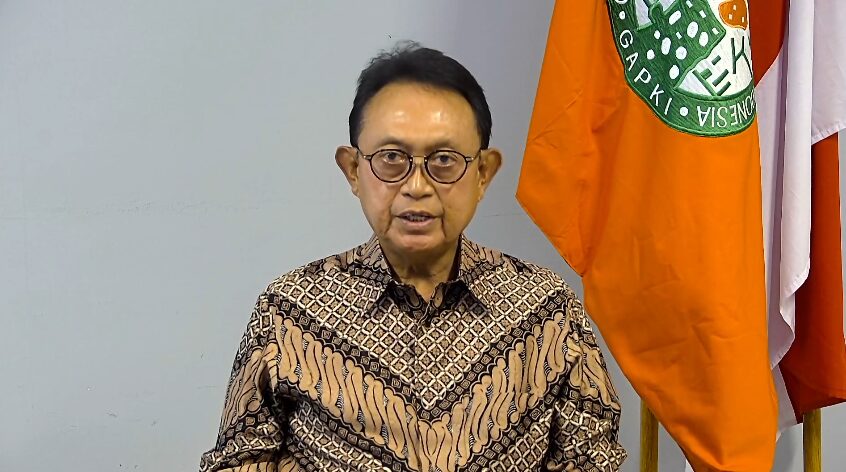
“The decision of President Prabowo Subianto to establish the Forest Governance Improvement Task Force (Satgas Hutan) will help resolve the legal issues related to forest-related legal problems facing the smallholders in the implementation of replanting program,” GAPKI Chairman Eddy Martono said after the inauguration ceremony of the new regional executive board of GAPKI Kalsel (South Kalimantan) for period of 2024-2029 and its regional conference in Banjarmasin, on Wednesday (19 February 2025).
Eddy Martono said during the occasion that problems related to suspected forest encroachment and legal status are one of the main factors that had slowed down the implementation of replanting for smallholders’ palm plantations. “This is urgent to be resolved soon to accelerate the replanting program, as part of efforts to increase productivity and sustainability of palm oil as a whole,” he said.
“We hope it can be resolved as soon as possible, as we need to increase our palm oil production to meet the rising needs at local and global markets. Our palm production has been stagnant during the last few years. But in the meantime, palm oil consumption has been continually rising. We need to seriously anticipate it, so that it won’t reduce our palm oil exports,” said Eddy Martono.
Eddy also said that currently the new Satgas is working hard to solve the forest-related problems. Based on information gathered from the Satgas, around 3.2 million hectares of forest areas are considered problematic. But not all of the problematic areas are owned by big palm companies, as many of them are owned by smallholders.
“The Task Force is conducting a verification process for 436 companies, of which around 200 are GAPKI member companies. The size of the problematic areas varies, some of them are only 10 hectares, 50 hectares, and up to 100 hectares,” Eddy said.
According to him, GAPKI’s current concentration is to help smallholders in implementing the replanting program, which is part of a solution to tackle the problem of production stagnation.
“We see that replanting smallholders’ palm plantations is very important. We face a big threat if consumption continues to increase, while production stagnates and productivity declines. It could become a big problem for our palm oil industry,” he added.
He expressed his appreciation to the government’s steps to start focusing on solving the forest-related problems, which is seen as one of the main obstacles in implementing the replanting program of smallholders’ plantations.
“The steps taken by the government have been very appropriate so far, because by solving the forest-related problems, we pave the way for more productive and sustainable rejuvenation of oil palm plantations,” he added. (*) Source: sawitindonesia.com