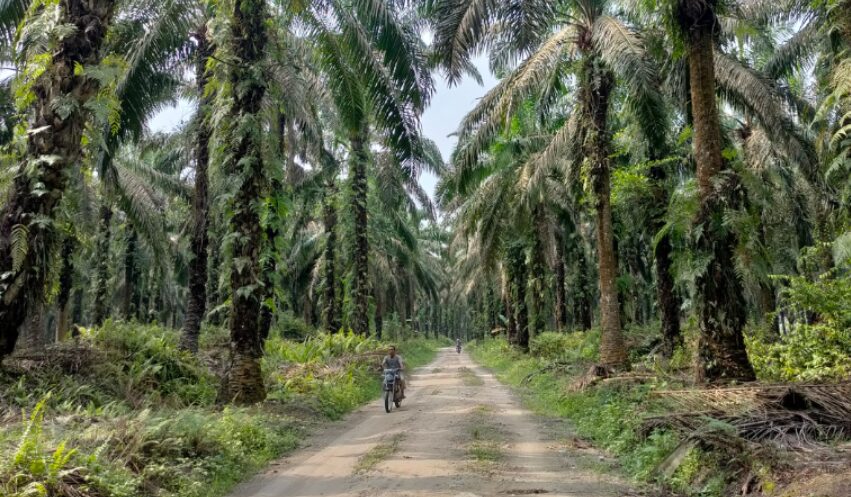
The palm oil has become an integral part of human life as it is used in most of consumer products sold in shopping malls across the globe. But actually, it doesn’t only offer economic benefits. It also offers potential environmental solutions, which include the solution to tackle the growing impacts of global climate change.
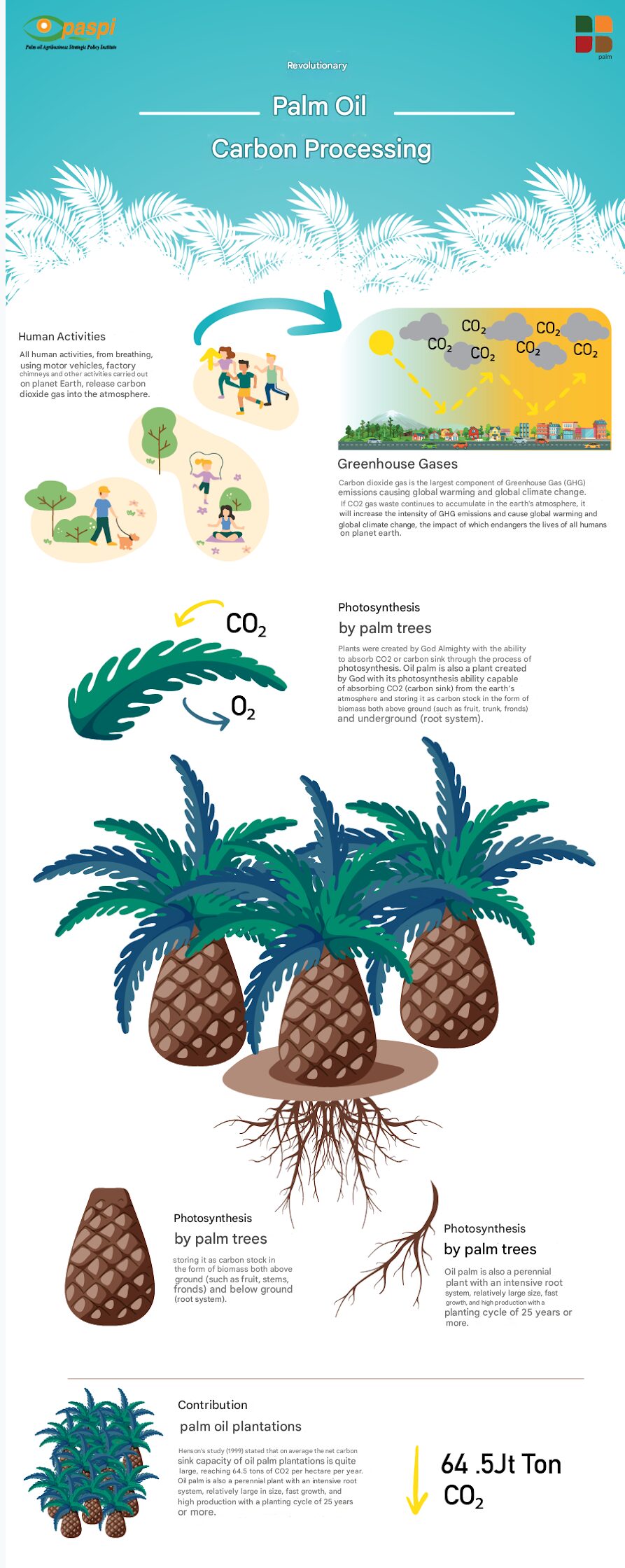
Having the capability to function as “carbon sink” through the process of photosynthesis, the oil palm plantations can help reabsorb carbon dioxide (CO2) from the atmosphere and reduce its negative impacts. As the main component in the greenhouse gas (GHG) emissions, the CO2 has become the main cause of global warming and climate change.
All human activities, from breathing to using vehicles and factory operations, cause CO2 emissions to the atmosphere. If the CO2 keeps accumulating, the intensity of GHG emissions will increase, causing global warming and climate change that threaten all lives on earth.
To tackle the problem, it is very important to find a way to reabsorb the CO2 already released to the atmosphere.
God creates plants with the miracle of photosynthesis, which allows them to absorb CO2 and then change it to oxygen. Acting like normal plants, the oil palm trees have an outstanding capability to absorb CO2 from the atmosphere and save it in the form of biomass above ground and underground.
A study conducted by Henson in 1999 reveals that the “carbon sink” ability of oil palm plantations reach 64.5 tons of CO2 per hectare per year.
It is really higher than the capability of tropical forest, which only reaches 42.4 tons of CO2 per hectare per year. Besides, the oil palm plantations are also capable of producing oxygen (O2) at 18.7 tons per hectare per year.
Besides its function of “carbon sink”, the oil palm also has the characteristics as perennial plants with a strong system of rooting, fast growth, and high productivity. Having a cultivation cycle of 25 years or more, the oil palm trees can function like “biological machines” which can be relied on to absorb CO2 from the atmosphere.
With a total palm plantation areas across the globe reaching 25.1 million hectares, the oil palm plantations are able to absorb CO2 at 1,68 billion tons of CO2 per year or equivalent to 1,68 Gigaton CO2 per year. With such outstanding contribution, the oil palm plantations should become a potentially important solution to reduce the carbon emissions and tackle the problems caused by the global climate change. (*)
Palmoilina.asia. Sawit Revolusi Pengolahan Karbon Terbaik di dunia (2023). https://palmoilina.asia/berita-sawit/revolusi-pengolahan-karbon/. Juli 20, 2023