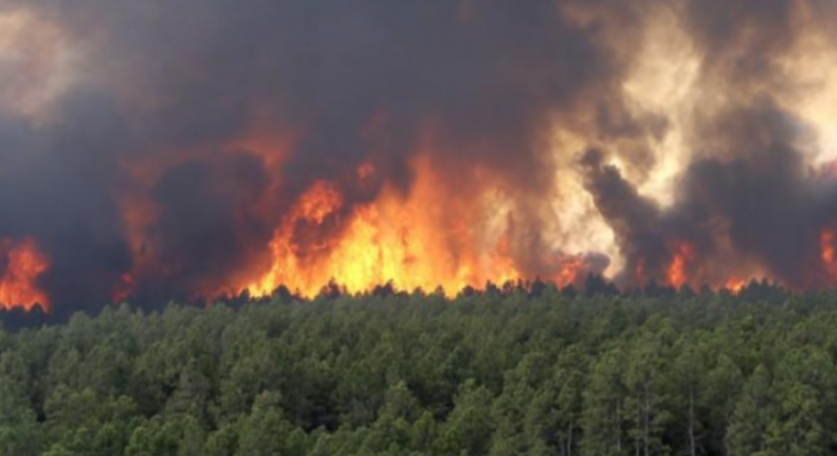
JAKARTA – Environment Minister Hanif Faisol Nurofiq has determined the Indonesian Palm Oil Association (GAPKI) as national model in preventing the forest and land fires (Karhutla) in Indonesia.
The minister announced the decision after conducting a direct monitoring on technical and operational preparations of PT Kimia Tirta Utama (KTU), a subsidiary of the publicly listed PT. Astra Agro Lestari, a member company of GAPKI, in Siak regency of Riau province.
“GAPKI’s well-preparedness should not be only made as an exemplary, but it should be widely emulated. We want this to become a new standard in preventing Karhutla,” Hanif said during his visit in Riau on Saturday (10/05/2025).
Based on data from the Meteorology, Climatology and Geophysics Board (BMKG), there are eight (8) provinces categorized as high risk of Karhutla this year. The eight provinces include Riau,
which has the largest oil palm plantations in Indonesia at more than 4.0 million hectares and more than 5.0 million hectares of forests (production, conservation, and protection forests), and around 4.9 million hectares of peat forest. The other seven provinces are Jambi, South Sumatera, West Kalimantan, Central Kalimantan, South Kalimantan, East Kalimantan and North Kalimantan.
Minister Hanif said that synergy among the palm oil industry players, like those grouped in GAPKI, with the central government and regional governments is one of the key factors in preventing the yearly cases of Karhutla.
He also urged all other palm oil companies that are not yet members of GAPKI to join in. “GAPKI has shown that collaboration and structured system can save thousands hectares of forest and land from fire,” he said.
GAPKI Secretary General Muhammad Hadi Sugeng warmly welcomed the government’s decision, saying that GAPKI has been developing a well-organized ecosystem to keep pursuing efforts of preventing forest and land fires.
“We develop an early detection system based on data of hotspot, mobilize the fire-concern societies (MPA), and organize trainings and certifications of field personnel,” said Hadi.
He said that GAPKI is also active in utilizing the modern technology to help prevent fires, such as using drone for monitoring tasks and conducting weather modification with artificial rain engineering. (*)