JAKARTA – Indonesia’s palm oil industries as the biggest contributor of foreign exchange to the state are facing a new threat: Overlapping regulations and legal uncertainty. Two new regulations – Undang-undang Cipta Kerja (Law on Job Creation) and Presidential Regulation (Perpres No:5/ 2025 on forest area enforcement — are feared to reduce palm oil production and weaken their competitiveness at the global market.

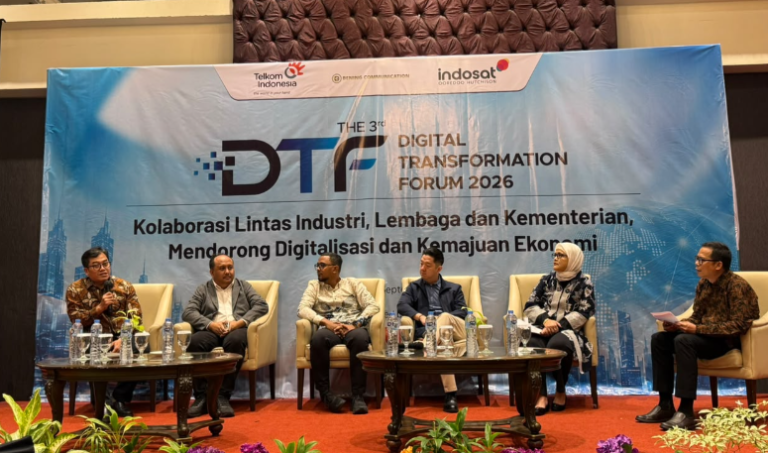
“If the new regulations end up causing reduction of production, those who suffer losses are not only the business players but also the state. We should realize that palm oil industries significantly contribute to our foreign exchange, and our national energy sector,” said Eugenia Mardanugraha, a researcher from Universitas Indonesia (Indonesia University) and a commissioner of the Business Competition Supervisory Commission (KPPU), during a public discussion on “Measuring Policies In Palm Oil Industries Toward Reaching Golden Indonesia 2045”, which was organized by Tempo Impresario at Studio Tempo, Jakarta on Monday (16/06/2025).
Present during the discussion were IPB University’s Palm Oil Study Center Head Prof Budi Mulyanto, the Attorney General (Kejagung) Spokesman Agung Harli Siregar and Legal Expert from University of Al Azhar, Sadino. The discusion was moderated by Tempo Journalist Ghoida Rahma.
According to Eugenia, Indonesia’s palm oil exports contribute more than US$30 billion per year. If the production dropped due to unclear regulations, then it will affect the target of national economic growth.
She said from the economic perspective, the palm oil industries play an important role in stabilizing national economy and the alternative energy sources such as the biodiesel. Legal certainty will create healthy business competition, and increase national productivity of palm oil industries.
Eugenia urged the government to also present in the palm oil sector as an investor through the state-owned companies (BUMN) with a view to increasing national productivity and attracting the interest of private sector.
“Certainly, if BUMN companies manage to earn profit, the private investors will be interested in investing in the palm oil industries,” she said.
The IPB Palm Oil Study Center Head Budi Mulyanto highlighted the inaccuracy of map references used by the Task Force of Forest Area Encorcement (Satgas PKH). According to him, the maps of forest areas used by the task force are often not in accordance with Undang-undang Kehutanan (Forestry Law). “To resolve the forest problems, borderlines of forest areas must be first clarified, and the lands of people not included in forest areas should be excluded from the map of forest areas,” he said.
The IPB Professor emphasized the importance of affirmative policy in managing the forest areas and oil palm plantations. He criticized the use of forest map as an absolute reference. It’s because such reference is often not in line with the field condition.
According to him, currently there are still land rights located on non-forest zones, so that the use of the forest map as an absolute reference should be reviewed. “For example, the land areas of 31.8 million hectares that are now no longer forested should be disciplined by considering the interest of people inside the areas,” Budi said.
Budi opined that an affirmative policy is badly needed to bridge the interest of the general public, state and investors.
The Forestry Law Analyst and Lecturer at the Faculty of Law at the University of Al-Azhar Indonesia, Sadino, said that too many regulations and conflicting each other will actually worsen the business climate. “Instead of functioning to drive improvement, such regulations will actually cause the slow death of the industry,” he said.
Sadino said the overlapping regulations will also further complicate the problem of governance in the industry. “The legal philosophy underlying the legislation so far has not supported improvement, but exacerbated it instead. Regulatory changes are often not synchronized,” he said.
In addition to improving regulations, Sadino proposed the formation of a special palm oil board to formulate solutions to structural problems in the palm oil sector. According to him, until now the issues of forest area enforcement and land disputes have not been resolved. “This special institution can also function as a strategic think tank that bridges business actors with various related ministries and other institutions,” he said.
Head of the Attorney General’s Legal Information Center, Harli Siregar, said that the Satgas PKH was established to restore state control over lands that have been used without a valid legal basis. He emphasized that the actions taken by the Satgas were administrative steps to restore state control over land areas that had been illegally controlled by other parties.
“The public shouldn’t think that there has been a change of players or confiscation. We emphasize that Satgas PKH had never carried out confiscation, because confiscation is a legal term in criminal cases. What is done so far is the re-control of state assets,” said Harli.
He said that the approach used by the Satgas PKH in implementing the mandate stipulated in the Presidential Regulation No.5/ 2025 is a constitutional step that shows the presence of the state in upholding sovereignty over land.
According to Harli, the Satgas PKH consists of 12 ministries and institutions, including the TNI (military), Police (Polri), the Attorney General’s Office, and the Geospatial Information Agency. So far, it has identified around 3.7 million hectares of land controlled without a valid legal basis in forest areas.
“Around 1.1 million hectares of land in nine provinces and 64 districts have been returned to the state. The lands were previously controlled by around 406 companies,” said Harli.
Harli acknowledged that the Satgas needs to consider the inputs from academics and civil society. “We see that the Satgas PKH needs to evaluate its work mechanism to make it more transparent, accountable, and oriented towards legal certainty,” he said. (*)