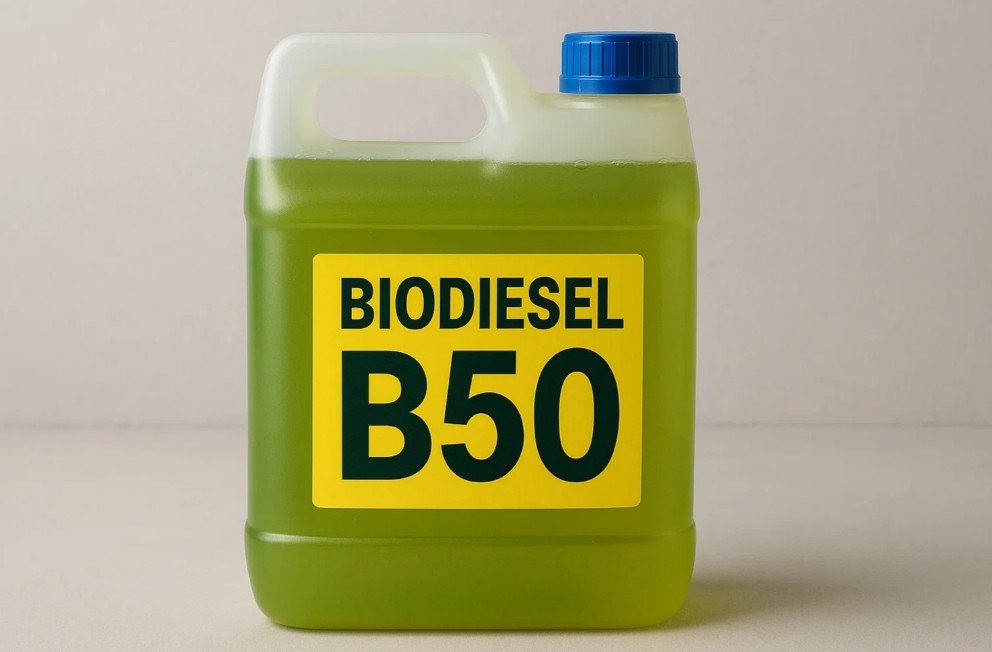
JAKARTA – The ministry of energy and mineral resources (KESDM) reported that the government will stick to its initial plan on the implementation of mandatory program of biodiesel 50 percent (B50) since early 2026 and ensure that the supply of crude palm oil (CPO) is enough to support the program.
Deputy Minister of Energy and Mineral Resources (ESDM) Yuliot Tanjung said that currently they are in a process of completing an evaluation on the implementation of B40, which has been launched since early 2025. The result of evaluation will become a foundation for the government to take further steps in implementing the biodiesel mandatory program.
“We’re now evaluating the implementation of B40 until now. We’ll stick to our plan to upgrade the current B40 program to B50 program next year (2026),” Yuliot said during his working visit to Bojonegoro, East Java, on Thursday (26/06/2025).
Yuliot said that there is also a possibility for the government to accelerate the implementation of the B50 program. “We’re still open for the possibility of accelerating B50. But we need to make necessary preparations, especially in several crucial aspects, such as availability of CPO supply and the production capacity of the biodiesel producing companies (BUBBN),” he said.
“Currently, the capacity of biodiesel producing companies in producing FAME (Fatty Acid Methyl Ester) is still limited. We’re pushing them to increase their production capacity according to the target of B50. If all are ready, then we can do acceleration,” he said.
Impact To World Market
Meanwhile, Agriculture Minister Amran Sulaiman said that the implementation of B50 is potential to raise the price of CPO at global market. It is because most of national production of CPO previously intended for exports will be diverted to domestic market to fulfil the need for the biodiesel production.
“Last year we exported 26 million tons of CPO. If we divert 5.0 million tons for B50, then there will be only 21 million tons left for exports. Most likely, it will push up the CPO price at the global market,” Amran said during a press conference in Jakarta on Friday (30/05/ 2025).
Amran added that the B50 program will need around 5.3 million tons of CPO. “Therefore, export allocation will be reduced for the sake of supporting our national energy resilience based on the biodiesel production,” he said.
According to him, as Indonesia controls almost 66 percent of global CPO market, its decision to divert a portion of exports to domestic market is projected to affect the price at the global market.
B40 Challenges
Regarding the ongoing implementation of B40 mandatory program, KESDM’s Bioenergy Director Edi Wibowo said that its implementation is facing a serious challenge, especially on the limited production capacity of the biodiesel producing companies.
“Production has reached around 80 percent of total installed production capacity. It shows that our production capacity is now tightening, and in need of increase soon to ensure the supply of B40 in the future,” he said in a press statement in Jakarta on Tuesday (06/052025).
He said that to anticipate surging demand, the government is seeking new investors to expand the production capacity of biodiesel, bioethanol, and processing of diesel fuel based on bio-tank. It is seen crucial to maintain the continuation of the national mandatory program of renewable energy.
Latest data from the ministry shows that as of the end of April 2025, the distribution of B40 had reached 4.3 million kiloliters. Interestingly, the B40 distribution from the non-public service obligation (non-PSO) sector has exceeded the distribution of B40 under the scheme of PSO.
The government said that the B40 is potential to reduce Indonesia’s reliance on imports of fossil fuels and save foreign exchange up to Rp147.5 trillion, which is higher than the saving of foreign exchange from B35 program at Rp122.98 trillion.
Currently, the distribution of B40 is conducted by 24 biodiesel producing companies, supported by two oil-gas companies for PSO and non-PSO distribution, and 26 biodiesel producing companies specialized on the segment of non-PSO. (*)