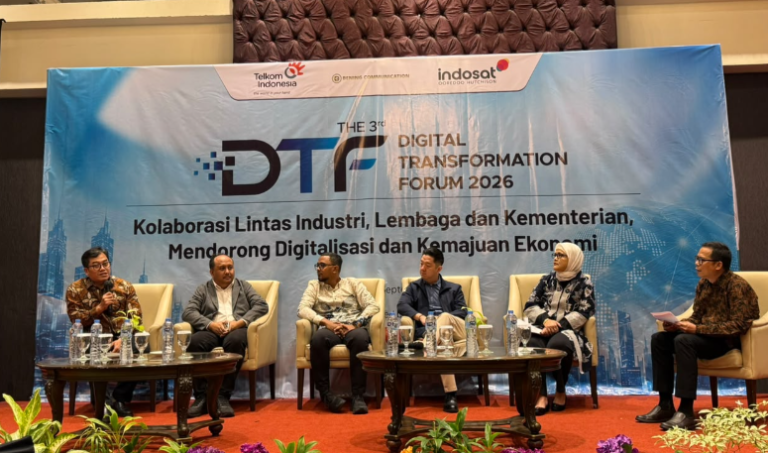
BOGOR – Hundreds of palm oil stakeholders met in Bogor, West Java, on Monday (01/09/2025) to discuss a number of crucial issues, ranging from weak incentive for local governments to legal uncertainty as a result of overlapping forest areas. The meeting that was facilitated by FORCI IPB University, was offering a number of solutions to tackle the problems.
Professor of Public Policy at the Bogor University of Agriculture (IPB University), Prof. Sudarsono Sudomo highlighted the problem of local governments that are not interested enough in improving the quality of plantations’ data. To encourage the local governments, he proposed the application of incentives based on their performances. “The indicators for giving incentives could be the completeness of data, their agility of renewing information, and the compliance of business players to the standards of legality and sustainability,” he said.
Sudarsono also highlighted the poor condition of operational sustainability of palm oil information system, which depends on the annual budget of local governments. He recommended a model of independent financing, such as through digital-based collection of levies, integrated with the mechanism of legality verification, and cooperation with the private sector. Surplus from this system can become non-tax state income (PNBP).
Other problems highlighted during the meeting also include the overlapping areas of forests that have often caused legal uncertainties. “The Multi-Commodity Strategy Platform (PMKS) can be equipped with the geospatial algorithm based on multi-source data (BIG, ATR/BPN, up to newest satellite image). That way, if there is no proof of formal borderline, the land areas can be categorized as non-forest areas, so that smallholders and companies can get legal certainties.
“Most of smallholders’ palm plantations have not yet met the principles of sustainability. With the Sustainable Jurisdictional Approach (SJA), environmental indicators, socio- economy, and governance can be measured more clearly,” he said.
As a solution, Prof. Sudarsono offered the Sustainable Jurisdictional Approach (SJA), which is considered able to integrate the aspects of legality, productivity, and sustainability through collaborations of the local governments, companies, and the general public. The development of platform of multi-commodity strategy (PMKS) has also become an urgent need to solve the problems.
Based on the draft regulation he proposed, the Multi-commodity strategy platform (PMKS) should be under the presidential regulation (Perpres). The regulation covers governance of the Indonesian Sustainable Palm Oil (ISPO), legality of plantations, traceability, and inclusivity of independent growers. Sudarsono also proposed the establishment of a special authority of sustainable palm oil, which functions to manage the digital platform, synchronize cross-authority data, and solve legal and agrarian conflicts.
“With integrated and sustainable digital governance, Indonesian palm oil industries can maintain important roles in Indonesian economy without victimizing the aspects of legality, environment, and social justice,” he said. (*)
Sawitindonesia.com. https://sawitindonesia.com/prof-sudarsono-usulkan-platform-multi-komoditas-strategis-menjadi-regulasi-jalan-keluar-bagi-kepastian-hukum-industri-sawit/. Prof. Sudarsono Usulkan Platform Multi-Komoditas Strategis Menjadi Regulasi, Jalan Keluar Bagi Kepastian Hukum Industri Sawit. 3 September 2025.