JAKARTA – The Indonesian Palm Oil Association (GAPKI) has dismissed the notion that Indonesia is facing a labor crisis in its palm oil industries, saying that it is more appropriate to describe it as a challenge instead of full-scale crisis.

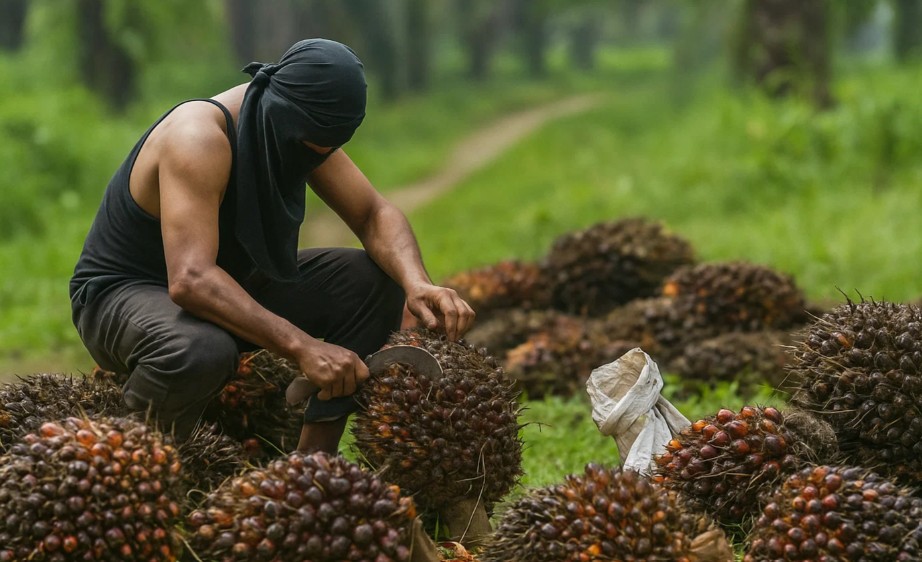
The issue of labor condition in the palm oil industries of Indonesia has recently emerged as a topic of public discussions. A number of workers see the palm oil work environment as still far from expectation, due to several problems, ranging from low wage, discrimination, to abolition of workers’ unions.
Manpower Specialist with GAPKI Employment Division, Immanuel Manurung admitted that there are still problems facing the workers in the palm oil sector of Indonesia. “But it is not appropriate to describe the problems as crisis. Workers deal with various situations on the ground, due to several factors, which include the big size of Indonesia’s palm plantation areas at a total of more than 16 million hectares with 40% being owned by smallholders,” he said.
“Yes, there are problems, but the problems are not yet reaching the level of crisis. I prefer to call it challenges with a wide variety of different conditions on the field,” Immanuel told the participants of the talkshow on International Palm Oil Workers United (IPOWU) 2025, on Monday (8/9/2025).
According to data from GAPKI, there are around 2,000 palm oil companies operating in Indonesia, of which 747 companies have become member companies of GAPKI. Immanuel said that improvement of labor condition can only be pursued among companies grouped in associations like GAPKI. To support the efforts of improving labor conditions among its member companies, GAPKI has issued three practical guidelines, which are now being socialized to all branch offices across Indonesia.
“If there are companies treating workers as slaves, they should just leave the companies. But we urge our member companies to continually improve themselves in terms of employment and should prioritize decent treatment,” he said.
During the same occasion, special staff to manpower minister, Indra MH said that decent work is not just a matter of technical issue, but also constitutional rights. He quoted article 27 verse (2) and article 28D verse (2) UUD (constitution) 1945, which guarantees citizens’ rights for decent work and life and fair treatment in employment relationships.
“Talking about decent work and salary is actually talking about constitution. It is not just the issue of industry,” he said. Indra also highlighted rampant violations, such as salary below minimum wage set by the government, gender discrimination, and union busting.
Meanwhile, the palm oil workers coalition (KBS) and the Alliance of Kalimantan Palm Oil Workers’ Unions (Serbusaka) opined that the condition of palm oil workers has reached a phase of crisis. They mentioned a number of facts, ranging from low wage, guarantee of work safety, to uncertain work status due to the system of outsourcing.
“The fact on the ground shows that palm oil workers who have given big contribution to the national and regional economies are facing inadequate working conditions. More than four million workers are only paid at certain amounts of salaries that are not commensurate with the risks they have to endure,” said Serbusaka Coordinator Rutqi.
He also mentioned the use of agrochemicals that endanger their lives. It is especially concerned with female workers, who are often assigned as pesticide sprayers without standard protection against potential health risks. They have to carry the chemical spray tank and walk under the hot sun every day, with their bodies being slowly but surely exposed to the pesticide mist.
The Palm Oil Workers Coalition have proposed a formulation of draft law (RUU) on protection of oil palm plantation workers to guarantee the rights of palm workers, especially in terms of salary, health, safety, and social and future security. (*)