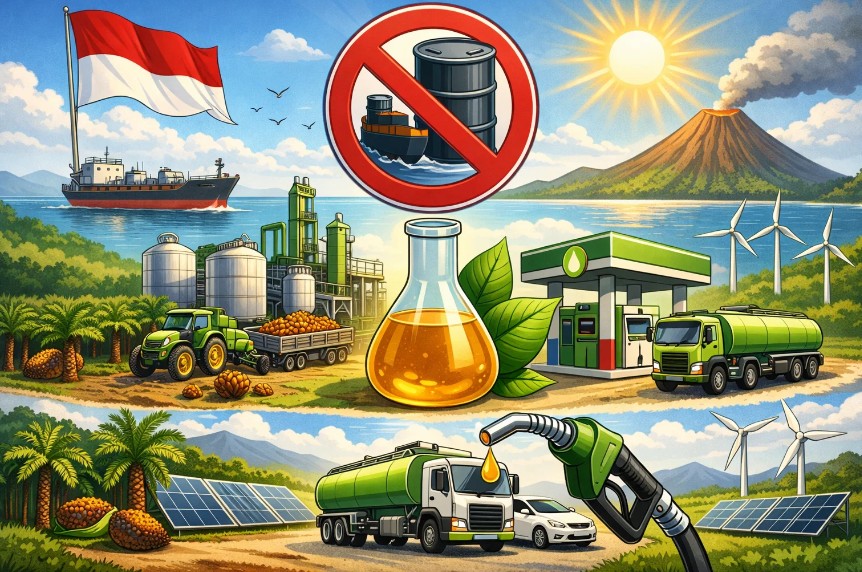
JAKARTA – The Indonesian government has officially taken a major step toward realizing its energy independence by halting imports of diesel fuel since 1 July 2026. The new energy policy coincides with the implementation of mandatory program of palm oil-based biodiesel 50 percent (B50), which is touted as a future energy solution for the country.
Agriculture Minister Andi Amran Sulaiman emphasized that this step is a national strategy to reduce dependence on imported fossil fuels while maximizing the potential of domestic palm oil.
“We will no longer import diesel. In 2026, on July 1, we will stop importing the conventional diesel fuel and we’ll start implementing B50 program,” Amran said during a meeting at the Sepuluh Nopember Institute of Technology (ITS) in Surabaya.
B50: Energy Game Changer
The implementation of B50 program is not just another energy policy. This program marks a significant milestone in Indonesia’s energy transformation based on local resources.
Amran explained that palm oil cannot be only processed into biodiesel, but also has the potential to be processed into gasoline and ethanol, the development of which is currently being accelerated.
“This is Indonesia’s energy future. Palm oil can be processed into biodiesel or bio-gasoline,” he added.
To strengthen this implementation, the government has also established a synergy with PT Perkebunan Nusantara IV (PTPN IV) in the development of palm-based gasoline, starting on a small scale before expanding to large-scale industries.
Diesel fuel import stopped, local refineries ready for production
Meanwhile, Energy and Mineral Resources Minister Bahlil Lahadalia emphasized that the government had already suspended diesel import permits since early 2026.
According to him, any imported diesel fuel still coming in would be leftover shipments from the previous year’s permits.
“Starting this year, we will no longer issue diesel import permits,” Bahlil emphasized.
He detailed:
- CN48 diesel fuel: imports have stopped completely
- CN51 diesel fuel: only imported until the first semester of 2026
Starting from the second semester of 2026, all national diesel fuel needs will be met by domestic production, specifically by state-owned energy company PT Pertamina.
RDMP Balikpapan strengthens energy resilience
The decision to stop the import was taken after the completion of project of Balikpapan Refinery Development Master Plan (RDMP) in East Kalimantan.
This US$7.4 billion (IDR123 trillion) project increases the refinery’s production capacity from:
- 260,000 barrels/day → 360,000 barrels/day
With the RDMP fully operational:
- Domestic diesel production will be 100% sufficient
- Gasoline imports will decrease from 24 million KL to around 18–19 million KL
- Fuel quality will improve to Euro 5 standards (more environmentally friendly)
Furthermore, the refinery is also capable of producing high-value petrochemical products such as:
- Propylene
- Ethylene
Palm oil becomes RI’s future energy pillar
The B50 policy and the cessation of diesel imports demonstrate Indonesia’s commitment to making the palm oil industry the backbone of the national energy sector.
With the following combination of:
- Palm oil downstreaming
- Strengthening domestic refineries
- Reducing energy imports
Indonesia is moving closer to energy independence while simultaneously increasing the added value of domestic commodities. (*)
Cnnindonesia.com. Terapkan B50, Indonesia Setop Impor Solar per 1 Juli. https://www.cnnindonesia.com/ekonomi/20260420121132-85-1349984/terapkan-b50-indonesia-setop-impor-solar-per-1-juli. 20 April 2026.