JAKARTA – The Indonesian Palm Oil Association (Gapki) has further strengthened its integrated system of preventing forest and land fires (Karhutla) amid the growing threat of Karhutla due to the expected long dry season this year.
Environment Minister Hanif Faisol Nurofiq emphasized that this year’s climate conditions require serious anticipation. The combination of low rainfall and the potential for extreme drought is considered to increase the vulnerability to forest and land fires, especially in Riau, which has extensive peatlands.
“Low rainfall and highly vulnerable peat conditions significantly increase the potential for drought. Riau is one of the regions that are categorized as highly-prone areas for Karhutla incidents, especially with peat covering almost half of its total land area and the presence of more than 13,000 kilometers of canals,” he said in a press release, quoted on Sunday (26/04/2026).
He emphasized the importance of being prepared for all stakeholders, including the business sector, through well-planned and coordinated operational steps to minimize the risk of Karhutla early on.
Responding to such condition, GAPKI Executive Director Mukti Sardjono stated that all association members have implemented a sustainability-based prevention approach, including the implementation of a zero-burning policy.
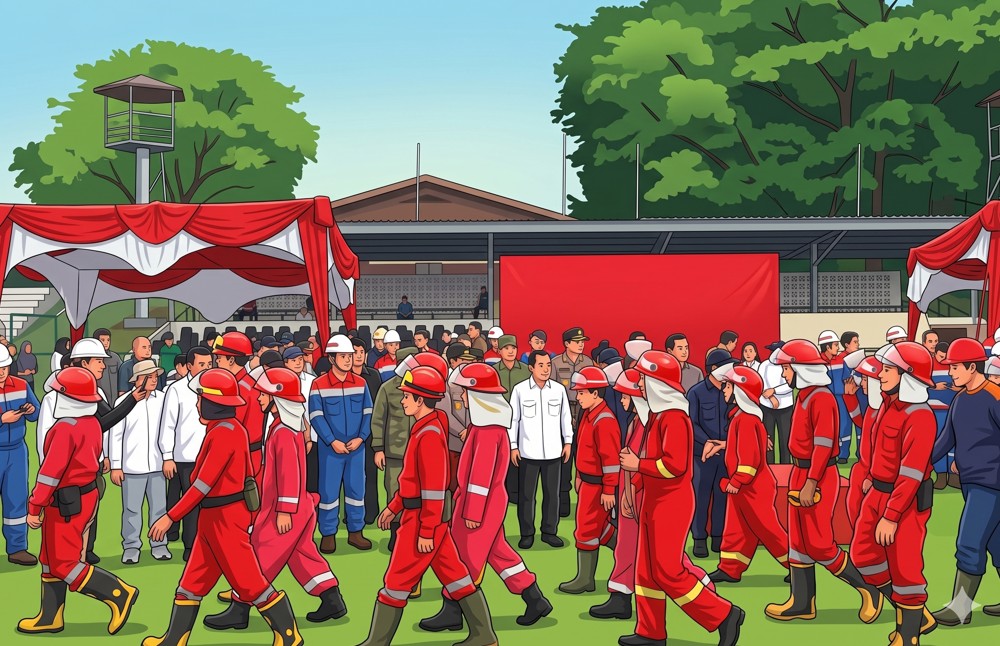
“GAPKI and all members are committed to continuously strengthening our Karhutla prevention system. We are not only ensuring internal company readiness by establishing and strengthening fire brigades, but also encouraging active community involvement through the development of Fire Aware Communities (MPA) in the fire-prone areas,” said Mukti.
In addition to strengthening human resources, GAPKI member companies are also developing prevention infrastructure such as watchtowers, water reservoirs, and technology-based monitoring systems to support early detection of fire hotspots.
Mukti added that the association has formulated guidelines on how to prevent and deal with fires on oil palm plantations and socialized the projections of 2026 dry season to all members as part of risk mitigation.
“GAPKI has designed guidelines for dealing with fires on oil palm plantations and issued a circular to all members regarding predictions for the 2026 dry season and its impact on oil palm plantations,” he said.
He stated that forest and land fire prevention efforts cannot be carried out in isolation. Synergy between the government, the business sector, and the community is key to ensuring effective and sustainable mitigation measures.
GAPKI’s participation in any effort of fire prevention reflects the shift in the palm oil industry’s approach from a reactive to a preventive one. “By strengthening our coordination and preparedness from the outset, we hope to mitigate the potential for forest and land fires, while maintaining the sector’s sustainability and environmental protection amidst the pressures of climate change,” he said. (*)
Ekonomi.bisnis.com. Respons Gapki Atas Ancaman Karhutla Dampak Kemarau Ekstrem. https://ekonomi.bisnis.com/read/20260426/99/1969428/respons-gapki-atas-ancaman-karhutla-dampak-kemarau-ekstrem. 26 April 2026