JAKARTA –- Who would have thought that our palm oil industry has been the main part of Indonesia’s economic journey for more than four decades? It is actually more than just a long journey, as revealed by the celebration of the 45th anniversary of the Indonesian Palm Oil Association (GAPKI) on Tuesday ( 29/04/2026). It reveals all interesting facts about how the Indonesian palm oil industry had weathered through the national and global challenges.
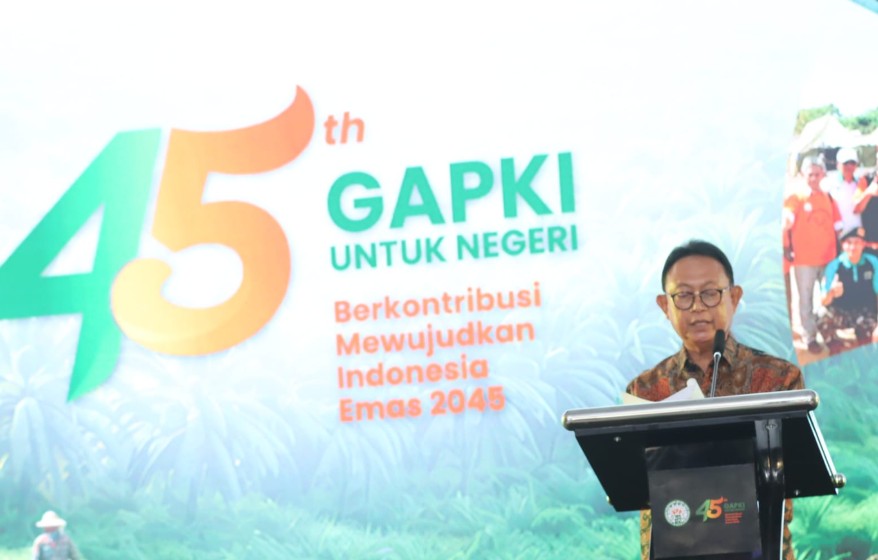
GAPKI Chairman Eddy Martono said that palm oil for Indonesia is not just a commodity, but a key pillar supporting the national economy. The anniversary celebration, which was attended by directors, industry stakeholders, and even Deputy Minister of Transmigration Viva Yoga Mauladi, served as a platform to reflect on the crucial role of palm oil for Indonesia.
45-years of journey: Not just about numbers
For GAPKI, its 45th anniversary is not just a timepiece or a mere celebration. Eddy called it a moment of reflection on a long journey filled with dynamics, trials, and lessons.
“This 45-year milestone strengthens GAPKI’s role as a strategic partner for the government,” Eddy said in his remarks at the ceremony in Jakarta.
The resilience of palm oil is undeniable. While many sectors have collapsed due to the global crisis, the palm oil industry has emerged as an unsung hero.
“The palm oil industry has proven to be a savior for the Indonesian economy during various crises, and to this day it remains resilient and contributes significantly to foreign exchange earnings,” he emphasized.
Palm oil contribution for Indonesia
For more than 40 years, the presence of palm oil has had a tremendous multiplier effect on the nation’s progress. The following are concrete examples of palm oil’s contribution to the national economy:
- Creating millions of jobs: The upstream and downstream palm oil sectors have become a primary source of livelihood, employing millions of workers throughout Indonesia.
- Main driver of regional economies: The presence of the palm oil industries—from upstream to downstream–have proven effective in opening up isolated regions and driving up economic development, particularly in remote areas.
- Significant Foreign Exchange Earner: Amidst global economic uncertainty, palm oil exports continue to be a mainstay, providing significant foreign exchange to maintain the country’s financial stability.
Key to future: Synergy and collaboration
The future challenges in the global market will be certainly getting tougher. Therefore, Eddy Martono emphasized one non-negotiable key to success: synergy between the government and business actors.
GAPKI fully appreciates the various pro-industry policies the government has issued. This solid collaboration is the key to maintaining Indonesia’s palm oil competitiveness globally.
Eddy also added that future homework demands even stronger cooperation. Increased productivity, a commitment to sustainable practices, and legal certainty are essential to maintaining a healthy and attractive investment climate in the palm oil sector.
As a culmination of the event and a documentation of this long dedication, GAPKI also officially launched a book titled “45 Years of GAPKI for the Nation.” This book comprehensively summarizes the organization’s history and the significant contribution of the palm oil industry to Indonesia’s economic and social development. (*)