JAKARTA – The government is accelerating the down-streaming process of the plantation sector as part of national strategy to realize national energy self-sufficiency while simultaneously increasing the added value of domestic plantation commodities amidst global pressures and unsecured dependence on fossil fuels caused by the global geopolitical conflict.
The policy has positioned the plantation subsector beyond simply being a producer of raw materials, to a crucial foundation in a new energy supply chain based on local resources. The direction aligns with President Prabowo Subianto’s initiatives, outlined in the national policy to encourage economic transformation by strengthening downstream industries and reducing energy imports.
Minister of Agriculture Andi Amran Sulaiman emphasized that the paradigm for plantation development must shift toward high-value-added processing.
“Plantation products must be upgraded. They should not remain as raw materials, but processed into high-value derivative products, including bioenergy. This is part of our efforts to strengthen our national energy independence and sovereignty, as directed by the President,” said Minister Amran in his statement on Friday (24/04/2026).
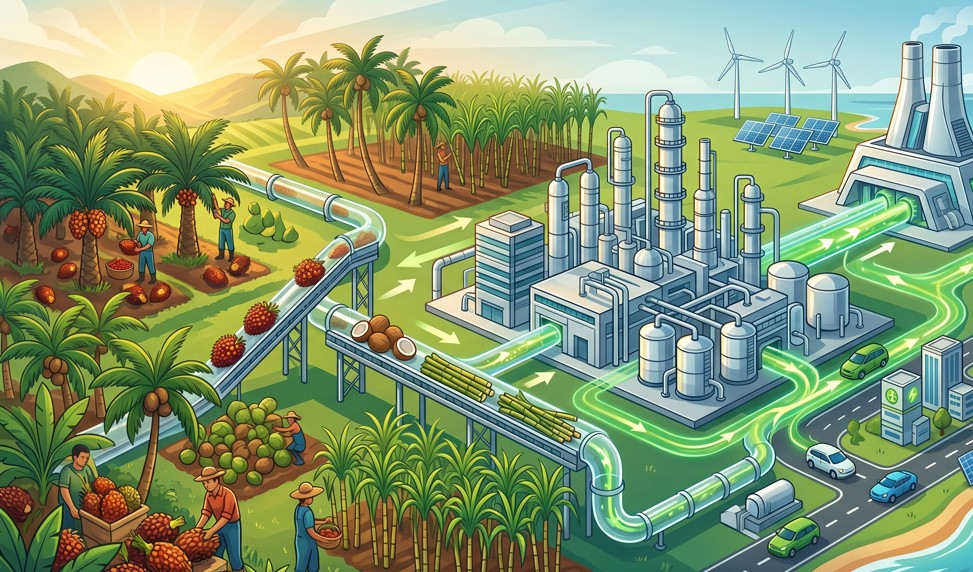
Several strategic commodities, such as palm oil, sugar cane, corn, and cassava, are now being targeted as the backbone of biofuel development, which are mainly biodiesel and bioethanol. The use of domestic commodities is considered crucial for strengthening the national energy mix and reducing dependence on fossil fuels, the supply of which are being threatened by disrupted shipping route of Hormuz strait as a result the geopolitical conflict in the Middle East.
On the upstream side, efforts of strengthening continue through the increase of productivity and sustainability of smallholders’ plantations by implementing replanting program, providing facilities and infrastructure, and overseeing permits and sustainability certifications such as the Indonesian Sustainable Palm Oil (ISPO).
For sugarcane, the government is also pushing for accelerated sugar self-sufficiency while meeting bioethanol needs and expanding planting areas to 200,000 hectares nationwide.
Furthermore, improving plantation data and information systems is a priority to ensure more precise planning to support the supply of raw materials for the bioenergy industry.
The Acting Director General of Plantations, Ali Jamil, assessed that down-streaming will have a broad impact on the national economy.
“Plantation down-streaming will create added value domestically, strengthen commodity-based industries, create new job opportunities, and improve the welfare of smallholders. This is key to driving national economic transformation,” said Ali Jamil.
He added that future commodity development will not only focus on food needs and conventional industries, but will also be directed as a prospective source of raw materials for renewable energy.
“Going forward, we’ll keep strengthening cross-sector synergy, from the upstream side, the processing industry, to energy policy. The goal is to ensure a continuous supply of raw materials and optimize the development of the national bioenergy industry, including biodiesel from palm oil and bioethanol from sugarcane,” he added.
With integration from production to processing and utilization, plantation down-streaming is expected to become a strategic foundation for simultaneously strengthening energy and food security, while also promoting inclusive and sustainable economic growth. (*)
pertanian.go.id | sawitindonesia.com. Pemerintah Percepat Hilirisasi Perkebunan untuk Memperkuat Kemandirian Energi. https://sawitindonesia.com/pemerintah-percepat-hilirisasi-perkebunan-untuk-memperkuat-kemandirian-energi/.