JAKARTA – The House of Representatives (DPR) Commission IV Member, Firman Soebagyo, has urged the legislators and the government to devise soon a new special law (lex specialis) on palm oil industry as a legal framework to manage the national strategic industry.
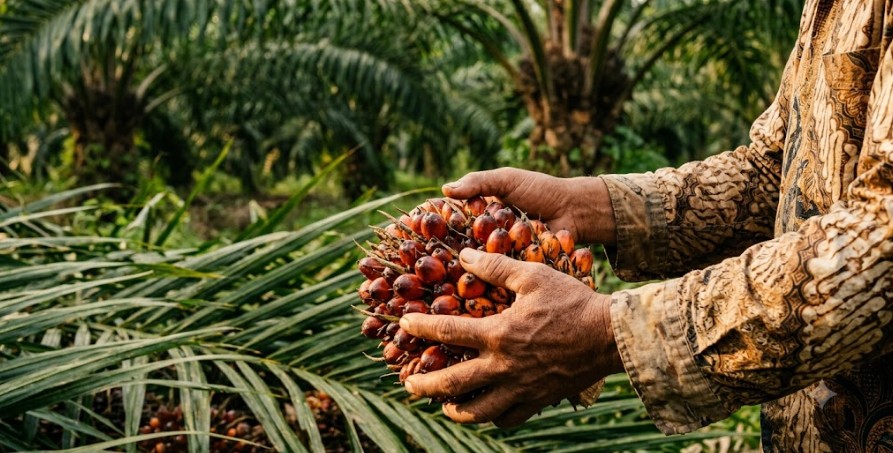
The legislator from the Golkar faction said that the palm oil industry has grown from just export commodity to a national strategic commodity, which plays an important role as raw material to feed many kinds of industries, such as foods, energy, pharmacy, personal care, healthcare, cleaning, and others.
“It’s now time for us to have a special and integrated law on palm oil industry. Malaysia has had such law for a long time. That’s why they have better governance of palm oil. We’re the largest producer and exporter of palm oil in the world, but our regulations on palm oil are still fragmented in the forms of plantation law, agriculture minister regulation (Permentan), presidential regulation (Perpres). As a result, our smallholders are legally weak and our palm industry is vulnerable to external attacks,” Firman Soebagyo said in Senayan Parliament Complex, Jakarta, on Friday (11/07/2026).
Firman emphasized the strategic role of palm oil in the national program of energy resilience. Through the mandatory biodiesel programs, B40 and B50, palm oil serves as the primary feedstock for biodiesel.
“Data from the Ministry of Energy and Mineral Resources is clear. Palm-based biodiesel saves the state budget up to IDR 117 trillion in diesel subsidy costs. That is public money we can utilize for healthcare, education, and infrastructure. Palm oil is also a key feedstock for our New and Renewable Energy (NRE) goals leading up to 2060,” the Golkar Party politician said.
Without a specific legal framework, Firman fears that three major issues will remain unresolved: illegal palm oil operations, land conflicts, and price uncertainty at the farmer level.
“This Palm Oil Law acts as a constitution for the palm oil industries, from upstream to downstream. Its existence must protect the 17 million people who rely on palm oil for their livelihoods. There must be certainty regarding replanting funds, mandatory ISPO certification, enforcement of palm oil regulations in forest areas, and traceability to ensure we are strong enough to face any trade barriers that include discrimination imposed by European countries,” he explained.
Firman also urged the government to designate the Palm Oil Bill as a priority in the 2026 National Legislation Program (Prolegnas).
“This aligns with President Prabowo Subianto’s priority programs regarding energy self-sufficiency and industrial down-streaming process. We at Commission IV are ready to work swiftly alongside the Ministry of Agriculture, the Ministry of Energy and Mineral Resources, and Bappenas to deliberate on this matter,” he concluded.
Improving governance
Chairman of the Indonesian Palm Oil Association (GAPKI), Eddy Martono welcomes the proposal to enact a dedicated Palm Oil Law.
He explained that the Palm Oil Law warrants attention from the government and the House of Representatives (DPR) because Indonesia—the world’s largest palm oil producer—currently lacks specific legislation and a dedicated agency to oversee the sector.
According to him, the absence of clear regulations and a legal framework has negatively impacted the sector’s governance. “Consequently, there are still many overlapping policies. With this specific law in place, we hope that palm oil governance will improve,” he said.
The proposed Palm Oil Law will regulate various strategic aspects, such as protecting the approximately 17 million people whose livelihoods depend on the palm oil industries–from upstream to downstream, ensuring funding certainty for smallholder replanting programs, mandating Indonesian Sustainable Palm Oil (ISPO) certification, enforcing laws regarding palm oil operations in forest areas, and implementing traceability systems to boost Indonesia’s competitiveness in the global market. (*)
Sawitindonesia.com. Terkait UU Kelapa Sawit, Indonesia Tertinggal dari Malaysia. https://sawitindonesia.com/terkait-uu-kelapa-sawit-indonesia-tertinggal-dari-malaysia/. 12 Juli 2026