Palm oil has been playing a more strategic role in supporting Indonesia to implement its energy transition program from the dominant use of fossil fuels to green and renewable energy sources. After being successful in using it as raw material to produce biodiesel and bioavtur, the country has envisioned to expand its use for producing gasoline through two different approaches of technology, namely palm-based bioethanol and palm-based gasoline.
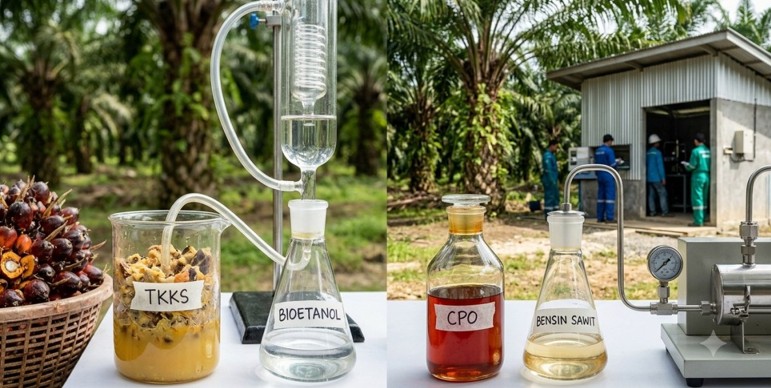
Both of the innovations have the same goal of reducing dependence on fossil fuels and increasing the use of local resources. But palm bioethanol and palm gasoline have fundamental differences, ranging from raw material, production process, up to characteristics of fuel produced.
Palm Bioethanol: Utilizing biomass and plantation wastes
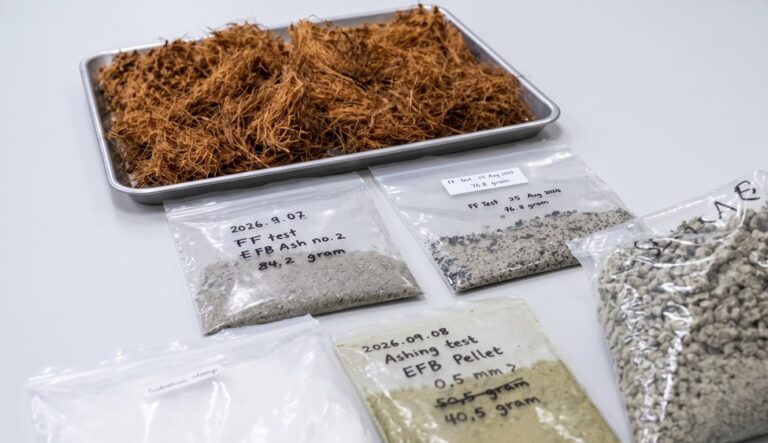
Palm-based bioethanol is a biofuel produced from biomass and waste from oil palm plantations, such as empty fruit bunches (EFB), palm trunks, and palm fronds. These materials contain lignocellulose, which can be processed into simple sugars before being fermented into ethanol.
The production process involves several stages: hydrolysis to break down cellulose into sugars, fermentation using microorganisms, and distillation to obtain ethanol at a specific level of purity.
By utilizing plantation wastes, the development of palm-based bioethanol is considered to have the potential to enhance the value of biomass, which is not yet optimally utilized.
Palm gasoline: Changing palm oil into hydrocarbon
Unlike palm-based bioethanol, palm-based gasoline utilizes palm oil as its primary feedstock. Through catalytic technology—including the development of the “Merah Putih” (Red and White) catalyst—palm oil molecules undergo processing to remove oxygen content, resulting in hydrocarbons with characteristics closely resembling those of fossil-based gasoline.
This technology yields a fuel suitable for use in motor vehicles without requiring engine modifications or significant changes to distribution infrastructure. Consequently, palm-based gasoline is often classified as a “drop-in” biofuel.
The development of palm-based bio-hydrocarbon technology also stands as part of efforts to advance the downstream processing of the palm oil industry while simultaneously strengthening national energy self-sufficiency.
Main differences between palm bioethanol and palm gasoline
The fundamental differences between the two technologies lies in the raw materials and conversion pathways employed.
Palm-based bioethanol utilizes biomass or palm oil waste processed through a biological method—specifically, fermentation. The end product is ethanol, an alcohol compound commonly used as a gasoline blend.
In contrast, palm-based gasoline utilizes palm oil processed through chemical and catalytic methods to produce hydrocarbons. Because its properties closely resemble those of conventional gasoline, this fuel has the potential to be used directly in existing vehicles.
In other words, palm-based bioethanol yields alcohol as fuel, whereas palm-based gasoline produces hydrocarbons with characteristics similar to fossil-based gasoline.
Complementing each other in supporting energy security
Although they employ different approaches, palm-based bioethanol and palm-based gasoline do not compete with each other, but they can complement each other in establishing a national biofuel ecosystem.
Palm-based bioethanol opens up opportunities to utilize the abundant biomass and plantation wastes found in Indonesia, while palm-based gasoline demonstrates the potential of using palm oil as a source of renewable hydrocarbon fuel.
Moving forward, the development of both technologies could expand the role of palm oil in the energy sector. While palm oil has traditionally been known as a feedstock for biodiesel and bio-jet fuel, palm-based bioethanol and palm-based gasoline have the potential to become key components in providing more sustainable alternatives to conventional gasoline.
Through technological innovation and appropriate policy support, palm oil can continue to contribute to strengthening national energy resilience while simultaneously enhancing the value-added of Indonesia’s downstream palm oil industry. (*)
WikiSawit. Bioethanol Sawit vs Bensin Sawit: Apa Bedanya?. https://gapki.id/id/wikisawit/knowledge-base/bioethanol-sawit-vs-bensin-sawit-apa-bedanya/