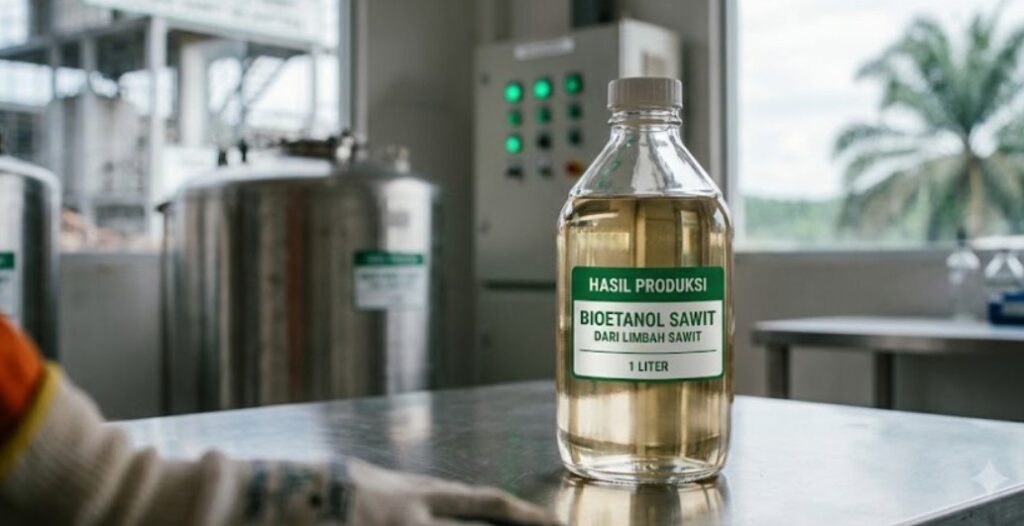
Palm-based bioethanol represents a transformative approach to renewable energy, converting oil palm biomass and wastes—rather than food crops—into clean fuel. As Indonesia advances its downstreaming agenda, palm bioethanol is emerging as a strategic second-generation biofuel with significant economic and environmental potential.
What is palm bioethanol?
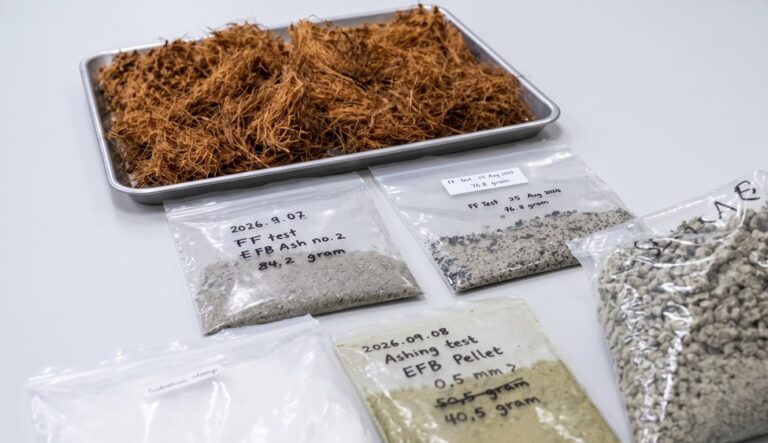
Palm-based bioethanol is an ethanol-derived biofuel produced from oil palm biomass and wastes, and not from crude palm oil (CPO). The primary feedstocks used include empty fruit bunches (EFB), trunks from replanting activities, and other parts of the oil palm plant that are rich in cellulose.
Unlike conventional bioethanol—typically produced from sugarcane, cassava, or corn—palm-based bioethanol falls into the category of second-generation (G2) bioethanol because it utilizes lignocellulosic waste and does not compete with food supplies.
Why Bioethanol is not produced from palm oil?
Palm oil, or Crude Palm Oil (CPO), is composed of fatty compounds (triglycerides), whereas ethanol is produced through the fermentation of sugars using microorganisms such as Saccharomyces cerevisiae. Consequently, CPO cannot be directly fermented into ethanol.
In contrast, palm waste—such as Empty Fruit Bunches (EFB)—contains high levels of cellulose and hemicellulose. Through hydrolysis, these components are converted into simple sugars, which are then fermented into ethanol. Subsequently, the ethanol is purified via distillation to meet fuel specifications.
In general, the production of palm-based bioethanol consists of three main stages:
- Hydrolysis of biomass into simple sugars.
- Fermentation of sugars into ethanol.
- Distillation and purification of ethanol.
Indonesia has huge potential of palm bioethanol
As the world’s largest palm oil producer, Indonesia possesses an abundant supply of palm biomass. Each year, the palm oil industry generates millions of tons of empty fruit bunches and other biomass with the potential to serve as feedstock for bioethanol production.
This potential creates significant opportunities for developing palm-based renewable energy while simultaneously supporting the national palm oil industry’s initiatives of down-streaming.
Utilizing oil palm wastes to produce bioethanol offers multiple benefits:
- Reducing the accumulation of wastes from plantations and palm oil mills.
- Adding economic value to biomass that has previously been underutilized.
- Reducing reliance on fossil fuels.
- Supporting efforts to realize target of reducing greenhouse gas emission.
- Avoiding disruption to food supplies, as the process utilizes waste materials.
Palm bioethanol’s advantages compared to 1st generation bioethanol
Palm bioethanol has a number of advantages compared to bioethanol derived from sugarcane, cassava, and corn.
- Not competing with the need for foods — Since it is derived from biomass waste, palm-based bioethanol does not require raw materials that also serve as a food source for the general public.
- Supporting circular economy — Oil palm wastes—which were previously used only as organic fertilizer or left unutilized—can be converted into high-value-added energy products.
- Reducing carbon emissions — Utilizing palm biomass to produce bioethanol helps reduce emissions that could arise from the natural decomposition of wastes.
- Supporting down-streaming of palm oil industry — Bioethanol can serve as a strategic downstream product alongside biodiesel, bio-jet fuel, biomass energy, and various palm-based oleochemical products.
Development of palm bioethanol research in Indonesia
Research on palm-based bioethanol continues to advance in Indonesia. Various universities, research agencies, and government institutions have developed technologies to convert palm biomass into fuel-grade ethanol.
Current research focuses include:
- Improving the efficiency of the biomass hydrolysis process.
- Developing more cost-effective pretreatment technologies.
- Optimizing the fermentation process.
- Increasing ethanol purity to meet fuel standards.
- Developing integrated biorefinery concepts that yield various value-added products from palm biomass.
Challenges of palm bioethanol development
Despite promising, the development of palm bioethanol is still facing a number of challenges.
- Production cost still high — The processing of lignocellulosic biomass is far more complex than the fermentation of sugars from sugarcane or cassava.
- Lignin content that is hard to process — The high lignin content in palm biomass requires special treatment to ensure the hydrolysis process can proceed optimally.
- Purification technology still needs improvement — Fuel-grade bioethanol requires a very high level of purity, necessitating efficient distillation technology.
- Not many commercial projects — Currently most of palm bioethanol developments are still on the stage of research, pilot project, and feasibility study.
Why national bioethanol program has not yet used palm bioethanol?
The current national program of mandatory bioethanol blending focuses on first-generation bioethanol derived from sugarcane, cassava, and corn. This is because the production technology is more mature, investment costs are lower, and supply chains are already established.
Meanwhile, palm-based bioethanol still requires technological development to enable economical production on a large industrial scale.
The future of palm bioethanol in Indonesia
Palm-based bioethanol has the potential to become a key pillar of Indonesia’s future renewable energy landscape. Driven by abundant biomass availability, growing research support, and the demand for low-carbon energy, it offers a strategic solution to enhance the value-added potential of the national palm oil industry.
If technological and production cost challenges can be overcome, palm-based bioethanol stands to complement the success of palm-based biodiesel as a mainstay biofuel for Indonesia. Beyond bolstering national energy resilience, the development of palm-based bioethanol can also strengthen downstream industry integration, create new jobs, and contribute to the realization of Indonesia’s target of reducing carbon emission.
WikiSawit. Bioethanol Sawit vs Bensin Sawit: Apa Bedanya?. https://gapki.id/id/wikisawit/knowledge-base/bioethanol-sawit-vs-bensin-sawit-apa-bedanya/