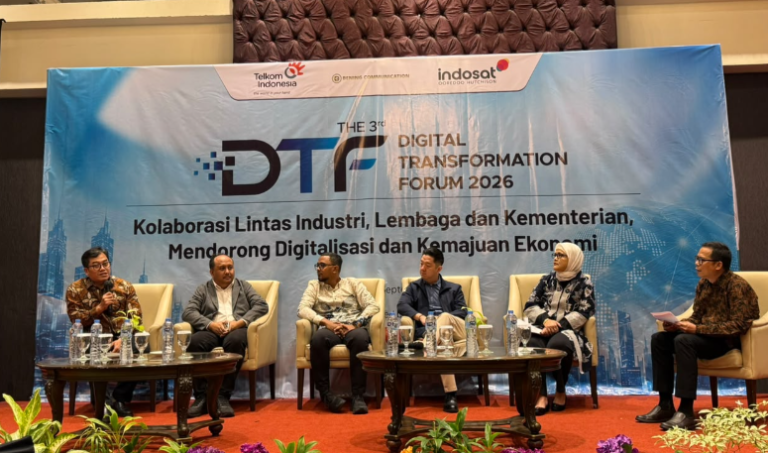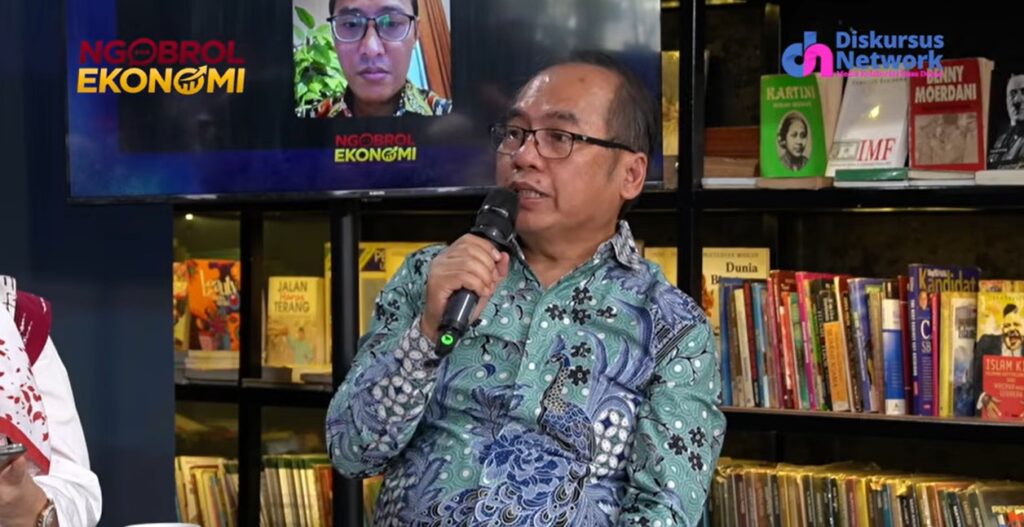
The discussions on the role of PT Danantara Sumberdaya Indonesia (DSI) in overseeing the export of strategic national commodities specifically palm oil, coal, and nickel ore/ferroalloys resurfaced during a public forum held by Diskursus Network and the NEXT Indonesia Center on Wednesday (17/09/2026).
The forum brought together industry representatives, academics, policy research institutes, and the House of Representatives (DPR) to examine the benefits, risks, and appropriate scope of authority for DSI, an entity established based on the Government Regulation No. 24 of 2026.
These three strategic commodities accounted for approximately US$71.1 billion or 25.2% of Indonesia’s total exports in 2025, commanding significant global market shares: roughly 54% for palm oil, 29% for coal, and 45% for ferroalloys/lignite. Indonesia’s substantial standing in the global market drove the creation of DSI as a response to export governance issues, including the long-scrutinized problem of trade misinvoicing.
Two choices of DSI role: Off-Taker or Data Integration centre
Christiantoko, Executive Director of the NEXT Indonesia Center, presented findings from his organization’s study on comparing experiences in a number of countries. A DSI scheme acting as a sole off-taker or exporter was previously implemented in Australia (wheat), New Zealand (dairy), and Ghana (cocoa) but has since been abandoned due to the risk of creating monopolies and conflicting with WTO regulations.
In contrast, models considered more relevant include approaches like ASAC (United States of America) and TradeTrust (Singapore), which function as data integration platforms where all transactions are reported, thereby minimizing discrepancies between export and import data.
“The success of the DSI is measured by improvements in governance, not by the volume of goods successfully sold,” Christiantoko emphasized.
He warned that if the DSI were to assume the role of off-taker, financial and commercial risks including working capital requirements, warehousing, and global price fluctuations would shift to the state. Given that the export value of these three commodities could exceed IDR 1,000 trillion, the state budget is considered to lack the fiscal capacity to shoulder such a burden, particularly given the budget deficit limit maintained at around 2.8%.
Palm Industry: System already tight, problem in price reference
Yustinus Lambang Setyo, Head of the Taxation and Fiscal Division at the Indonesian Palm Oil Association (GAPKI), emphasized that Indonesia’s export procedures are already formally and strictly regulated encompassing customs, the Indonesia National Single Window (INSW), and the export earnings monitoring system (SIMODIS) at Bank Indonesia. Any discrepancy between the export declaration and the receipt of export earnings results in the automatic suspension of exports.
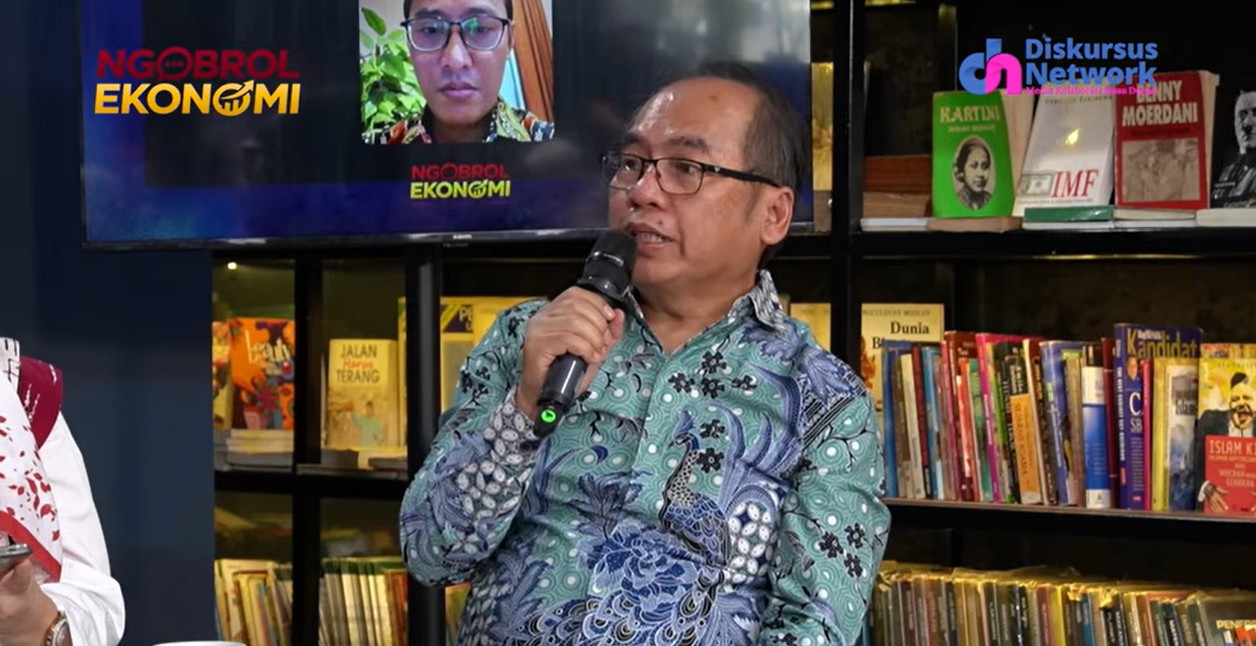
Yustinus Lambang Setyo, Head of the Taxation and Fiscal Division at GAPKI (Indonesian Palm Oil Association).
He emphasized that transfer pricing transactions between related parties, such as an Indonesian palm oil company and its overseas parent company is a common practice governed by established tax regulations. These regulations include requirements for transfer pricing documentation to substantiate the fairness of the pricing.
According to him, allegations of under-invoicing can often be explained by technical factors such as freight, insurance, export levies (PE), export duties (PEBK), as well as Domestic Market Obligation (DMO) and Domestic Price Obligation (DPO) requirements which amount to approximately US$297 per metric ton if aggregated.
The fundamental issue highlighted by GAPKI is the absence of a single price reference recognized by all parties. The current CPO price reference issued by the Ministry of Trade a weighted average of CIF Rotterdam, ICDX, and Malaysia’s MPOB rates is considered inadequate in reflecting Indonesia’s price-setting sovereignty as the world’s largest palm oil producer.
GAPKI urges relevant agencies including Customs, the Ministry of Trade, and the Directorate General of Taxes (DJP) to adopt a unified price reference, similar to the system Malaysia employs through the MPOB.
Yustinus also revealed that the association was recently invited by PT DSI to sign a Memorandum of Understanding (MoU) on August 24, 2026. However, industry players are still awaiting clarification regarding DSI’s position and scope of authority specifically whether it will act as a sole exporter, a sole intermediary, or fulfill another function.
Academician: Strengthen verification function, don’t rush into becoming Off-Taker
Prof. Telisa Aulia Falianty, a Professor at the Faculty of Economics and Business, Universitas Indonesia (FEB UI), commends the study conducted by NEXT Indonesia as a constructive step toward finding solutions, rather than merely engaging in a debate over the pros and cons of the proposed National Export System (DSI). She argues that the establishment of any new institution must address the root of the problem to avoid overlapping authority with the Ministry of Trade, Customs and Excise, and Bank Indonesia agencies that already operate their own respective systems (Inatrade, CEISA, and SIMODIS).
She identifies a current gap in the weak independent verification of export price and volume reasonableness. This is where the DSI could potentially serve as both a verifier and a source of a “second opinion” for the Ministry of Trade, thereby making the oversight process less susceptible to manipulation by certain parties.
Regarding the “off-taker” option, Prof. Telisa believes a feasibility study and an assessment of urgency are required for each specific commodity. In the short term, this option is considered less viable, as it would necessitate significant state capital injection at a time when fiscal space is limited. A more pressing priority is the strengthening of export facilitation specifically, optimizing the utilization of Free Trade Agreements (FTAs), an area that has not yet been fully leveraged by the relevant technical ministries.
DPR: Don’t extend supply chain and disturb market ecosystem
Ahmad Labib, a member of Commission VI of the House of Representatives (DPR RI), pointed out that DSI currently operates as a limited liability company (PT) under the state-owned enterprise (SOE) umbrella, rather than as a regulatory body. He emphasized that the fundamental issue is not weak regulation given the already stringent systems established by the Ministry of Trade, Customs and Excise, and Bank Indonesia but rather lax enforcement, which creates loopholes for misinvoicing.
Ahmad Labib asserted that the House would evaluate DSI’s policy direction based on input from business players and academics, as well as the policy study to be prepared by NEXT Indonesia. He further emphasized the need to ensure that DSI’s operations do not lengthen the trade chain, increase logistics costs, or harm the investment climate and the commodity market ecosystem a sector that has long provided employment for millions of workers.
The House plans to bring all stakeholders together in a single discussion forum to harmonize regulations across various ministries and agencies, addressing the overlaps that have persisted until now.
Meeting point : Strengthen data integration and supervision, not take over transactions
Among the various perspectives that have emerged, a consensus view prevails: the DSI should be directed toward strengthening data integration, risk analysis, and independent verification functions, rather than taking over commercial export transactions that currently operate through market mechanisms.
This approach is considered fiscally realistic imposing no additional burden on the state budget and preserves the competitiveness of the commodity trade ecosystem (including the palm oil industry, which involves millions of farmers and workers) in the global market, without lengthening the supply chain or creating overlapping authority with existing institutions.
For the palm oil industry, the key lies not merely in establishing a new institution, but in strengthening law enforcement regarding existing export supervision systems and establishing a single, credible reference price recognized by all relevant agencies. (*)
Diskursus Net.DSI Jadi Off-Taker? Risiko Finansial, Harga, dan Masa Depan Ekspor SDA. https://www.youtube.com/watch?v=auKB7aBN1i4. Sep 17, 2026. Fetry Wuryasti