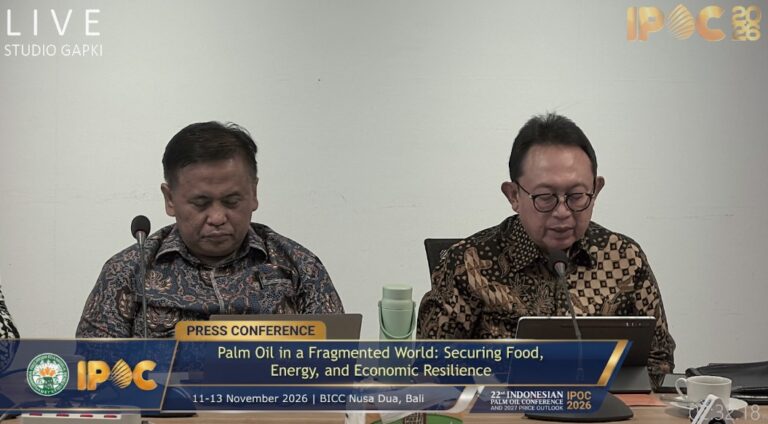
JAKARTA – The Indonesian Palm Oil Association (GAPKI) emphasizes that the international event, The 22nd Indonesian Palm Oil Conference (IPOC) and 2027 Price Outlook (IPOC 2026), will serve as more than just a forum for discussion. All conclusions and expert insights gathered during the conference will be compiled and submitted to the government as concrete proposals for improving national policies on palm oil industry.
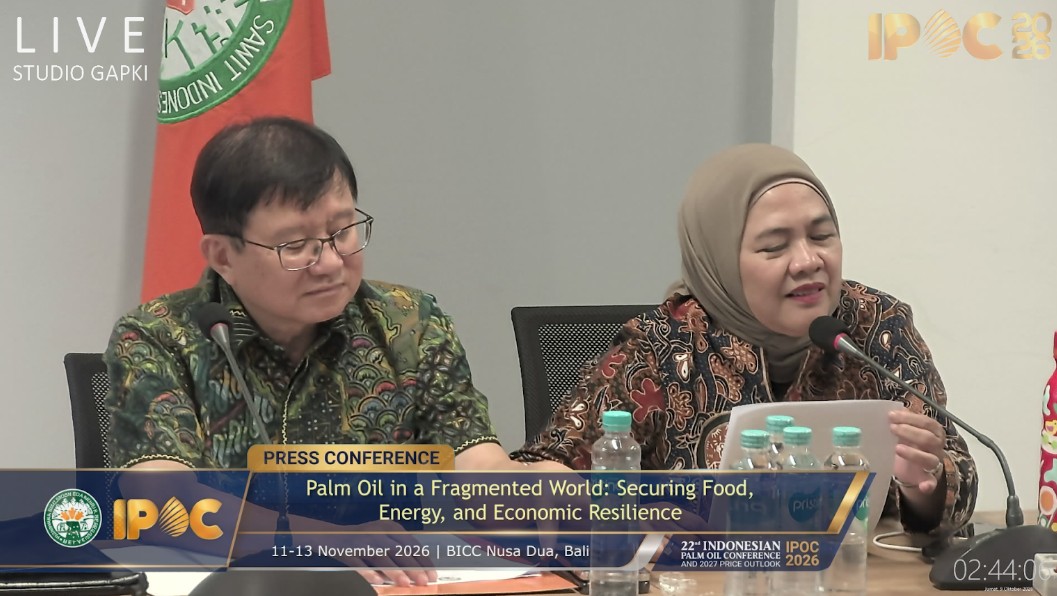
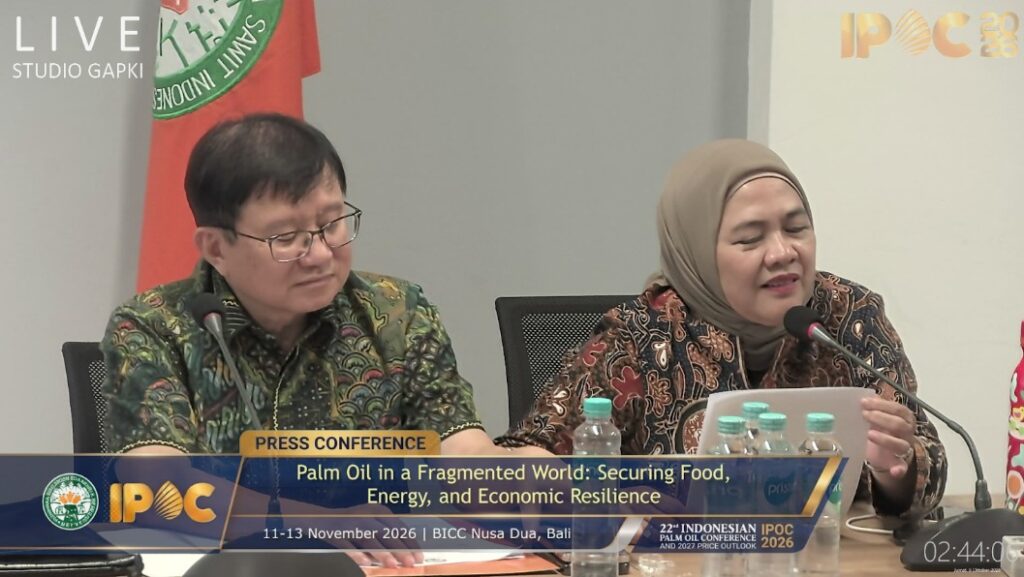
Suryanto Bun, Chairman of the IPOC 2026 Organizing Committee, and Mona Surya, Treasurer of GAPKI, shared this information during an IPOC 2026 press conference held at the GAPKI office in Jakarta on Friday (09/10/2026).
Mona Surya noted that the national palm oil industry currently stands at a crossroads, facing a convergence of challenges ranging from climate uncertainty to a lack of regulatory clarity.
“We will submit the outcomes of this IPOC to the government. We hope our proposals for policy improvement will help address the concerns of industry players, and ultimately lead to a regulatory environment that better supports the industry’s ecosystem,” said Mona.
Key issues facing the industry including the impact of El Niño on the weight of fresh fruit bunches (BJR), the dynamics of export institutions, and details regarding IPOC 2026 participation are outlined as follows:
- Major Challenges Facing the Palm Oil Industry:
- Certainty of Land and Forest Area Status: The unresolved status of forest area designations creates legal uncertainty for plantation investments.
- Allegations Regarding Forest and Land Fires (Karhutla): Mona stressed that it is incorrect to accuse companies of setting fire to their own plantations—assets worth trillions of rupiah. Such fires often occur due to accidental causes or external negligence across vast areas.
- Clarity on Export Governance (DSI): Business players are still awaiting confirmation regarding the role of PT Danantara Sumber Daya Indonesia (DSI) established on May 20 specifically whether it will act as a sole exporter or merely serve as an export registrar, as this will significantly influence market pricing mechanisms.
- Impact of the B50 Mandate: The domestic absorption of crude palm oil (CPO) for the B50 mandate will inevitably reduce the volume of CPO allocated for export to the global market.
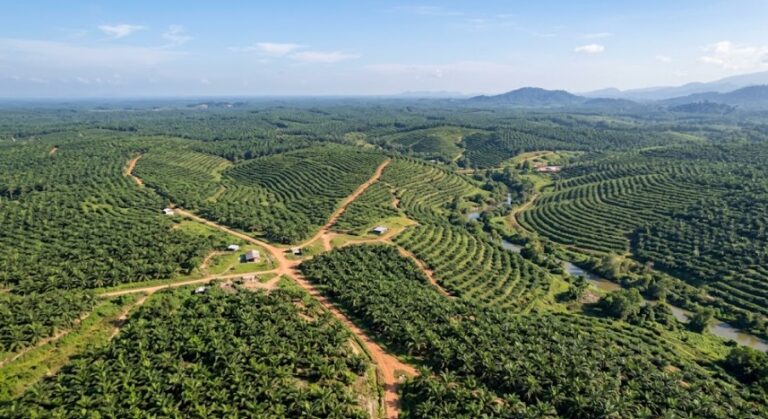
- The Threat of El Niño and Declining Productivity (Average Bunch Weight/BJR): Mona presented field findings showing that the Average Bunch Weight (BJR) of oil palm has dropped by 17 to 20 percent in just two months due to drought. Although oil palm trees are producing a large number of fruit bunches, the lack of rainfall has hindered optimal fruit development.
- Adjustment to 2027 Production Projections: While official GAPKI data targets a production volume of 56.6 million tons by 2027, Mona estimates that actual production could fall further potentially reaching 55 million tons due to the prolonged impact of El Niño.
- Targeting 2,000 Participants in Bali: The 2026 Indonesian Palm Oil Conference (IPOC 2026), themed “Palm Oil in a Fragmented World: Securing Food, Energy, and Economic Resilience,” will be held on 11 – 13 November 2026, at the Bali International Convention Center (BICC) in Nusa Dua, Bali. GAPKI aims to attract up to 2,000 participants from both Indonesia and abroad.
Through comprehensive deliberations at IPOC 2026, it is hoped that synergy between industry players and the government will lead to robust policies that safeguard food security, energy security (including the B50 mandate), and the economic sustainability of Indonesia’s palm oil sector. (Fetry Wuryasti)