Palm Oil Biodiesel and FAME: What’s the Difference?
Palm oil biodiesel is a biofuel produced from palm oil and used as a substitute for, or blend with, fossil-based diesel fuel. As part of the biofuel group, palm oil biodiesel plays an important role in supporting the energy transition, reducing greenhouse gas emissions, and increasing the utilization of domestic renewable resources.
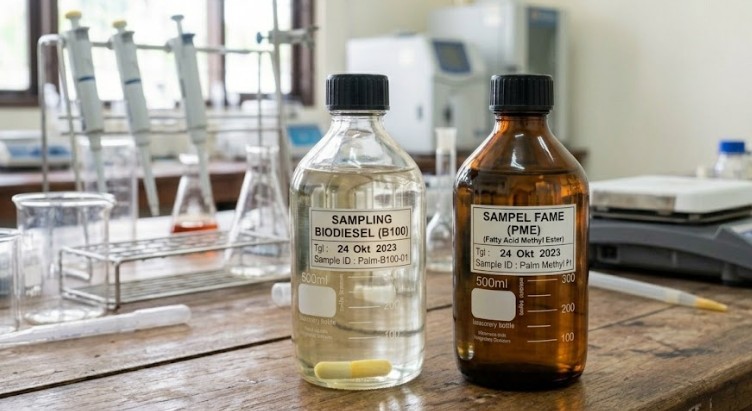
In Indonesia, palm oil biodiesel has become the backbone of the national biodiesel mandate program, which has grown from B20, B30, B35, B40 to B50. However, many still consider palm oil biodiesel and FAME to be two different products. In fact, the two have a very close relationship.
What is Palm Oil Biodiesel?
In general, palm oil biodiesel is fuel derived from palm oil that can be used in diesel engines. Biodiesel falls into the biofuel category, namely fuel produced from biomass or renewable biological sources.
Palm oil biodiesel is produced to reduce dependence on fossil fuels while increasing the added value of the national palm oil industry. In addition to being used in the transportation sector, biodiesel is also used in the industrial sector and power plants.
What is FAME?
FAME stands for Fatty Acid Methyl Ester, which is a fatty acid ester compound produced through the transesterification of vegetable oils using methanol and certain catalysts.
In practice, the palm oil biodiesel used in Indonesia’s current biodiesel mandate program is essentially FAME based on palm oil. Therefore, the terms “palm oil biodiesel” and “FAME” are often used interchangeably in the industry.4
Palm Oil Biodiesel and FAME: A Relationship to Understand
Although often considered the same, biodiesel is actually a broader term than FAME.
The relationship can be explained as follows:
- Palm oil biodiesel is a general term for diesel fuel derived from palm oil.
- FAME is a type of palm oil biodiesel produced through the transesterification process and is the most widely used form of biodiesel today.4
- HVO (Hydrotreated Vegetable Oil) or Renewable Diesel is another type of biodiesel produced through the hydrogenation process and has different characteristics from FAME.
In other words, all FAME is biodiesel, but not all biodiesel is FAME.
The Difference Between FAME and HVO
The main difference between FAME and HVO lies in their chemical structure and production process.
FAME still contains oxygen in its molecular structure because it is in the form of fatty acid esters. Meanwhile, HVO is processed through hydrogenation, which removes the oxygen and produces hydrocarbons whose characteristics are more similar to fossil diesel.5
This difference affects a number of technical aspects, such as storage stability, flow properties at low temperatures, combustion quality, and compatibility with certain diesel engines.5
Why Is This Understanding Important?
Understanding the differences between palm oil biodiesel, FAME, and HVO is becoming increasingly important as biofuel technology develops around the world.
Currently, Indonesia’s national biodiesel program is still dominated by palm oil-based FAME. However, in the future, renewable fuel technologies such as HVO or renewable diesel are expected to grow further and complement the use of conventional biodiesel.5
Therefore, recognizing that palm oil biodiesel is a general category, while FAME is the form of biodiesel most widely used today, can help avoid misunderstandings in understanding the development of palm oil-based renewable energy.
The Role of Palm Oil Biodiesel for Indonesia
Palm oil biodiesel has become one of the success stories of Indonesia’s palm oil downstream processing. Besides helping reduce fossil fuel imports, the biodiesel program also creates a strong domestic market for national palm oil products, improves energy security, and adds value to the palm oil industry chain from upstream to downstream.
Through the development of biodiesel and various other bioenergy innovations, the Indonesian palm oil industry continues to contribute to the transition towards more sustainable energy while strengthening the national economy.
References
CNBC Indonesia, “B50 Biodiesel Mandate Takes Effect July 2026, with a 3-Month Transition”, https://www.cnbcindonesia.com/news/20260630160744-4-746912/mandatori-biodiesel-b50-mulai-berlaku-juli-2026-ada-transisi-3-bulan
Universitas Islam Indonesia, “The Difference Between Biofuel and Biodiesel”, https://www.uii.ac.id/perbedaan-biofuel-dan-biodiesel/
RSC Advances, “Widely used catalysts in biodiesel production: a review”, https://pubs.rsc.org/en/content/articlehtml/2020/ra/d0ra07931f
4 USPTO Patent Application, “System and method for producing hydrothermal renewable diesel and saturated fatty acids”, https://image-ppubs.uspto.gov/dirsearch-public/print/downloadPdf/11414606
5 Baker Institute, “What to Know About Renewable Diesel and Biodiesel”, https://www.bakerinstitute.org/research/what-know-about-renewable-diesel-and-biodiesel