What Is Oil Palm?
Oil palm (Elaeis guineensis) is the most efficient oil-producing crop in the world. From one hectare of land, oil palm can yield 4–6 tons of oil per year — far higher than soybean (0.4 tons), sunflower (0.6 tons), or rapeseed (0.8 tons).¹ Because of this remarkable productivity, oil palm has become a strategic commodity driving the global food, energy, and oleochemical industries.
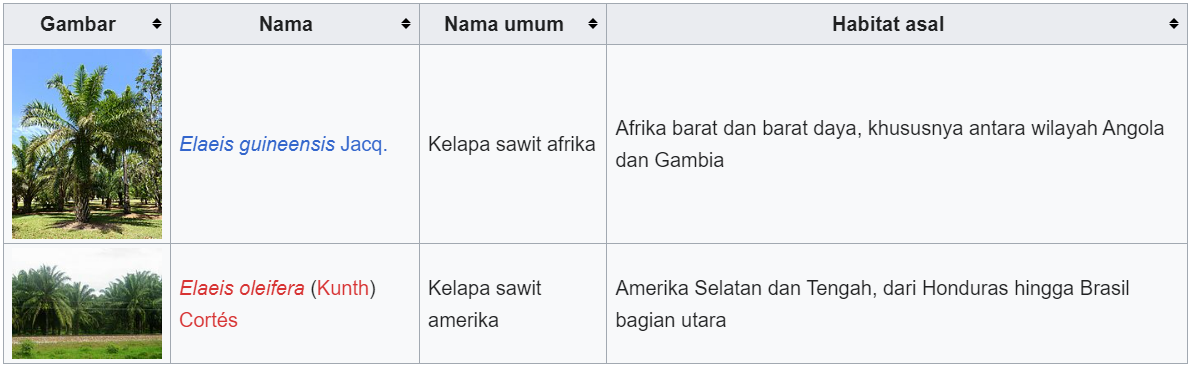
About the Oil Palm Plant
Oil palm belongs to the Arecaceae family (palms), growing as a tree with a single trunk. Mature trees can reach more than 20 meters in height, with pinnate leaves 3–5 meters long and densely packed fronds.²
Botanically, the oil palm fruit has three useful parts:³
- Exocarp — the outermost skin, which is reddish and smooth.
- Mesocarp — the fibrous flesh containing crude palm oil (CPO).
- Endocarp — the hard shell protecting the kernel, which yields palm kernel oil (PKO).
Superior Varieties: Dura, Pisifera, and Tenera
Based on shell thickness, oil palm is divided into three varieties:⁴
- Dura — thick shell with about 18% oil per bunch; generally produces large fruit bunches.
- Pisifera — has no shell and no economic kernel; its female flowers tend to be sterile, so it rarely produces fruit and is often used as the male parent in seed breeding.
- Tenera — a cross between Dura and Pisifera, considered superior seed because its shell is thin yet remains fertile; it can produce up to 28% oil per bunch. Commercial Tenera is the most widely planted variety in Indonesian plantations.
Growing Requirements
Oil palm grows optimally in tropical regions with temperatures of 24–28 °C, altitudes of 1–500 meters above sea level, and humidity of 80–90%.⁵ It requires high rainfall of about 1,500–4,000 mm per year and 5–7 hours of sunlight daily. For this reason, planting distance is set at about 9 × 9 meters so each tree receives enough light. The most suitable soil types are podzolic, latosol, and alluvial; productivity on podzolic soil is generally higher than on sandy or peat soil.
The Role of Oil Palm in Indonesia
Indonesia is the world’s largest producer of palm oil. The palm oil industry is the backbone of the national economy: it absorbs millions of workers, drives downstream sectors such as biodiesel and oleochemicals, and contributes significantly to foreign exchange through exports. With sustainable management — including ISPO (Indonesian Sustainable Palm Oil) practices — oil palm continues to be a flagship commodity that balances economic, social, and environmental interests.⁶
References
¹ Directorate General of Plantations, Ministry of Agriculture of the Republic of Indonesia, “Indonesian Plantation Statistics: Oil Palm”, https://ditjenbun.pertanian.go.id/
² State Islamic University of Sultan Syarif Kasim Riau, “Morphological study and classification of oil palm (Elaeis guineensis Jacq.)”, https://repository.uin-suska.ac.id/15043
³ Brawijaya University, “Botanical study and growing requirements of oil palm”, https://repository.ub.ac.id/10885
⁴ State Islamic University of Sultan Syarif Kasim Riau, “Oil palm varieties: Dura, Pisifera, and Tenera”, https://repository.uin-suska.ac.id/16582
⁵ University of Lampung, “Morphology and growing requirements of oil palm”, https://digilib.unila.ac.id/3517
⁶ Indonesian Palm Oil Association (GAPKI), “Publications and Palm Oil Industry Data”, https://gapki.id/