Oil Palm Rejuvenation for Smallholders (PSR): Progress, Requirements, and Challenges
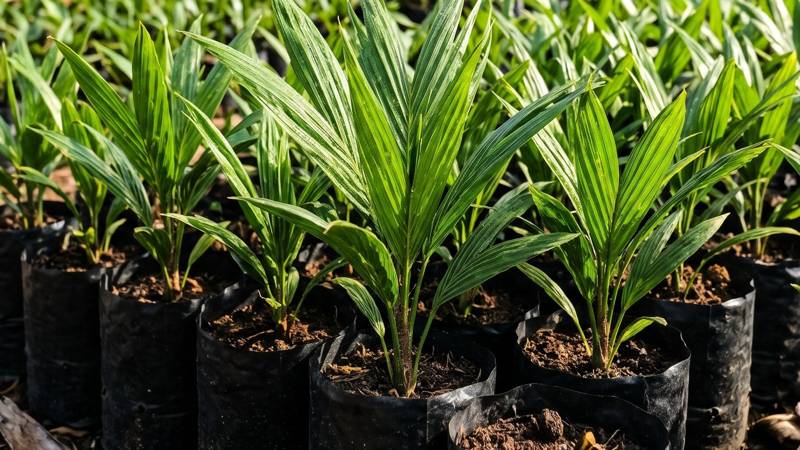
Oil Palm Rejuvenation for Smallholders (PSR) is a national programme to replace old or low-productivity oil palm trees owned by smallholders with new, more productive planting material. The programme has been running since 2017.
What Is the Background of the PSR Programme?
Smallholder oil palm plantations cover 41% of the national total of 16.83 million hectares and provide a livelihood for more than 7 million farming families. National CPO productivity in 2025 averaged only about 3.6 tonnes per hectare per year. PSR is regarded as one of the strategic steps to raise productivity.
Where Does the PSR Funding Come From?
PSR funds are managed by the Plantation Fund Management Agency (BPDP), formerly known as BPDPKS. Its legal basis is Presidential Regulation Number 132 of 2024 on Plantation Fund Management. The funds are collected from levies on exports of plantation commodities and/or their derivatives.
Progress of the PSR Programme
Data from the Ministry of Agriculture (Directorate General of Plantations) as of mid-October 2026:
- Technical recommendations: 444,303 ha covering 200,890 smallholders across 21 provinces (±37% of target).
- Uprooting of old trees: 341,893 ha.
- Replanting: 320,707 ha (±72% of the recommended land area).
- BPDP funds disbursed: Rp12.48 trillion for 438,217 ha / 196,846 smallholders (2016–30 September 2026).
Note: the technical recommendation and fund disbursement figures come from two institutions using different measurement bases, so they should be read separately.
How Large Is the PSR Grant per Hectare?
- At the start of the programme (2017): Rp25 million/ha
- From 2020: Rp30 million/ha
- Since 1 September 2024: Rp60 million/ha
The increase to Rp60 million was established through the Decision of the President Director of BPDPKS Number Kep-252/DPKS/2024. The grant is capped at 4 ha per person.
What Are the Requirements to Join PSR?
- Institutional: a farmers’ group, a federation, or a cooperative, with at least 20 smallholders or a contiguous area of ≥50 ha.
- Land legality: a land title certificate or a statement of physical possession.
- Land status: not inside forest areas and not on land held under HGU (Right of Exploitation) titles.
- Plant criteria: age >25 years; and/or productivity ≤10 tonnes FFB/ha/year at age ≥7 years; and/or non-superior planting material.
- Grant cap: maximum 4 ha per person.
- Intercrop: upland rice must be planted.
What Is the PSR Application Process?
Regency/city government channel: the smallholder institution submits a proposal to the head of the local plantation office; documents and the field are verified; a CP/CL decree is issued by the regent/mayor; then the Director General of Plantations provides a technical recommendation to BPDP.
Partnership channel: the smallholder institution partners with a plantation company to submit a proposal to the Director General, accompanied by a company statement letter; verification is carried out by a surveyor appointed by BPDP.
What Are the Main Challenges of PSR?
- Low smallholder participation because of lost income during the immature period.
- Document completeness, group institutions, and smallholder data consistency.
- Overlapping maps and unclear land status (forest areas/HGU land).
- Frequent summonses by law enforcement, which discourages both smallholders and local officials.
How Is the PSR Programme Being Accelerated?
Simplified procedures. The Ministry of Agriculture is preparing a draft new ministerial regulation: submission via the online PSR application, verification by a surveyor assigned by the regency/city plantation office, a CP/CL decree by the regent/mayor, and mentoring for smallholders.
Partnerships with companies. Partner companies must hold a plantation business rating of at least class III, their own processing facilities or a mill partnership, heavy equipment, and a seed source. Partnerships provide technical mentoring, access to superior planting material, proposal assistance, and guaranteed FFB marketing.
IPOS Forum 2026 recommendations. The forum in Medan (29–30 October 2026) produced six recommendations; two relate to PSR: resolving legal uncertainty and land-agriculture/forest overlaps, and measuring PSR success based on real on-farm results rather than only fund disbursement.
Key Legal References
- Presidential Regulation Number 132 of 2024 on Plantation Fund Management (in force 18 October 2024).
- Minister of Agriculture Regulation Number 5 of 2025 (in force 10 February 2025), revoking Permentan 3/2022 & 19/2023.
- Decision of the President Director of BPDPKS Number Kep-252/DPKS/2024 on standard rejuvenation costs.
Frequently Asked Questions (FAQ)
What is PSR? A national programme replacing old or low-productivity oil palm trees owned by smallholders with new, more productive planting material.
How much PSR funding is available per hectare? Rp60 million per hectare since 1 September 2024, capped at 4 hectares per person.
Who can apply for PSR? Smallholder institutions (farmers’ groups, federations, cooperatives, or other smallholder institutions) submit proposals on behalf of their members. The grant is given to smallholders, not companies.
Can land in forest areas or under HGU join PSR? No. Land status must be proven to be outside forest areas and not on HGU land.
How much area has been replanted under PSR so far? 320,707 hectares as of mid-October 2026.
References
- Minister of Agriculture of the Republic of Indonesia. Minister of Agriculture Regulation Number 5 of 2025. https://jdih.pertanian.go.id/sources/files/Permentan_05-2025_sdh_TTE.pdf
- Tempo. “Pemerintah Naikkan Insentif Dana Peremajaan Sawit Rakyat Jadi Rp 60 Juta per Hektar” (Government Raises the Oil Palm Rejuvenation Grant to Rp60 Million per Hectare). October 2024. https://www.tempo.co/ekonomi/pemerintah-naikkan-insentif-dana-peremajaan-sawit-rakyat-jadi-rp-60-juta-per-hektar-368124
- GAPKI. “Peremajaan Sawit Rakyat Masih Tertinggal, Deregulasi Disiapkan” (Oil Palm Rejuvenation Still Lags, Deregulation Prepared). 2 November 2026. https://gapki.id/news/2026/11/02/peremajaan-sawit-rakyat-masih-tertinggal-deregulasi-disiapkan/
- Media Indonesia. “PSR Dinilai Jadi Kunci Dongkrak Produktivitas Sawit Nasional” (PSR Seen as Key to Boosting National Palm Oil Productivity). 2026. https://mediaindonesia.com/ekonomi/892011/psr-dinilai-jadi-kunci-dongkrak-produktivitas-sawit-nasional
- President of the Republic of Indonesia. Presidential Regulation Number 132 of 2024. https://peraturan.bpk.go.id/Details/305311/perpres-no-132-tahun-2024
- Hukumonline. “Perpres Pengelolaan Dana Perkebunan Perluas Cakupan hingga Pembentukan BPDP” (Plantation Fund Regulation Expands Coverage to the Establishment of BPDP). November 2024. https://www.hukumonline.com/berita/a/perpres-pengelolaan-dana-perkebunan-perluas-cakupan-hingga-pembentukan-bpdp-lt6732bb9346611
- Republika. “Realisasi PSR Capai 438 Ribu Hektare, Industri Sawit Dorong Percepatan Peremajaan” (PSR Realisation Reaches 438 Thousand Hectares, Palm Oil Industry Pushes Rejuvenation Acceleration). 2 November 2026. https://ekonomi.republika.co.id/berita/tnvnsn370/realisasi-psr-capai-438-ribu-hektare-industri-sawit-dorong-percepatan-peremajaan
- InfoSAWIT Sumatera. “Dana Peremajaan Sawit Rakyat (PSR) Sah Naik Jadi Rp 60 juta Per ha” (PSR Grant Officially Increases to Rp60 Million per Ha). 13 September 2024. https://sumatera.infosawit.com/2024/09/13/dana-peremajaan-sawit-rakyat-psr-sah-naik-jadi-rp-60-juta-per-ha/
- Periskop.id. “Harga Sawit Tinggi, BPDP Sebut Banyak Petani Tunda Peremajaan Kebun” (High Palm Prices, BPDP Says Many Farmers Postpone Rejuvenation). 30 July 2026. https://periskop.id/industri/20260730/harga-sawit-tinggi-bpdp-sebut-banyak-petani-tunda-peremajaan-kebun