Dura, Tenera, and Pisifera
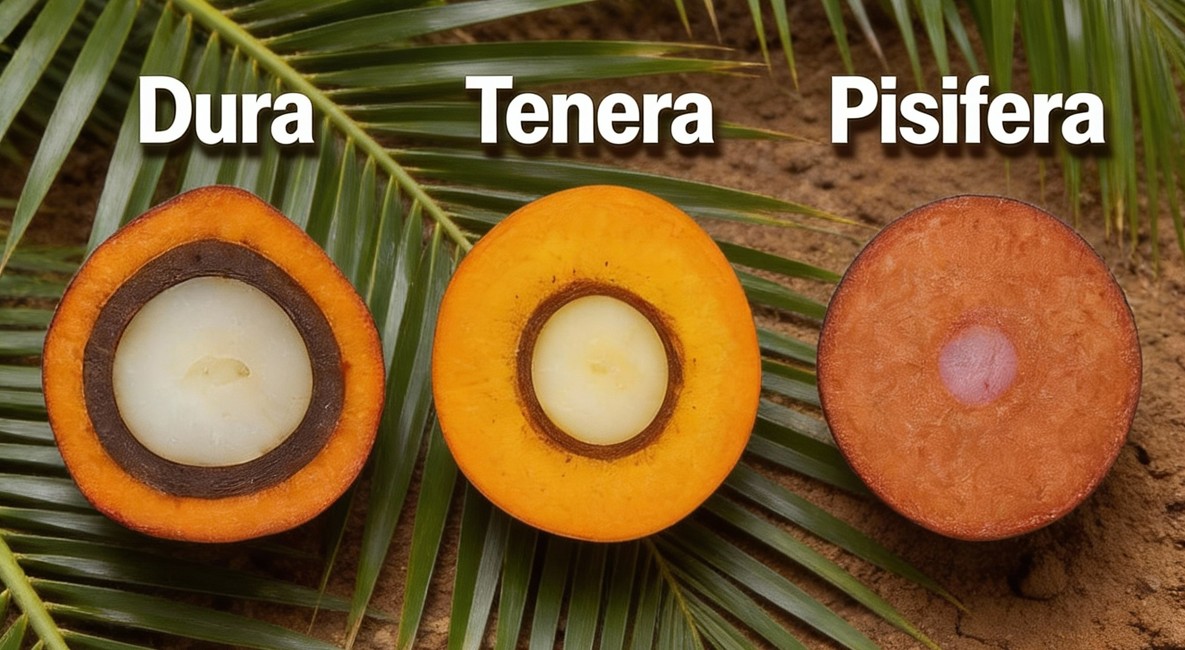
Dura, Tenera, and Pisifera are the three types of oil palm (Elaeis guineensis) classified according to the thickness of the fruit shell. The pisifera type essentially has no kernel and shell, tenera has a shell thickness of 12.5 mm, and the dura type has a thick shell (25 mm). All three play an important role in oil palm breeding programs to produce superior seeds.
Dura
Dura has a thick shell with fruit flesh (mesocarp) that is relatively thin compared to the other types, as well as a large kernel. Because of its high kernel content, Dura is often the main source of palm kernel oil (PKO) production. In breeding programs, Dura serves as the female parent, which is crossed with Pisifera to produce Tenera.
Pisifera
Pisifera essentially has no shell covering its kernel its fruit consists only of yellow mesocarp (fruit flesh) and part of a white kernel. Because it has no shell, the female flowers of Pisifera are generally sterile/not fertile, so this type rarely produces fruit bunches naturally and is not cultivated directly for commercial production. In breeding programs, Pisifera serves as the male parent (pollen source) that is crossed with Dura.
Tenera: The Superior Cross Result
The cross between Dura and Pisifera palm produces a hybrid offspring called Tenera. Tenera inherits the best traits from both parents: a thin shell like Pisifera, but female flowers that remain fertile like Dura, so it can produce fruit bunches normally.
Genetically, this trait is controlled by a single gene regulating shell thickness. Dura is homozygous (ShSh), Pisifera is homozygous recessive (shsh), while Tenera is heterozygous (Shsh), the result of crossing the two.
The main advantage of Tenera is its oil productivity. Hybrid Tenera fruit produces about 30% more oil than both of its parents. Some superior Tenera varieties even have a flesh percentage per fruit of up to 90%, with an oil content per bunch that can reach 28%.4
Why Tenera Is the Industry’s Top Choice
Almost all commercial oil palm plantations in Indonesia and the world today use Tenera seeds. Besides its high oil yield, Tenera’s thin shell is easier to crack in the processing mill without damaging the machinery. In contrast, the Dura type has a yield of about 16%, and its palm kernel oil (PKO) is difficult to utilize because its shell is hard to crack and can damage mill machinery.
Relevance to the Indonesian Palm Oil Industry
The selection of certified superior Tenera seeds, produced from seed sources with selected collections of Dura and Pisifera parents, is one of the determining factors for the productivity of oil palm plantations in Indonesia. The use of illegal or uncertified seeds which are often ordinary Dura type risks reducing farmers’ productivity and oil yield in the long term.
References
INSTIPER Journal, “Study of the Characteristics of 3 Oil Palm Varieties on Podzolic Soil”, https://jurnal.instiperjogja.ac.id/index.php/JOM/article/download/904/542/5301
Akvopedia, “Sustainable Oil Palm Cultivation / Tenera, Dura, and Pisifera”, https://akvopedia.org/wiki/Budidaya_Kelapa_Sawit_Berkelanjutan_/_Tenera,_Dura,_dan_Pisifera
East Kalimantan Plantation Agency, “Tenera: The Superior Palm Type for Commercial Use”, https://disbun.kaltimprov.go.id/artikel/tenera-tipe-sawit-unggul-untuk-komersil
4 PKT Group, “Understanding Oil Palm and the Types of Oil Palm”, https://pkt-group.com/sawitnotif/pengertian-kelapa-sawit-dan-jenis-jenis-kelapa-sawit/2/