Plasma vs Independent Smallholder Palm Oil: What’s the Difference?
Within Indonesia’s smallholder oil palm plantation structure, two land ownership schemes are often mentioned side by side but are actually quite different: Plasma and independent smallholder (Swadaya) palm oil. Understanding the difference between the two is important because it is closely related to government programs such as PSR (Smallholder Oil Palm Replanting).
What is Plasma Palm Oil?
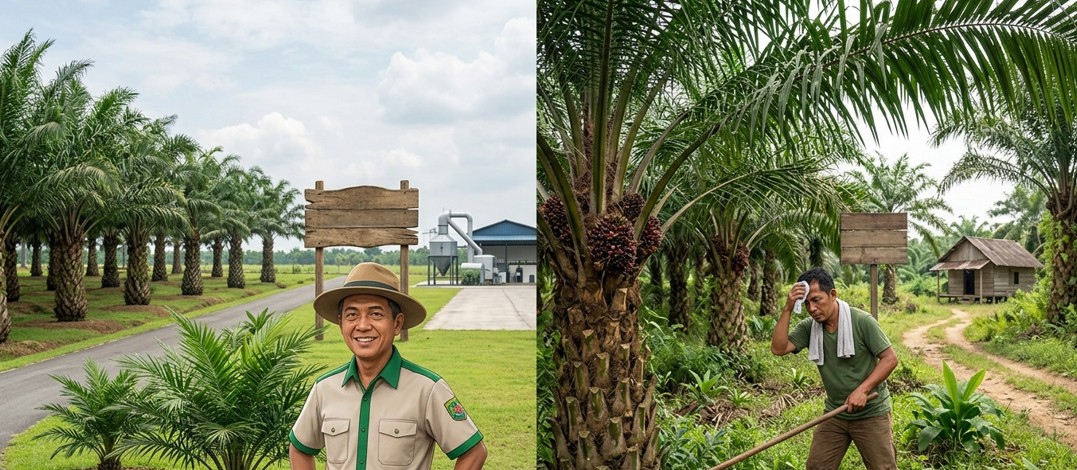
Plasma palm oil is a partnership scheme between large plantation companies (called the “nucleus”) and the farmers around them (called the “plasma”) a term inspired by the biological cell model, in which the nucleus helps maintain, manage, and accommodate the produce of the plasma estates. In practice, a number of companies commit themselves to allocating part of the plantation area they develop (generally around 20%) to be managed as plasma estates owned by the surrounding community. This scheme was also initially linked to the transmigration program, in which partner farmers took part in the government-sponsored resettlement of people to islands such as Kalimantan and Sumatra to open up oil palm land.
What is Independent Smallholder (Swadaya) Palm Oil?
Independent smallholder palm oil (also called self-funded/independent farmers) refers to farmers who manage their own oil palm gardens without any formal partnership ties to a nucleus company. Unlike plasma farmers, who receive technical guidance from the nucleus estate or the relevant agencies, independent smallholders generally receive less information and assistance regarding sustainable oil palm cultivation.
Characteristic Comparison
Note: land area proportions and productivity figures may vary across sources and study regions.
National Scale: Independent Smallholders Dominate
According to data compiled by the Oil Palm Farmers Union (SPKS), around 64% of smallholder oil palm land is owned by independent smallholders, while the remaining 36% is owned by plasma farmers.4 As an example of implementation at the corporate level, one major plantation group recorded its 2023 FFB supply composition as 64% from its own estates, 29% from independent smallholders, and 7% from plasma/partnership farmers.
Price Stability and Challenges Faced
The government is encouraging the strengthening of independent smallholder institutions, given that they are more vulnerable to selling price fluctuations than plasma/partner farmers, who have purchase certainty through contracts with palm oil mills.5 Even so, the plasma scheme itself is not without criticism some plasma farmers complain of unfair profit sharing and land areas that do not match the initial agreement, and consider that various palm oil policy incentives are enjoyed more by large corporations than by independent smallholders, who in fact dominate the amount of land.6
Relevance to the Indonesian Palm Oil Industry
Understanding the difference between the plasma and independent smallholder schemes is important because both face different challenges in accessing government programs such as PSR: plasma farmers generally find it easier to access programs through institutions already established together with the nucleus company, while independent smallholders although more numerous nationally still face institutional and land legality obstacles, which are the main prerequisites for disbursing replanting assistance.
References
Gokomodo, “Learn the Difference Between Nucleus Oil Palm Plantations and Plasma Oil Palm Plantations”, https://gokomodo.com/blog/ketahui-perbedaan-perkebunan-inti-sawit-dan-perkebunan-plasma-sawit
ANJ Group, “Farmer Empowerment”, https://www.anj-group.com/id/kemitraan
AGROFORETECH Journal, “Productivity of Plasma and Independent Smallholder Oil Palm Plantations”, https://jurnal.instiperjogja.ac.id/index.php/JOM/article/view/902
4 Liputan6, “Plasma Partnership Scheme for Oil Palm Deemed to Harm Farmers”, https://www.liputan6.com/bisnis/read/4328436/skema-kemitraan-plasma-kelapa-sawit-dinilai-rugikan-petani
5 Haisawit, “Plasma FFB Prices Stable, Deputy Agriculture Minister Encourages Independent Smallholders to Switch to Partnership Schemes”, https://haisawit.co.id/news/detail/harga-tbs-sawit-plasma-stabil-wamentan-dorong-petani-swadaya-beralih-ke-skema-kemitraan
6 Liputan6, “Plasma Partnership Scheme for Oil Palm Deemed to Harm Farmers”, https://www.liputan6.com/bisnis/read/4328436/skema-kemitraan-plasma-kelapa-sawit-dinilai-rugikan-petani