What Is Palm Kernel Expeller (PKE)?
Palm Kernel Expeller (PKE), also known as oil palm kernel cake, is a by-product generated from the extraction of palm kernel oil (Palm Kernel Oil/PKO)5.
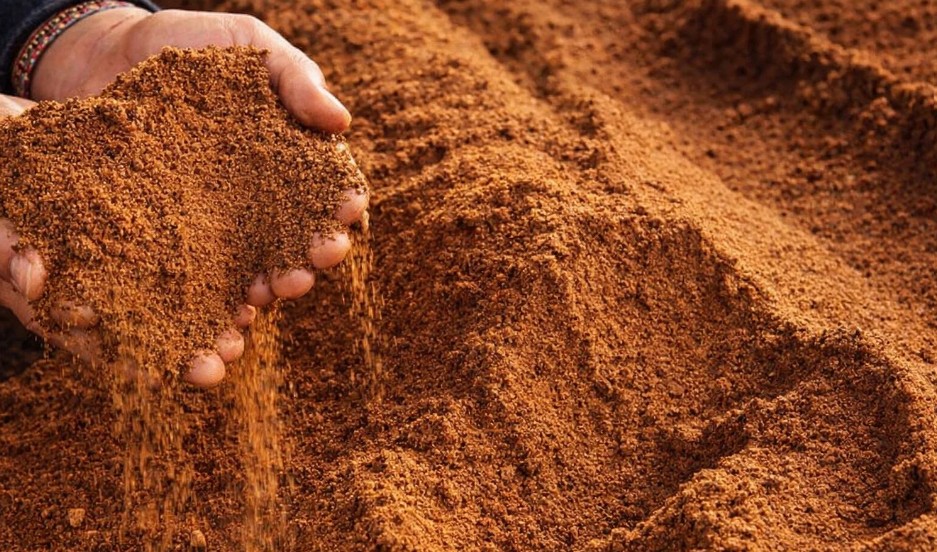
After the palm kernels are pressed to extract the oil, a solid residue called PKE remains. This product comes in the form of granules or lumps, colored brown to reddish brown, and still contains significant amounts of protein, fat, and fiber.
Although it is a by-product, PKE is not waste. In the palm oil industry, PKE has high economic value and is widely used as a raw material for animal feed and as an export commodity.
How PKE Is Formed
In brief, PKE is formed through the following stages:
- Fresh Fruit Bunches (FFB) are processed at a Palm Oil Mill (POM) into Crude Palm Oil (CPO) and kernels.
- The kernels are then sent to a kernel processing plant or Kernel Crushing Plant.
- The kernels are pressed using a mechanical machine (screw press) to produce Palm Kernel Oil (PKO).
- The solid residue from this pressing process is called Palm Kernel Expeller (PKE)5.
In this extraction process, the amount of PKE produced can reach approximately 4546% of the weight of the kernels processed6.
Quality Standards and Nutritional Content
Based on SNI 7856:2017 issued by the National Standardization Agency (BSN), palm kernel expeller is classified into two main grades based on its nutritional content.
In general, the standard requires:
- Minimum crude protein of 1416%
- Maximum crude fat of 910%
- Maximum crude fiber of 1620%
- Maximum moisture content of 12%
- Maximum ash content of 56%
- Maximum shell content of 1015%
In addition, PKE also contains important minerals such as phosphorus (P), zinc (Zn), and manganese (Mn) in relatively high amounts. Its metabolizable energy ranges from 2,5822,682 kcal/kg6, making it a good alternative energy source in livestock rations.
Utilization of PKE
As Feed for Ruminant Livestock
PKE is most widely used for ruminant livestock such as cattle, goats, and sheep. Research and technical recommendations show that:
- In beef and dairy cattle, PKE can be used up to 6570% in certain ration formulations.
- In goats and sheep, its use can reach about 30% of the total ration.
Feeding PKE to cattle has been reported to increase body weight gain by about 0.61 kg per day. In dairy cows, the use of PKE in concentrate can also increase milk production and reduce feed costs.
For Poultry (With Additional Processing)
Because of its fairly high crude fiber content, PKE is not optimal when fed directly to poultry. Therefore, fermentation or additional processing is needed to improve digestibility and reduce fiber content6. After fermentation, PKE can be used at 515% in poultry rations6.
As an Export Commodity
In addition to domestic needs, PKE is also one of Indonesia’s export commodities. This product is shipped to various countries as a raw material for the animal feed industry. In the palm oil downstream value chain, PKE contributes to increasing industrial added value as well as national foreign exchange earnings4.
Economic and Industrial Significance
The existence of PKE shows that the palm oil industry applies the principle of complete utilization (zero waste concept). Every part of the processing output has economic value, including by-products such as PKE.
Besides helping reduce dependence on imported soybean meal, the use of PKE can also cut animal feed production costs by up to 1420%.
Thus, PKE plays a strategic role in both the national plantation and livestock sectors.
References
Agricultural Research and Development Agency of Bangka Belitung (2024). Quality Standards of Palm Kernel Expeller as a Feed Ingredient to Support Ruminant Livestock Rations. https://babel.brmp.pertanian.go.id/berita/standar-mutu-bungkil-inti-sawit-sebagai-bahan-pakan-untuk-menunjang-ransum-ternak-ruminansia
Plantation Office of Kutai Kartanegara (2024). Palm Kernel Expeller as Animal Feed. https://disbun.kukarkab.go.id/artikel/bungkil-inti-sawit-sebagai-pakan-ternak
Media Perkebunan (2024). Palm Kernel Cake: Nutritional Content, Benefits, and Processing Methods. https://mediaperkebunan.id/bungkil-sawit-kandungan-nutrisi-manfaat-dan-cara-pengolahan/
4 Aprian, G. B. & Irawan, F. (2023). Review of Value Added Tax on Palm Kernel Expeller After the Supreme Court Decision Number 70P/HUM/2013. Jurnal Pajak dan Keuangan Negara (PKN), STAN. https://jurnal.pknstan.ac.id/index.php/pkn/article/view/2316
5 Plantation Office (2023). Palm Kernel Expeller as Animal Feed. https://disbun.kukarkab.go.id/artikel/bungkil-inti-sawit-sebagai-pakan-ternak