SANUR, Bali – Two studies recently conducted on the relations of oil palm plantations and orangutan have concluded that orangutans and palm plantations can coexist under a sustainable and mutually beneficial management system.
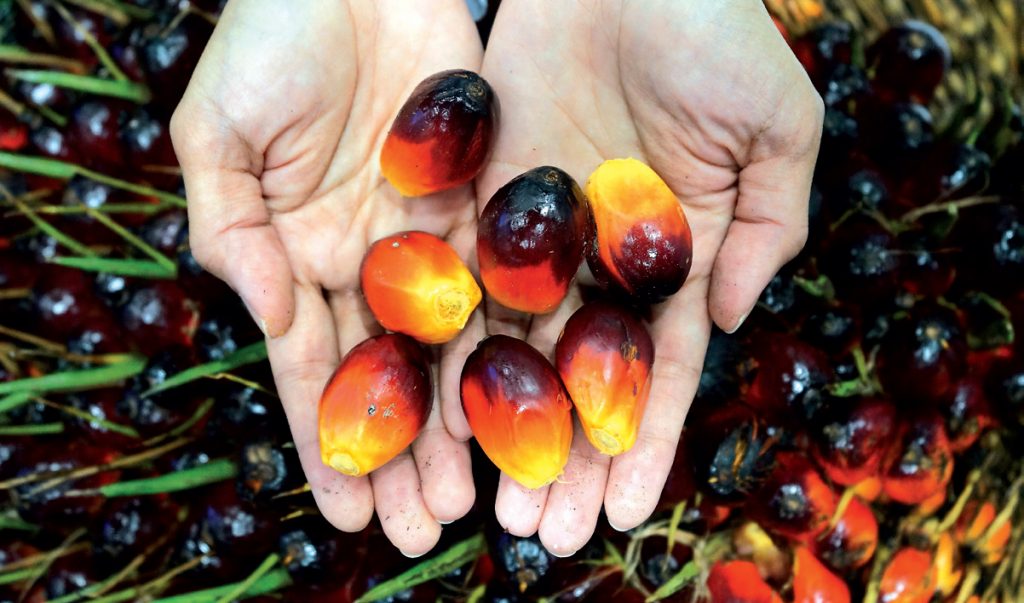
The studies debunked the claim made by a number of green NGOs that oil palm plantations disrupted the life of orangutans. On the other hand, orangutans were considered to be able to disturb oil palm cultivation.
Mark Ancrenaz, a scientific researcher of the Sabah Wildlife Department, and Irfan Bakhtiar, Director of Climate and Market Transformation Program at the independent conservation organization World Wildlife Fund (WWF) Indonesia, revealed the coexistence issue of orangutans and oil palm plantations during the International Conference on Oil Palm and Environment (ICOPE) 2025 at the Bali Beach Convention, Bali, Wednesday (13/02/2025).
Ancrenaz said that based on their study, they saw the behavior change of orangutans which can adapt to the condition in oil palm plantations. “When I first worked in Borneo 25 years ago, scientists believed that orangutans could only survive in primary forests,” he said.
However, over time, that understanding began to change. Recent research shows that orangutans can adapt and survive in secondary forests, even in oil palm plantations. “We want to know why they behave that way,” Ancrenaz said.
According to him, the aim of orangutans moving to oil palm plantations is to look for food such as young fronds. On the other hand, in his research he refuted the myth that orangutans are destroyers of oil palm plantations, meaning that the damage caused by their presence is often exaggerated by palm growers. “The disturbance caused by orangutans is actually very minimal,” he added.
Ancrenaz and his team have conducted a two-year study to understand interactions between orangutans and oil palm plantations. One of the findings was that within two years, the production of plantations exposed to orangutans was as good as those without.
This shows that orangutans can live side by side with humans and plantations without sacrificing palm productivity. “Therefore, palm industry players need to change the way they view the orangutans and other wildlife that visit their oil palm plantations,” he said.
“More than 1,000 animals in the oil palm plantations are in good health. If they are captured and relocated, the risk of disease and stress increases. Usually, after relocation many of them did not survive,” he said.
By considering the facts, Ancrenaz proposed a system of coexistence as a solution for both the palm growers and orangutans which need the existence of forests as their habitat. “We need to build a more resilient ecosystem. Every 25 years, we have to replant, and this is an opportunity to create a better landscape for orangutans and humans,” he said.
He added that more than 300 thousand hectares of land will be replanted in the next few years, creating opportunities to increase sustainability for both agriculture and conservation.
“If we can create an environment where orangutans feel safe, their level of aggressiveness will decrease,” he concluded.
Meanwhile, Irfan Bakhtiar of the WWF Indonesia, revealed that orangutans could live side by side with human and oil palm plantations under a sustainable system of agroforestry, combining the palm plantations with other productive plants as corridors to surrounding forests to enable the orangutans to survive.
“A pilot project of agroforestry that we developed has shown such potential opportunity for the coexistence with orangutans,” he said during the ICOPE 2025 in Sanur, Denpasar, Bali, on Thursday (14/02/2025).
According to him, orangutans cannot live side by side if oil palm plantations are managed under a pure system of monoculture or in one stretch of all oil palm plantations.
He said that the agroforestry system applies certain corridors or arrangements by adding other kinds of productive plants, such as fruit trees, coconut trees and other trees which have the potential to function as nests or extended habitat of orangutans.
“For example, by sacrificing five to 10 lines of oil palm trees, there a land area is created to plant fruit trees that will function as corridors to link to surrounding forests. Our colleagues in Malaysia have done that and they proved it is possible,” he said.
He said that they had developed an agroforestry pilot project in oil palm plantations in collaboration with palm growers in Jambi and Central Kalimantan.
He said that the local trees planted on the pilot land area, which is not too large at around 10 Ha, include petai, jengkol, candlenuts, and others.
“So far, there have been no sightings of orangutans, but we saw indications of their presence from the existence of their temporary nests,” he said. (*) Source: sawitindonesia.com