By Eddy Martono, Chairman of the Indonesian Palm Oil Association (GAPKI)
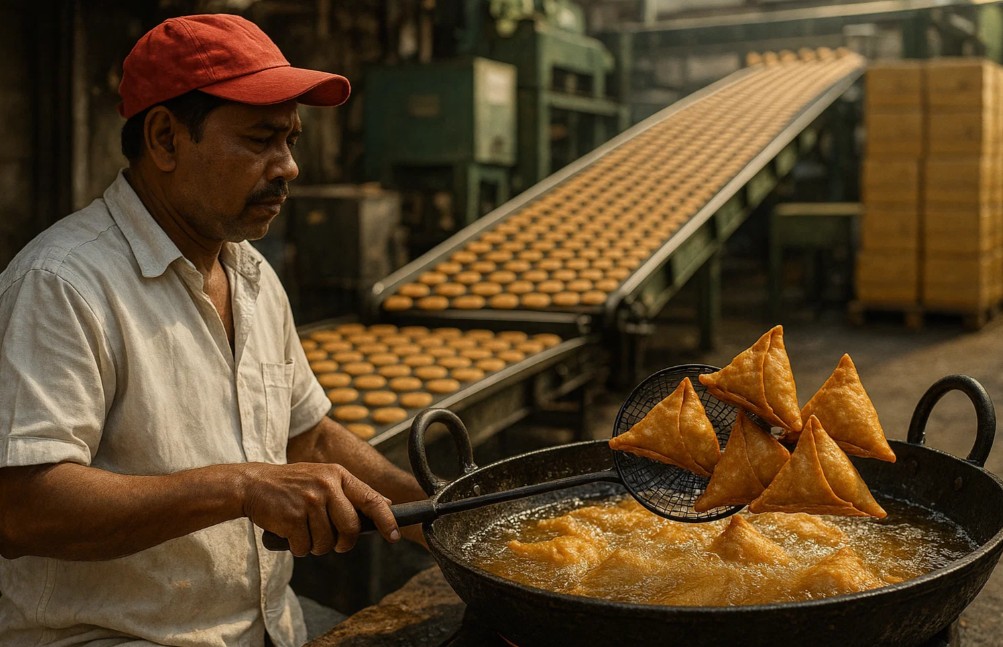
From the sizzling pan of a bustling samosa stall in Mumbai to the conveyor belts of India’s largest biscuit factories, palm oil is the silent enabler powering one of India’s fastest-growing industrial sectors — food processing. More than a cooking medium, it links farms to factories, Indonesia’s plantations to India’s kitchens, and affordability to accessibility for millions of households.
As India strengthens food security goals and Indonesia maintains its position as the world’s largest producer, the palm oil trade has become an economic corridor that fuels industrial expansion, creates jobs, and stabilizes prices. In a sector where every rupee of input cost affects millions of plates, palm oil in food products is a cornerstone of growth and resilience.
Driving Growth in India’s Food Processing Industry
India’s food processing sector is a transformation hub that turns raw produce into higher-value goods, reduces wastage, and supports rural livelihoods. According to the Ministry of Food Processing Industries (MoFPI), it contributes 8.6 percent to agricultural GVA and 11.6 percent to manufacturing GVA, employing over 11.4 million people directly and 35 million indirectly.
As per IBEF, the industry was valued at USD 336.4 billion in 2023 and is projected to reach USD 735.5 billion by 2032 at a CAGR of 8.8 percent. Moreover, processed food exports touched USD 8.4 billion in FY 2023–24, driven by rising demand in Asia, the Middle East, and Africa.
At the heart of this growth lies the steady supply of edible oils, with palm oil making up 62 percent of India’s edible oil imports. The Department of Food and Public Distribution (DFPD) reported that in FY 2023–24, India imported about 8.3 million tonnes of palm oil, making it the largest importer globally. This flow allows edible oil manufacturers to keep costs competitive, enabling affordable snacks, biscuits, noodles, and frozen foods.
Powering India’s Food Value Chain
Palm oil’s dominance stems from both function and economics. Its high oxidative stability, semi-solid nature, and neutral taste make it ideal for frying, baking, and shelf-life extension. Yielding four tonnes per hectare, it far surpasses crops like soybean and sunflower, making it the most cost-effective choice for palm oil suppliers.
The price advantage is clear. According to SEA’s August 2025 data, crude palm oil (CIF Mumbai) was priced at USD 1,155 per tonne, compared to USD 1,191 for soybean oil and USD 1,250 for sunflower oil, indicating that palm oil remains demonstrably cheaper by approximately 3–8 percent. This helps keep the refined palm oil price stable, crucial for affordability in price-sensitive rural and semi-urban markets. In rural India, palm oil accounts for more than 60 percent of total edible oil consumption, according to NITI Aayog.
From the crispy layer of a paratha to the golden fry of potato chips, palm oil in food products ensures quality and taste consistency while enabling small and medium food processors to scale operations.
Building the Indonesia–India Supply Chain
Indonesia, producing 48 million tonnes of crude palm oil (CPO) in 2023 (USDA), exported around 30 million tonnes. India bought 4.2 million tonnes from Indonesia in FY 2023–24 (DGFT), accounting for nearly half of its palm oil imports.
This partnership offers predictability in an industry prone to price shocks. A stable corridor shields Indian processors from sudden spikes in palm oil cooking price caused by weather, freight, or biofuel policy changes.
The Institute for Development of Economics and Finance (INDEF) notes that this integration benefits both sides, foreign exchange earnings and jobs for Indonesia, and steady pricing for Indian bulk palm oil suppliers and palm oil traders in India.
Creating Jobs and Boosting Industrial Growth
Every tonne of palm oil refined in India triggers economic activity. With refining capacity exceeding 24 million tonnes annually, the sector sustains refineries, packaging units, and distribution hubs.
Industry estimates suggest that each 1 million tonnes of palm oil processed domestically supports around 25,000 direct jobs and about 100,000 indirect jobs in logistics, packaging, and allied services. The palm oil demand in India also boosts rural incomes — NITI Aayog reports value addition can raise farmer earnings by up to 60 percent versus raw commodity sales.
Affordable palm oil also helps food processors maintain competitive pricing, supporting domestic demand and export growth. It’s a system where crude palm oil importers and processors grow in tandem.
Addressing Challenges and Unlocking Opportunities
Import reliance leaves India exposed to volatility. Weather disruptions in producing nations, policy shifts, and freight crises can lift palm oil price today, affecting retail food prices. The OECD-FAO projects India’s edible oil consumption will rise from about 25.2 million tonnes in 2024 to around 31.5 million tonnes by 2030, with palm oil retaining the largest share due to cost advantages.
Opportunities lie in adopting Indonesia’s downstream model, producing derivatives like specialty fats, oleochemicals, and high-value food ingredients. This can reduce dependency on imported finished goods, increase exports, and strengthen domestic resilience.
Shaping Policy and Trade Pathways
Bilateral trade agreements with Indonesia can safeguard supply even during market turbulence. India’s National Mission on Edible Oils – Oil Palm (NMEO-OP), with INR 11,040 crore funding, aims to expand cultivation to 1 million hectares by 2025–26. While self-sufficiency will take time, refining imported palm oil domestically can immediately boost value addition and employment. can immediately boost value addition and employment.
Aligning policy with institutions like INDEF ensures supply security, affordability, and sustainability keeping the palm oil industry news centred on growth, not shortages.
Concluding the Growth Story
In India’s food processing narrative, palm oil is a central pillar. It keeps products affordable, industries competitive, and rural incomes rising. As Indonesia and India deepen economic ties, this golden oil will continue binding their growth stories.
For India, the future lies in balancing strategic imports, domestic capacity building, and collaborative trade frameworks to ensure palm oil remains a stable, sustainable, and accessible ingredient. For Indonesia, India is not just a buyer but a long-term partner in shaping the global palm oil narrative as a driver of shared prosperity. (*)