Introduction
India’s edible oil economy stands at a strategic juncture where ambitions of self-reliance must be balanced with enduring import dependencies. Annual consumption has reached 25–26 million tonnes (MT), expanding at a compound annual growth rate (CAGR) of 3.5 percent since 2019 (NITI Aayog, 2024). Yet, domestic oilseed production has grown by only 1.3 percent year-on-year, creating a structural gap that cost India USD 19.2 billion in edible oil imports during FY24 (DFPD, 2024).
Palm oil dominates this import basket, accounting for 57 percent of total volumes and nearly one-third of all edible oil consumed in the country. India imports around 9 million tonnes of palm oil annually, valued at over ₹40,000 crore, which alone represents more than half of the country’s total edible oil imports (NMEO–OP, 2024). Palm oil’s dominance is rooted in its agronomic efficiency, oxidative stability, and cost competitiveness.
In 2023, Indonesia alone supplied 2.9 MT, almost one-third of India’s total imports (WITS, 2024), cementing its role as India’s largest and most reliable supplier. Meanwhile, India’s National Mission on Edible Oils–Oil Palm (NMEO–OP) seeks to expand oil palm cultivation by 1 million hectares by 2026. Yet, ecological assessments suggest only 0.68 million hectares are truly viable.
Even under optimal conditions, India will still require 7–8 MT of palm oil imports by 2030, underscoring the inevitability of continued dependence. The core policy dilemma, therefore, is not about eliminating imports, but about managing them strategically while scaling viable domestic production.
This brief analyses India’s edible oil landscape, its domestic constraints, Indonesia’s comparative advantage, and global market dynamics to recommend a pragmatic hybrid framework that secures edible oil resilience through cooperative India–Indonesia partnership.
Understanding India’s Edible Oil Landscape

India’s edible oil sector has grown rapidly over the past decade, driven by rising incomes, urbanisation, and lifestyle changes. The expanding middle class, growth of retail networks, and the rise of food delivery ecosystems have further accelerated demand.
However, this demand-side dynamism has not been matched by equivalent domestic supply. Oilseed production increased from 31.5 MT in 2013–14 to only 38.6 MT in 2023–24.
The oil basket highlights this imbalance. Mustard, soybean, sunflower, and groundnut oils collectively meet just 42 percent of domestic demand. The rest is fulfilled through imports, with palm oil constituting the lion’s share as it is 10–15 percent cheaper than other oils and versatile across industrial, confectionery, and frying applications.
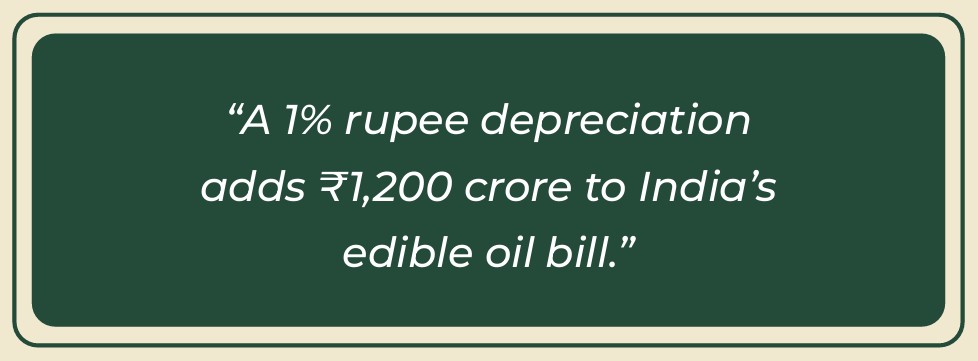
Such dependence creates vulnerabilities. Imports are exposed to global price swings, policy interventions, and exchange-rate volatility. In February 2024, imports fell to 0.89 MT — the lowest Since the 2020 lockdowns, refiners have deferred purchases amid high international prices. By May, volumes rebounded following Indonesia’s easing of export levies and a stabilised rupee (S&P Global, 2024). This volatility reveals the fragility of India’s supply chain and raises critical questions on price stability and food security.
Currency Instability
Currency movements compound these risks. A depreciating rupee inflates import costs even when global prices remain stable, directly impacting consumer prices through what economists term imported inflation. In February 2025, imported inflation for key commodities, including edible oils, spiked to 31 percent, up sharply from just 1.3 percent in June 2024 (PIB, 2025). Such swings underline how macroeconomic stability directly influences edible oil affordability.
Policy Initiatives
The Government of India launched the NMEO–OP in 2021 with a budget of INR 11,040 crore, providing subsidies such as INR 15,000/ha for plantation and an Assured Pricing Mechanism tied to 14.3 percent farmer returns. Yet progress remains slow due to agronomic limitations, economic disincentives, and operational bottlenecks. Given this trajectory, imports will remain indispensable, making Indonesia an essential partner.
Addressing Domestic Production Gaps and Limitations
Despite heavy policy investment, India’s oil palm expansion faces structural barriers.





These constraints show why palm expansion alone cannot bridge India’s edible oil deficit and why imports must remain central to long-term strategy.
Positioning Indonesia as a Strategic Trade Partner
Indonesia anchors India’s palm oil security. Producing 46 percent of global palm oil and 55 percent of global exports, it is the dominant supplier with unmatched logistical advantage (GAPKI, 2024). With average yields of 4.2 t/ha — higher than India’s pilot 3.1 t/ha — and over 52 MT annual refining capacity, Indonesia’s vertically integrated value chain ensures flexibility in crude vs. refined exports. This efficiency is reinforced by palm oil’s unmatched land-use advantage, yielding more oil per hectare than any other crop while supporting millions of Indonesian smallholders through structured company partnerships (PASPI, 2025).
Proximity offers cost advantages. Shipping times from Dumai or Belawan to India’s ports (Kandla, Haldia, Paradip) average under 10 days, compared to longer routes from South America. This cements Indonesia’s role as India’s most cost-effective supplier.
India’s evolving tariff regime has increasingly favoured crude palm oil (CPO), pushing its share of total imports to 83 percent in 2024, up from 68 percent two years earlier. Past tariff loopholes, such as duty-free olein routed via SAFTA, which once comprised 9 percent of imports, highlight how tariff loopholes distort refining and consumer trust (Food Security Portal, 2024). Rationalisation cut such diversions by 60 percent, but risks of arbitrage remain.
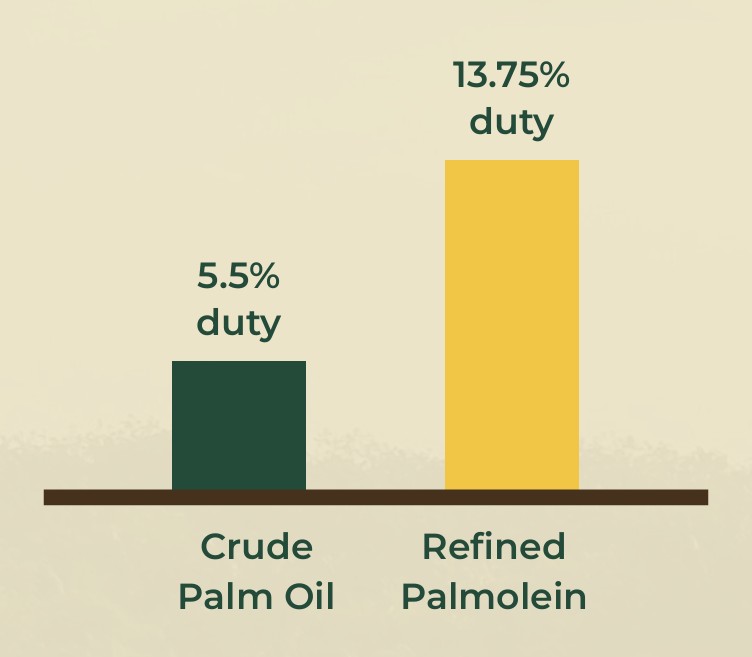
For Indonesia, aligning export offerings with India’s tariff structure, while co-investing in Indian refining and storage infrastructure, will be key to sustaining partnership credibility.
Analysing Market Trends and Consumer Preferences
India’s edible oil market is transforming under health narratives, regulatory scrutiny, and digital consumer awareness.
- Consumer Divergence From 2021–2024, blended oil sales grew at a CAGR of 14 percent, particularly in urban markets, compared to 4 percent growth for refined palm olein retail packs (GlobeNewswire, 2025). Palm oil remains indispensable in institutional channels such as quick service restaurants, bakeries, and packaged snacks, owing to its oxidative stability and shelf life. Palm oil is also a natural source of vitamins A and E, with ongoing studies exploring its role in cancer prevention and its essential use in milk formulas for infant nutrition (GAPKI, 2024).
-
Public Perception Risks Civil society concerns about palm oil’s ecological footprint are rising, often conflating Indonesia’s sustainability record with local Indian cultivation. Draft FSSAI rules on mandatory country-of-origin labelling for blended oils could intensify reputational risks, even when sustainability practices meet global benchmarks. To address these concerns, Indonesia has implemented the Indonesia Sustainable Palm Oil (ISPO) certification and adopted No Deforestation, No Peat, No Exploitation (NDPE) standards across its leading producers.
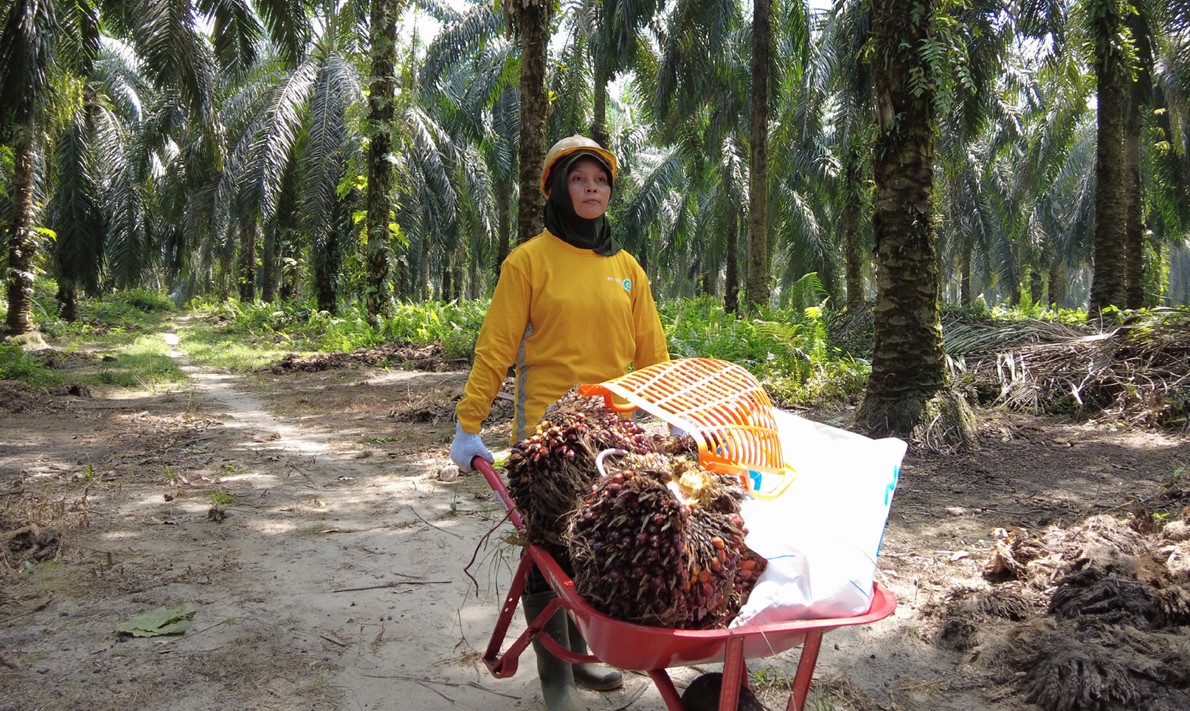
Indonesia must engage early with Indian regulators, trade associations, and consumer councils to clarify sustainability progress on land use, emissions, and smallholder inclusion. Without proactive communication, perception risks may convert into policy barriers.
Exploring Collaborative Opportunities
A transactional trade model must now transition into a strategic development partnership. Opportunities include:
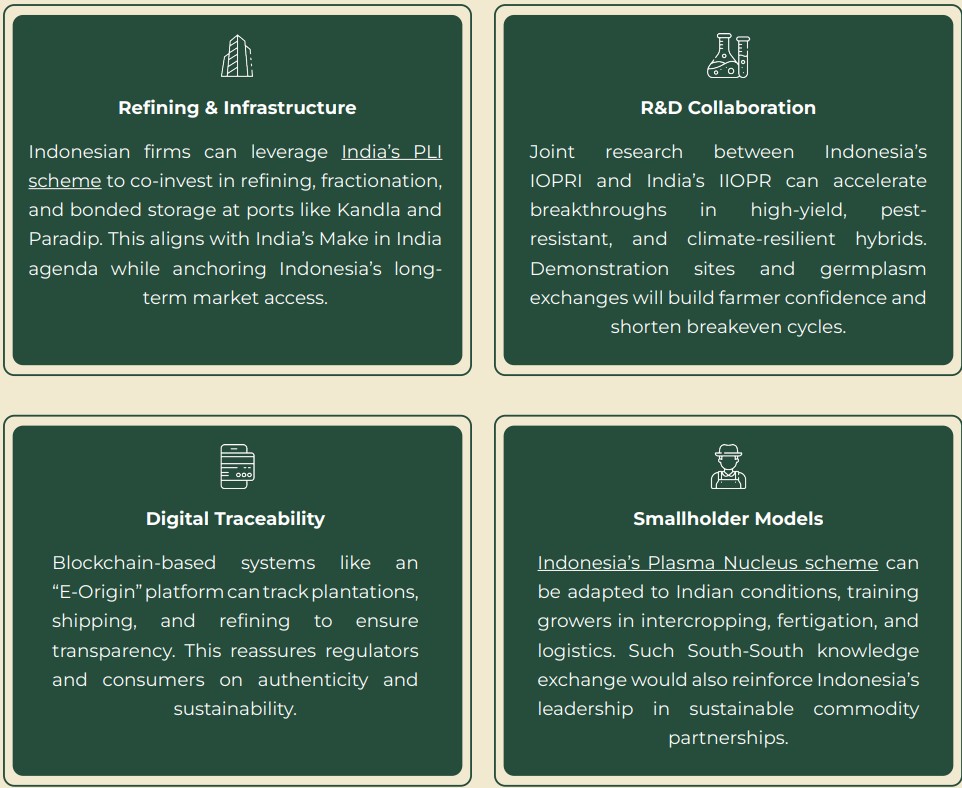
Comparing Strategic Policy Options
India faces two paths:
-
Full import substitution: Replacing 9 MT of imports would require more than 2 million hectares of plantations, INR 40,000 crore in infrastructure, and a decade of investment — outcomes unlikely given ecological and economic constraints.
-
Hybrid approach: Combining targeted expansion with predictable imports offers a more resilient model. Diversification into oils like mustard and rice bran can provide buffers but cannot replace palm’s efficiency.
-
Global precedents highlight pragmatism: Thailand continues to import during shortages despite being a palm grower, while Nigeria’s 2019 import ban triggered inflation, parallel trade, and eventual reversal. India must avoid absolutist policies that destabilise sensitive commodity markets.
Shaping Policy Recommendations
The palm oil policy ecosystem must shift from reactive to anticipatory. Key actions:
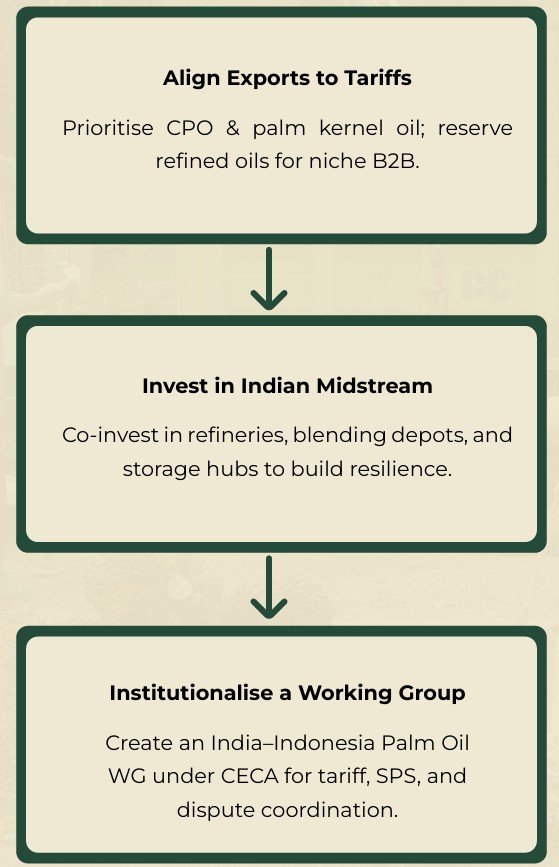
Global trade frictions further underline this need. Indonesia, the world’s largest palm oil producer, faces proposed U.S. tariffs of 32 percent, while Malaysia, the second largest, faces a 24 percent rate. This demonstrates how tariff escalations in distant markets can destabilise global flows and spill over into India’s edible oil security.
-
Rapid-response tariff coordination: A bilateral mechanism should enable levy adjustments, safeguard duties, and minimum import price bands in real time. Indonesia’s 2025 levy delay and India’s mid-2025 duty cuts provide workable precedents (PIB, 2025).
-
Development Credit Window: Jointly structured through Exim Banks, this would fund small refineries, traceability systems, and SME participation.
- Public communication campaigns: Partnering with SEA and industry bodies can counter misinformation, highlight sustainability progress, and strengthen consumer trust
Together, these measures can transform palm oil trade from a volatile cycle into a stabilising anchor for food security.
Conclusion: Toward a Co-Creation Model
India’s Atmanirbharta goals and Indonesia’s export ambitions are not conflicting, but complementary. Even with NMEO–OP, India will rely on 7–8 MT of imports annually through 2030. Indonesia, with agronomic efficiency, logistical proximity, and integrated value chains, is uniquely positioned to meet this demand.
The future must move beyond transactions into co-creation. By aligning exports with India’s tariff structure, investing in refining infrastructure, co-developing agronomic innovations, and strengthening traceability and communication, Indonesia can cement its role as India’s development partner, not just supplier.
GAPKI, as the voice of Indonesia’s palm oil industry, must champion this transition — through advocacy, matchmaking, and sustainability assurance. Palm oil can thus be repositioned from a trade commodity into a strategic pillar of resilience, transparency, and shared prosperity. (*)