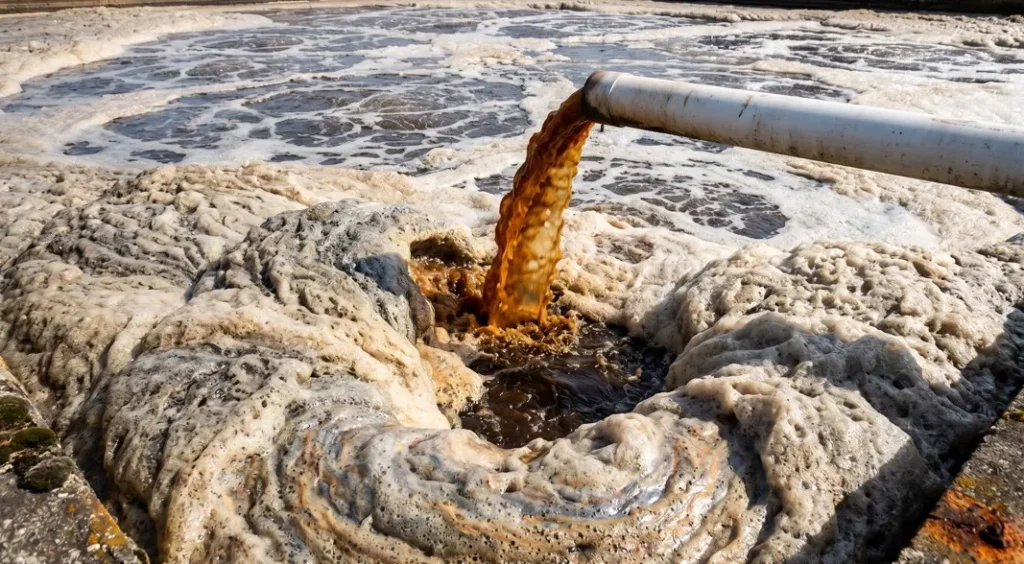
POME, which stands for Palm Oil Mill Effluent, is a liquid waste resulted from the processing of palm fresh fruit bunches (FFB) into palm oil at palm oil mills (PKS). Actually, although categorized as waste, the POME has big potential to be reused, especially as a source of biogas, renewable energy, organic fertilizer, and functions as part of the green practices of circular economy in the palm oil industry.
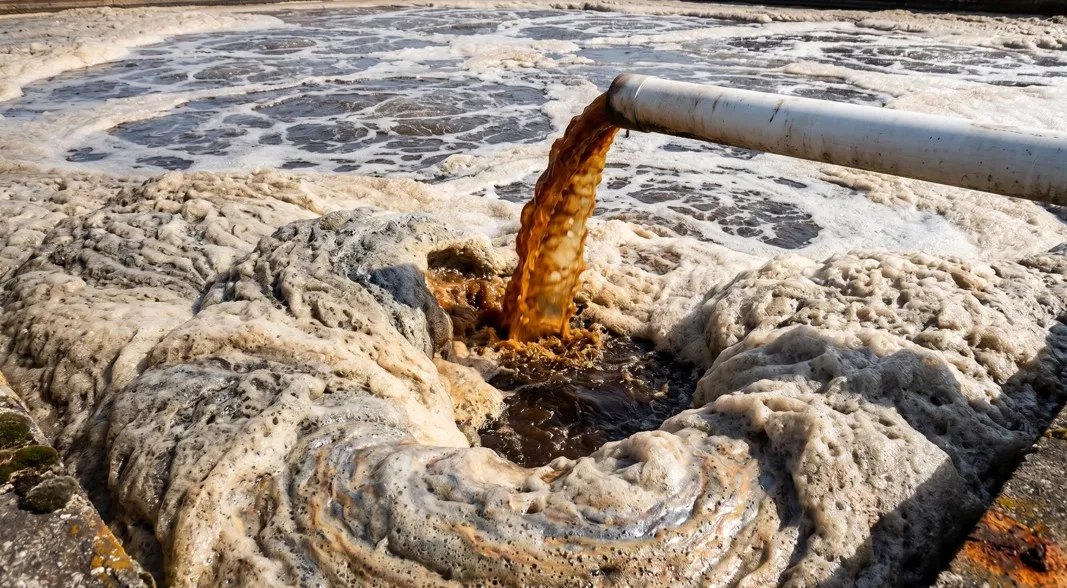
Utilizing the POME the right way becomes an important part of Indonesian palm oil industry’s efforts to maintain the quality of environment and increase the efficiency of utilizing resources.
What is POME?
POME stands for Palm Oil Mill Effluent, which is the liquid waste generated during the processing of fresh fruit bunches (FFB) of oil palm trees at palm oil mills.
The waste primarily originates from various stages of Fresh Fruit Bunch (FFB) processing, including sterilization, clarification, and other separation processes. POME is characterized by a high organic matter content, necessitating treatment before it is discharged into the environment.
The volume of generated POME is also substantial as large quantities are produced during palm oil processing, making its management a critical aspect of mill operations.
Why POME needs to be processed?
POME has a high content of organic matter as reflected in parameters such as BOD (Biochemical Oxygen Demand), COD (Chemical Oxygen Demand), and TSS (Total Suspended Solids).
If POME is discharged directly without appropriate treatment, this organic matter can deplete dissolved oxygen in water bodies. This condition has the potential to harm aquatic organisms and degrade environmental quality.
Therefore, POME cannot be treated like ordinary wastewater. Palm oil mills require treatment systems designed to reduce pollutant loads to levels that comply with applicable quality standards.
How POME processed in palm oil mills?
Generally, the POME processing is undertaken through a number of stages to separate the oil, the solids, and break down the organic matter.
Following are several stages usually applied:
- The Fat Pits and primary sedimentation
The initial stage aims to separate residual oil and solids still present in the wastewater.
The recovered oil can be collected and reused, ensuring that not all material entering the treatment system becomes waste.
- Anaerobic treatment
At this stage, microorganisms decompose organic matter in the absence of oxygen.
The anaerobic process is crucial because in addition to reducing the organic content of POME, it also produces biogas containing methane.
Technologies that can be employed include CSTR (Continuous Stirred Tank Reactor) systems, UASB (Upflow Anaerobic Sludge Blanket) reactors, and covered anaerobic lagoons.
- Further Processing
Following the anaerobic process, POME may undergo further stages of treatment, such as facultative, aerobic, and sedimentation processes.
The objective is to reduce pollutant parameters so that the wastewater quality meets requirements prior to discharge into the environment or utilization through approved systems.
POME can produce biogas
One of the greatest potentials of POME lies in biogas production. When the organic matter in POME is anaerobically decomposed by microorganisms, biogas typically with a high methane content is generated.
This methane can be utilized as an energy source.
Its applications include:
- fuel for boilers;
- fuel for power generation;
- an energy source for mill operations;
- or, following specific processing, use for other energy needs.
Thus, POME treatment not only aims to reduce pollution but also transforms waste into a renewable energy source.
From waste to energy: Concept of Circular Economy
The utilization of POME-derived biogas is an example of applying the concept of circular economy within the palm oil industry.
Under this concept, materials previously considered waste are not simply discarded, but they are instead repurposed to generate added value.
POME → anaerobic treatment → biogas → energy
This cycle enhances resource efficiency in palm oil production while helping to reduce greenhouse gas emissions—particularly when the generated methane is captured and utilized.
Can POME be utilized as fertilizer?
In addition to biogas production, the by-products of POME treatment have the potential to be reused in plantations, provided they meet applicable technical and environmental requirements.
The processed material may contain nutrients and organic matter that benefit the soil.
In practice, the utilization of processed POME for land management must be carried out in accordance with prevailing regulations to avoid creating new environmental impacts.
Through this approach, waste from the mill can be returned to the plantation system as part of a resource utilization cycle.
POME and carbon credit
POME processing is also linked to the reduction of greenhouse gas emissions. POME contains organic matter that can generate methane during anaerobic decomposition. Methane is a greenhouse gas with a global warming impact far greater than that of carbon dioxide over a given period.
By installing a biogas capture system, methane can be collected rather than simply released into the atmosphere.
This biogas can then be utilized as an energy source.
Since it yields emission reductions that can be calculated and verified according to established methodologies, the projects of POME-based biogas utilization also have the potential to be developed into carbon projects.
Challenges of processing and using POME
Despite its many benefits, the utilization of POME is not without challenges. Developing facilities of biogas capture and processing requires investment, technology, land, and effective operational management.
Furthermore, the success of a treatment system depends heavily on POME characteristics, mill capacity, facility design, and consistent operation.
This means there is no single technology that is universally suitable for all palm oil mills, as treatment systems must be tailored to the specific conditions of each mill.
POME and sustainability of Indonesia’s palm oil industry
POME management is a crucial component of efforts to enhance the sustainability of Indonesia’s palm oil industry.
Once viewed merely as liquid waste, POME can now be managed to serve as a source of energy and organic material, and even holds potential economic value through emissions reduction.
This aligns with the concepts of zero waste and the circular economy—maximizing resource utilization while minimizing the amount of waste released into the environment.
For the Indonesian palm oil industry, effective POME management goes beyond mere compliance with environmental regulations. It also opens up opportunities to improve energy efficiency and generate added value from the by-products resulted from the production process.
POME (Palm Oil Mill Effluent) is a liquid waste product from the palm oil processing stage that contains high levels of organic matter and requires treatment before being discharged into the environment.
However, POME is not merely waste to be discarded.
With appropriate technology of treatment, POME can be utilized to generate biogas and renewable energy, while the treated output has the potential for reuse within plantation systems in accordance with applicable regulations.
Thus, POME management serves as an example of how the palm oil industry can shift from the concept of “waste treatment” to “resource utilization.” (*)
WikiSawit, “Apa Itu POME (Palm Oil Mill Effluent)?”. https://gapki.id/id/wikisawit/knowledge-base/apa-itu-pome-palm-oil-mill-effluent/