JAKARTA – The Indonesian Palm Oil Association (GAPKI) has projected that Indonesia’s palm oil exports in 2027 are potential to decline by around 5.0 million tons to around 26.5 million tons. The export decline is caused by the decrease of production as a result of El Nino, while the national demand for biodiesel will be surging along with the full implementation of mandatory biodiesel 50 percent (B50).
GAPKI also reminded that the government’s step to cover the financial shortage of biodiesel program by raising the palm export levy risks to reduce the price of fresh fruit bunches (FFB) from the smallholders.
GAPKI Chairman Eddy Martono made the statement during a press conference on the association’s plan to hold The 22nd Indonesian Palm Oil Conference (IPOC) and 2027 Price Outlook (IPOC 2026) at GAPKI Jakarta headquarters on Friday (9/10/2026).
According to Eddy, the implementation of B50 in 2026 is not expected to cause any significant problem. The B50 mandate was started in July with an initial transition period of two-month, so that the additional demand of palm oil for biodiesel this year is estimated at only about 1.0 million tons.
“The real challenge will arise in 2027,” Eddy stated.
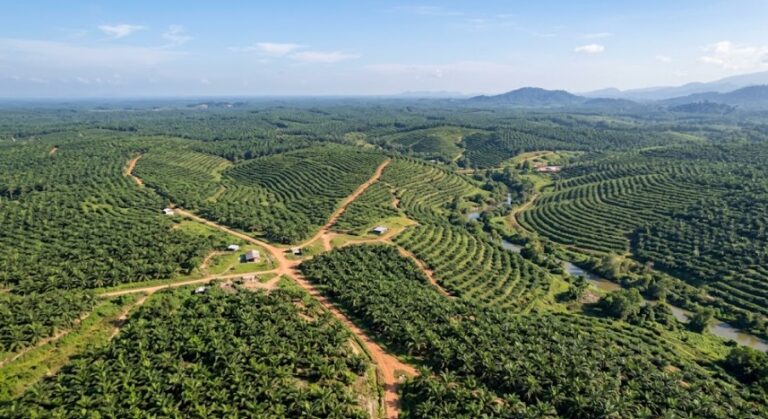
In case of no El Niño, national palm oil production in 2027 could potentially reach 59.5 million tons. However, due to the impact of El Niño, production is projected to reach only 56.6 million tons—approximately 4.9 percent below its potential. Crude Palm Oil (CPO) production is estimated at around 52 million tons, a figure similar to the projected output for 2025.
Meanwhile, palm oil consumption for biodiesel is expected to rise to 17.4 million tons, driven by the full-scale implementation of B50 throughout 2027.
Exports Most Likely to Be Reduced
Eddy emphasized that, in terms of production, the supply of palm oil is actually sufficient. However, certain allocations will inevitably have to be sacrificed, and exports are the most likely candidate for such allocation.
“In terms of production, it is sufficient. It is just that some allocations will have to be reduced, and exports are the most viable option. We cannot reduce food consumption and we certainly cannot cut back on cooking oil,” he asserted.
According to Eddy, a decline in exports has a direct impact on the funding for the biodiesel program, which has traditionally been sourced from palm oil export levies. He cautioned against covering any funding shortfalls by raising these export levy rates.
“If exports decline, what happens to biodiesel funding? If the export levy is raised again, it would be dangerous, as it would suppress domestic palm oil prices. Ultimately, this would also drive down the price of fresh fruit bunches (FFB),” he explained.
Eddy added that the issue of biodiesel funding amidst declining exports will be one of the topics discussed at the 2026 Indonesian Palm Oil Conference (IPOC) in Bali, held from 11 – 13 November 2026.
Global Market Concerns
According to Eddy, the decline in Indonesian palm oil exports has also become a concern for the international market—a point he noted during visits to several consumer nations, including those in Europe and India.
“If there is a reduction in the global supply of vegetable oils—meaning a drop in palm oil—it will cause volatility in prices of global vegetable oils, including palm oil. It is not just the price of palm oil that would rise; other vegetable oils would be affected as well,” he said.
Agrinas Falls Short of Covering Deficit
Eddy also addressed the plan by PT Agrinas Palma Nusantara, which reportedly aims to supply 20 percent of the requirements for the B50 biodiesel mandate. While noting that he could not speak in great detail regarding Agrinas, he expressed the view that the plantations currently managed by the company would be insufficient to cover potential supply shortfalls.
“If I’m not mistaken, Agrinas currently manages around 750,000 hectares of existing plantations. It seems unlikely that this would be enough to bridge a 5-million-ton deficit,” he said.
Given this, Eddy emphasized the need for the government and industry players to find a collective solution—one that ensures both the biodiesel program and palm oil exports remain sustainable.
“Ultimately, this is a matter that requires joint consideration to ensure the continuity of the biodiesel program, as well as palm oil exports,” he concluded. (Fetry Wuryasti)