JAKARTA – Palm oil can be categorized as “Superfood”. It is based on the result of studies conducted by global nutritionists, who concluded that the palm oil is “the world’s richest natural plant” as it is rich in vitamin and fatty acids needed by human body.
Palm Oil, Best Source of Vitamin A
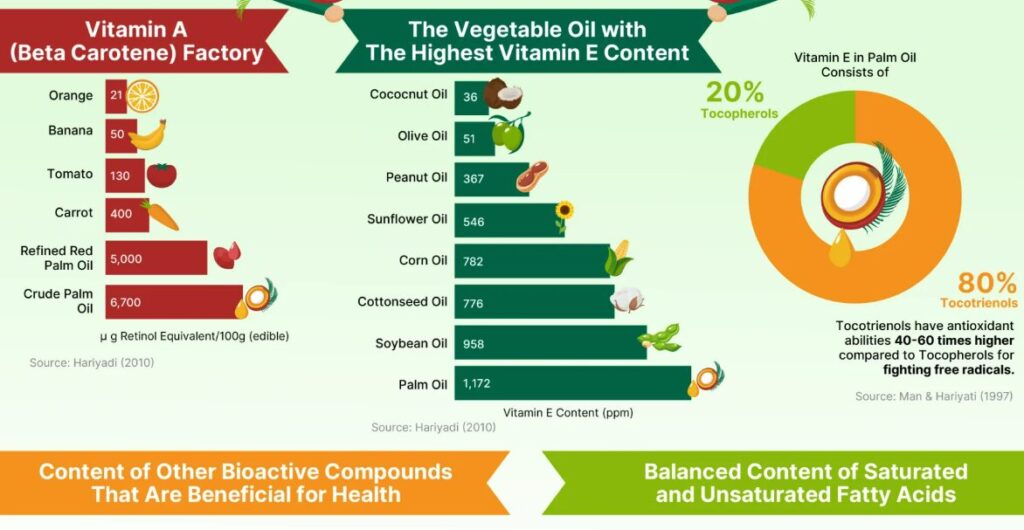
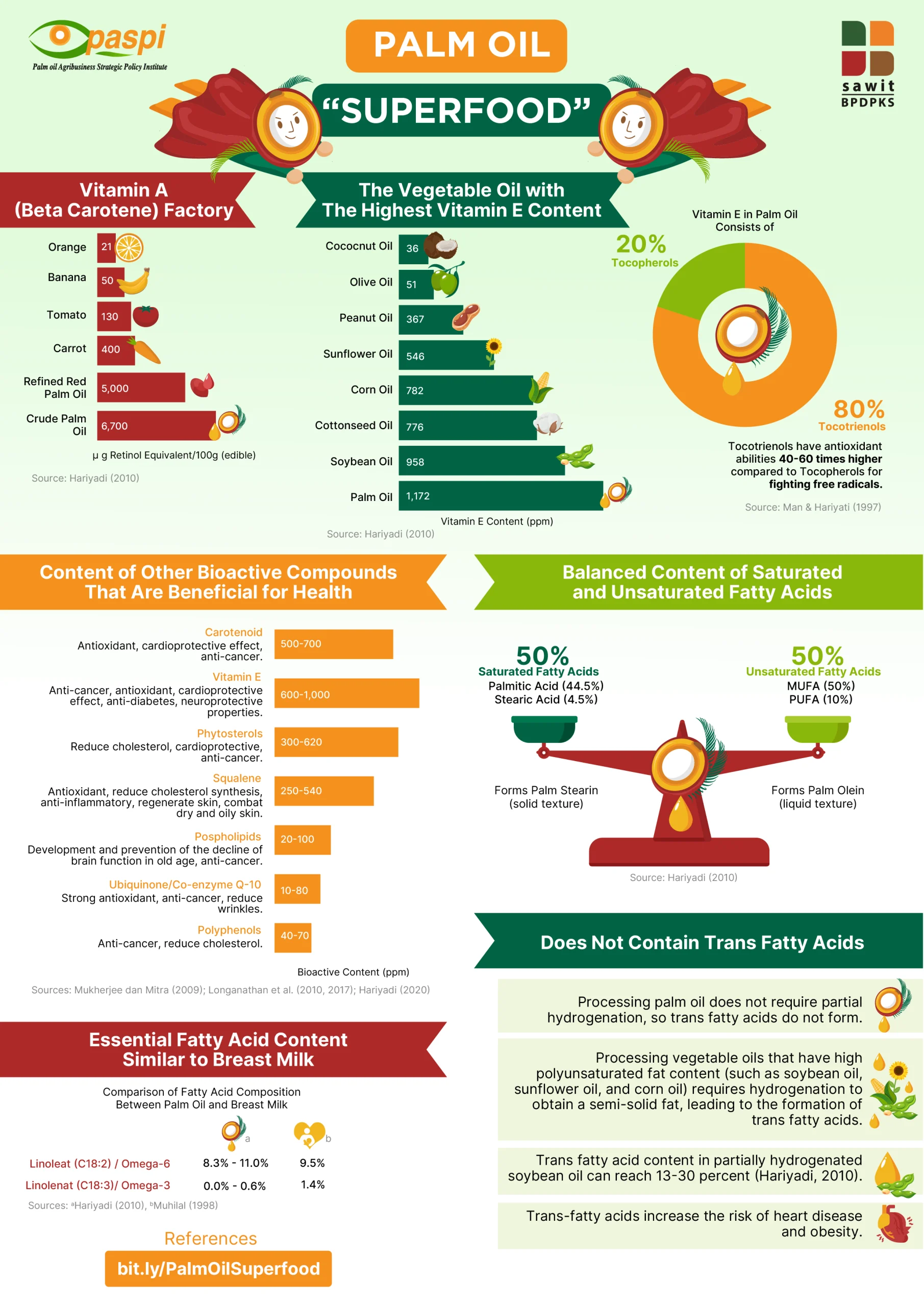
Various empirical studies (Nagendran et al., 2000; Mayamol et al., 2007; Mukherjee and Mitra, 2009; Dauqan et al., 2011) also reveal that palm oil is “the world’s richest natural source of carotenoids”. Beta carotene in palm oil acts as an antioxidant, precursor and source of vitamin A. The high carotene content in palm oil can be seen from the reddish orange color of the oil. In fact, compared to food sources such as oranges, bananas, tomatoes and carrots, the carotene content in palm oil is much higher.
Antioxidants To Fight Free Radicals
Palm oil is also the vegetable oil with the richest content in vitamin E compared to soybean oil, corn oil, sunflower oil, olive oil and coconut oil. The vitamin E component in palm oil consists of 20 percent tocopherols and 80 percent tocotrienols. The high content of tocotrienols makes palm oil having very strong antioxidant abilities to fight free radicals.
Benefits of Palm Oil Bioactive Compounds for Health
Apart from vitamins A and E, palm oil also contains other bioactive compounds that are beneficial for health such as phytosterols, squalene, phospholipids, and ubiquinone. These bioactive compounds can be consumed when using palm oil, providing additional health benefits at no cost to consumers.
Palm Essential Fatty Acids for Physical Growth and Health
Palm oil also contains essential fatty acids, such as linoleic (C18:2) or omega-6 and linoleic (C18:3) or omega-3. These fatty acids are important for nutrient absorption, cell formation, the immune system, and fetal development, especially the brain and eyes. This content is similar to the fatty acids in breast milk (ASI).
Palm Oil Has a Balanced Fatty Acid
Palm oil has a balanced fatty acid composition of saturated and unsaturated, making it the healthiest vegetable oil for cooking oil. Compared to other vegetable oils, such as coconut, soybean, corn and sunflower oils which have an unbalanced fatty acid composition, palm oil provides a healthier choice.
Palm Oil Free Dangerous Trans Fatty Acids
Another advantage of palm oil is that it does not require a partial hydrogenation process which can produce trans fatty acids. Other vegetable oils, such as soybean and corn oil, often have to undergo this process to achieve a semi-solid texture, which can trigger the formation of trans fatty acids that are harmful to health.
Palm Oil, Healthy Choice for Daily Diet
Trans fatty acids can increase the risk of heart disease and obesity. Therefore, many global health organizations recommend minimal consumption of trans fatty acids. Palm oil and palm-based products do not contain trans fatty acids, making them a healthier choice compared to other hydrogenated vegetable oils.
Palm Oil as Healthy and Natural Superfood
With these various advantages, palm oil deserves to be classified as a superfood which provides extraordinary benefits for human health. Rich in vitamins, antioxidants and balanced fatty acid content, palm oil is an ideal healthy alternative for human daily diet. (*)
Palmoilina.asia. https://palmoilina.asia/berita-sawit/sawit-superfood-sehat/. Sawit Superfood dengan Segudang Manfaat untuk Kesehatan. Oktober 28, 2024.