JAKARTA – Palm oil, which is scientifically known as Elaeis guineensis, has become one of the main contributors to Indonesian economy. It is not just important in the plantation sector, but it has brought big impacts to the national economy of Indonesia as a whole.
Within the real sector, the palm oil contributes significantly through creation of job opportunities, supply of raw material for downstream industries, and as the main source of state income from exports. Indonesia has now become the world’s largest producer of palm oil after seeing robust growth during the last few decades (PASPI, 2025).
Based on report on Indonesian oil palm smallholders: Development, Contribution and Challenges (PASPI, 2025), the beginning of oil palm plantations in Indonesia can be traced since the Dutch colonial era in 20th century. Initially, the oil palm was only used as decorative plants, but later it was found potential to produce vegetable oil and since then it has developed as one of Indonesia’s top export commodities.
Along with the history of the oil palm industry, the government has encouraged the participation of the public in the form of smallholders’ plantation program. It is aimed to promote even distribution of ownership of oil palm plantations and strengthen local economies.
The growth of smallholders’ plantations
Data from Statistics Indonesia (BPS) compiled by PASPI (2025) shows a trend of very significant growth of oil palm smallholders’ plantations. In 2000, the total areas of smallholders’ plantations were recorded at 1.19 million hectares. The smallholders’ total areas increased to around 2.5 million hectares in 2010, then rose again to more than 4.5 million hectares in 2015. By 2021, the smallholders’ plantations had reached 6 million hectares.
The growth has not only reflected an increase of total areas, but it also illustrates the importance of smallholders in the structure of the national palm oil industry. It has opened up a great opportunity to strengthen the quality and productivity of palm oil industries in the future.
Real contribution of smallholders
Oil palm smallholders have not only contributed to the production of crude palm oil (CPO), but they also play an important role in maintaining the stability of the national palm oil sector. Diversity of ownership and participation of smallholders helps the sector to be more resilient to global price fluctuations.
At the local level, the smallholders’ plantations have become a major pillar of local economies in many regions, especially outside Java. The existence of smallholders’ plantations provides a stable source of livelihood for millions of farming families and plantation workers. In addition, a more equitable distribution of income from the palm oil sector helps reduce socio-economic disparities between regions (PASPI, 2025).
Impact to Local Economy
The smallholders’ palm plantations have created wider and bigger positive impacts to regional economies, which include as follows:
- Famers’ income source
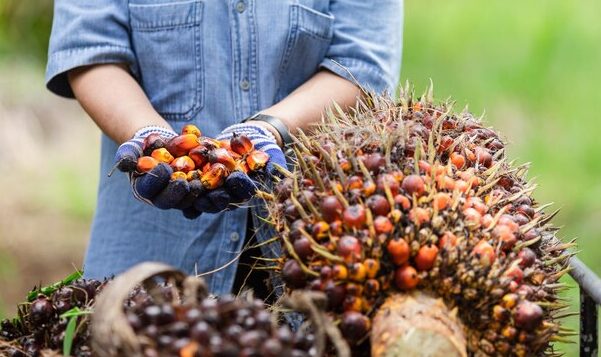
Farmers earn their income from the sale of fresh fruit bunches (FFB), which are processed into crude palm oil (CPO). With the income the small farmers can fulfill their everyday needs and improve their families’ welfare.
- Generate growth of related industries
Activities in the smallholders’ plantations also generate a variety of supporting businesses, such provision of fertilizer and agricultural equipment, transportation services, and product processing units.
- Increase local Investments
The income earned by farmers is often reinvested into the regions where they come from. Such investments strengthen the local economic cycle and encourage sustainability of regional development.
- Contribution to regional income
The smallholders’ plantations also contribute to the creation of locally-derived revenues (PAD) and support financing for local development.
On the other hand, the involvement of palm smallholders in the national supply chain also strengthens Indonesia’s position in the global market. The smallholders’ plantations are not only part of primary production, but also support added value in the downstream sector, such as the processing and marketing industry for palm oil derivative products.
The smallholders play a strategic role in supporting national economic growth, while creating a more inclusive economic ecosystem. The existence of strong and productive plantations of smallholders is an important foundation for the future of the Indonesian palm oil industry that is more equitable, sustainable, and able to provide greater profits and wider benefits among the public, from the village to the global level. (*)