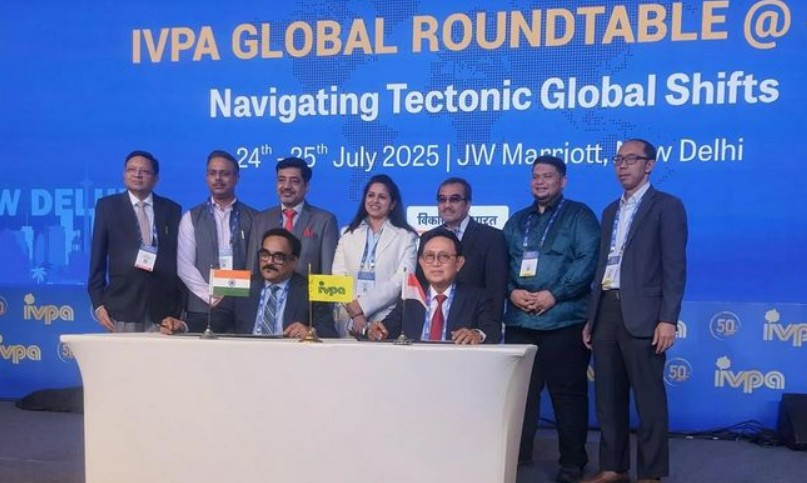
New Delhi, July 2025 – In a strategic and forward-looking move, the Indian Vegetable Oil Producers’ Association (IVPA) and the Indonesian Palm Oil Association (IPOA/GAPKI) have signed a landmark three-year Memorandum of Understanding (MoU) to elevate bilateral cooperation in the palm oil sector. This dynamic alliance not only cements the already-strong trade relationship between the two nations but also outlines an ambitious roadmap for sustainability, food security, and economic resilience.
With India sourcing over 60% of its edible oil needs and Indonesia standing tall as its top palm oil supplier for over a decade this pact is far more than just paperwork. It’s a promise to fortify the lifeblood of edible oil trade between two economic powerhouses. In 2024 alone, bilateral trade touched a whopping USD 26 billion, with palm oil playing a starring role: USD 20.3 billion in exports from Indonesia to India, and USD 5.7 billion in imports flowing back.
“This MoU reflects our shared commitment to a future-ready, transparent palm oil supply chain that benefits both consumers and producers,” said Sudhakar Desai, President of IVPA, during the IVPA Global Roundtable in New Delhi.
The agreement outlines five powerful pillars of cooperation:
- Technical Exchange & R&D: From research partnerships to tech transfer, both sides will push productivity while minimizing environmental harm.
- Sustainability Roadmap: Joint initiatives will boost certified sustainable palm oil production, improve traceability, and engage smallholder farmers—a core priority for both countries.
- Policy & Advocacy: The pact supports coordinated efforts to simplify regulations, promote fair trade, and stabilize market pricing.
- Food Security Measures: Both associations will jointly plan to mitigate supply chain risks and strengthen India’s National Edible Oil Mission.
- Market Intelligence: Real-time trade, price, and production data sharing will empower both sides to make smarter policy and industry decisions.
Echoing these goals, Dr. M. Fadhil Hasan, Head of Foreign Affairs, GAPKI, emphasized:
“Palm oil remains vital to Indonesia’s economy. Through ISPO certification, forest conservation, and responsible production, we aim to support India’s food security and climate objectives.”
He reaffirmed Indonesia’s dedication to climate-resilient agriculture and a secure supply of responsibly sourced palm oil.
While challenges such as smallholder compliance persist, the MoU promises to drive inclusive innovation and create a resilient supply chain that leaves no farmer behind. Eddy Martono, Chairman of GAPKI, noted:
“This partnership will deepen our mutual economic ties and support sustainable growth in the palm oil sector. Palm oil and its derivatives alone accounted for USD 4.4 billion, underscoring its strategic importance.”
The pact is bolstered by ongoing dialogue between the Indian Ministry of Commerce & Industry and Indonesia’s Ministry of Trade. It also complements India’s National Edible Oil Mission, with both governments actively participating in the formation of a working group to oversee implementation and performance metrics.
From innovation and sustainability to food security and trade stability, the India-Indonesia palm oil pact is more than a trade agreement it’s a transformational alliance set to reshape the future of global edible oil dynamics. (*)