Palm Oil: The Backbone of Affordable FMCG Products
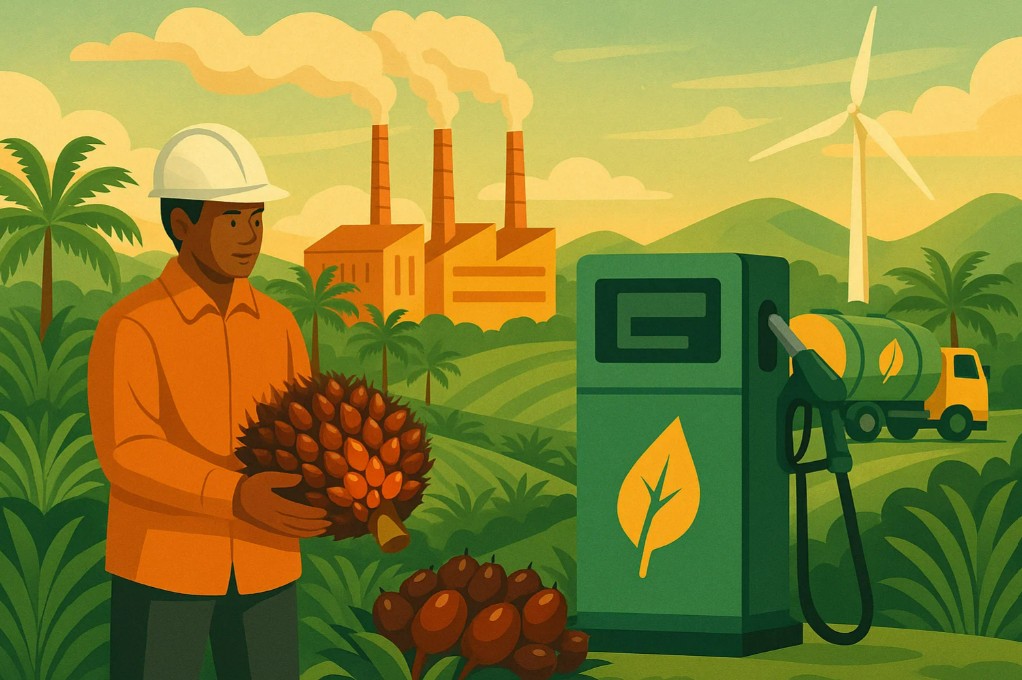
The global shift towards renewable energy presents a significant opportunity, and Indonesian palm oil leads in the burgeoning biofuel sector. The global transition to cleaner energy has put biofuels in the spotlight, and Indonesia’s agency and leadership position capitalizes on this shift. As the world’s largest producer of palm oil, Indonesia holds immense potential to lead the biofuel revolution through sustainable oil production. This journey is centered on pioneering sustainable oil production practices, leveraging our nation’s valuable palm oil produce for a greener tomorrow.
Why Indonesian Palm Oil Fits the Biofuel Shift
Biofuels derived from palm oil are gaining attention as an efficient and scalable alternative to fossil fuels. What sets Indonesian palm oil apart is its capacity to meet this demand at scale while integrating sustainable practices. The government’s ambitious biodiesel blending program, currently at B40 (a 40% palm oil blend) with studies for B50 implementation by 2026, creates a massive, stable domestic market. This significantly de-risks investment in biodiesel plants, enhancing the value of our national palm oil produce.
Unlike sugarcane or corn, palm oil produce offers higher oil yields per hectare, making it a more land-efficient biofuel source. This is essential in a world where balancing food production, biodiversity, and energy needs are increasingly challenging.
Strengthening the Sustainability Narrative
At IPOA, we believe the future of our industry is intrinsically linked to sustainability. Indonesia is making significant strides in championing sustainable oil production, actively moving beyond outdated perceptions. Our members are increasingly adopting Best Management Practices (BMPs) capable of cutting pesticide use and precision fertilization to reduce fertilizer use. Water management through efficient irrigation and soil conservation techniques, such as cover crops that can reduce erosion, are also central to improving how palm oil is produced.
Certification schemes are vital verification tools. IPOA’s certified palm oil production alongside INDEF, actively promotes sustainability, fostering an environment where Indonesian sustainable palm oil is the benchmark. This dedication to sustainable oil production is transforming the industry.
Transparent supply chains and independent verification systems are now non-negotiable in global trade. For palm oil suppliers, this is both a challenge and a differentiator. By embedding sustainability into their brand narrative, Indonesian producers can reshape palm oil industry news from controversy to credibility.
Strategic Market Openings: India and Beyond
India, as one of the largest importers of edible oil, represents a key strategic partner. The rising palm oil demand in India isn’t limited to food consumption. With its own energy goals and growing interest in alternative fuels, India could emerge as a vital market for palm-based biodiesel. For palm oil traders in India, this opens new lanes of engagement with Indonesian producers.
Moreover, as global discussions on carbon neutrality intensify, demand is shifting towards sustainably sourced materials. Palm oil suppliers that can prove traceability and environmental compliance will find themselves better positioned. This places Indonesian exporters ahead of the curve, particularly when supported by policy clarity and industry coordination led by bodies like the Indonesian Palm Oil Association (IPOA).
Innovation, Investment, and Industry Alignment
The palm oil industry is already undergoing transformation. With technological upgrades in milling, waste-to-energy initiatives, and digital traceability systems, the sector is modernizing fast. INDEF’s policy recommendations have underscored the need for greater investment in R&D and infrastructure to boost biofuel output without compromising food security or ecological balance.
Industry stakeholders need to see this not just as an energy opportunity, but as a full-spectrum development strategy. Sustainable oil production aligns with climate commitments, trade competitiveness, and rural development goals. With proper incentives, palm oil producers can scale biofuel production while improving yields and sustainability metrics.
Policy and Collaboration
The journey towards a fully sustainable and economically vibrant biofuel sector, powered by Indonesian sustainable palm oil, is one of active collaboration. IPOA, in partnership with organizations like INDEF, is dedicated to guiding stakeholders through this evolving landscape. To fully unlock biofuel opportunities, deeper collaboration between industry, government, and international stakeholders is essential. IPOA’s partnership with INDEF recognizes this need through their joint policy dialogues, research initiatives, and advocacy platforms that offer a roadmap for aligning national strategy with global market dynamics. By prioritizing sustainable oil production and market-driven innovation, stakeholders can ensure that Indonesian sustainable palm oil powers not just vehicles, but a more resilient and responsible global energy system.
At the same time, simplifying export procedures, harmonizing standards, and expanding bilateral agreements with countries like India can fast-track market access. The upcoming regional forums and trade expos present prime opportunities to showcase the evolution of Indonesia’s palm oil sector.
Partnering for a Sustainable Future with Indonesian Palm Oil
The biofuel opportunity is not a distant prospect. It is a present pathway, and Indonesian Palm Oil Association is already shaping that direction. What is emerging is not just an alternative energy source but a stronger narrative, one where sustainable oil production contributes meaningfully to climate action, industrial modernization, and strategic trade expansion. We champion sustainable oil production as a core principle for our industry’s long-term prosperity and its significant contribution to global energy solutions. It is not just a commitment; it’s a competitive advantage in an increasingly value-driven global market.
We invite all industry stakeholders, from investors to palm oil traders in India and global partners, to engage with us. Let’s work together to harness the immense opportunities in biofuel, ensuring that Indonesian palm oil continues to set benchmarks for sustainability and economic empowerment. Be part of a future powered by responsible innovation and true Indonesian sustainable palm oil. (*)