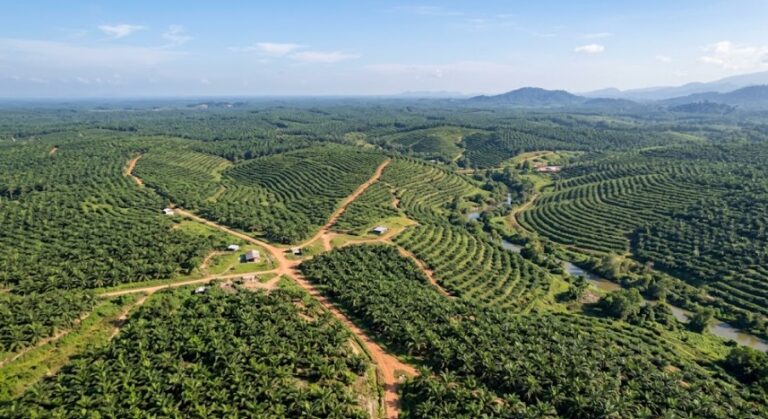
Shaping the economic fabric of two major Asian economies, palm oil plays a vital role in the evolving trade relationship between India and Indonesia. Found in everything from household kitchens to large-scale industrial applications, this versatile commodity is deeply embedded in India’s everyday life, while simultaneously anchoring strategic trade flows across the Indian Ocean.
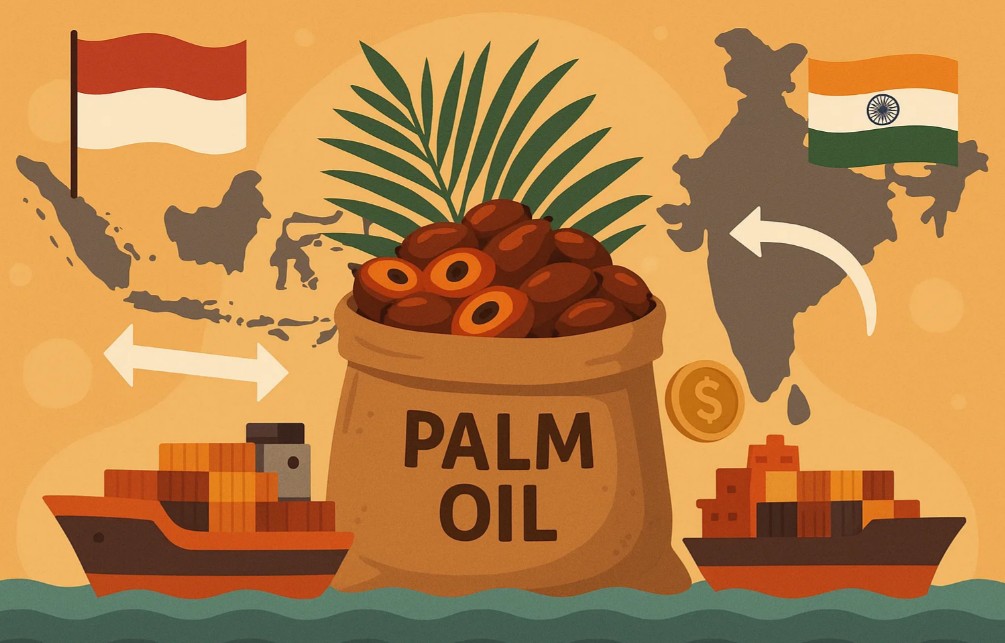
In FY 2023–24, bilateral trade between India and Indonesia reached USD 29.4 billion, with palm oil continuing to be a key contributor. Its importance extends far beyond commerce. It supports livelihoods, strengthens food security, and fosters a deeper economic partnership between two of Asia’s largest economies. As both countries look to the future, palm oil stands out as a cornerstone of collaboration and mutual growth.
Building Regional Trade through CECA
India and Indonesia share a strong trade relationship rooted in strategic alignment and regional cooperation. Under the India–Indonesia Comprehensive Economic Cooperation Agreement (CECA), both countries have expanded trade across sectors like agriculture, energy, and food processing, with palm oil emerging as the top commodity in Indonesia’s export basket to India.
As per India’s Directorate General of Foreign Trade, over 4.2 million metric tonnes of palm oil were imported from Indonesia in FY 2023–24, accounting for more than 48 percent of India’s total palm oil imports. CECA’s preferential tariffs and trade facilitation measures have helped maintain this flow, ensuring predictability in the sourcing of essential commodities.
On the Indonesian side, these palm oil exports contribute significantly to foreign exchange reserves and support employment across plantations, processing units, and ports. Through CECA, both nations have also strengthened areas like customs cooperation and sanitary and phytosanitary (SPS) alignment, which are essential to preserving product quality and managing cross-border logistics effectively.
In a global market facing frequent price and supply disruptions, the India–Indonesia palm oil corridor remains a reliable and stabilizing force that supports food systems and regional trade security.
Sustaining Demand through Integrated Supply Chains
India remains one of the largest global consumers of edible oils, with consumption exceeding 25 million tonnes in 2024. More than half of this demand is met through imports, and palm oil alone accounts for over 9 million tonnes annually, according to data from the Department of Food and Public Distribution. The increase has created a thriving market for palm oil suppliers, palm oil traders, and bulk palm oil suppliers.
Indonesia’s contribution to this supply chain has been pivotal. In FY 2023–24, Indonesia remained India’s top supplier of crude palm oil (CPO) and saw a resurgence in exports of refined bleached deodorized (RBD) palmolein, a finished product preferred by India’s food service and packaged goods sectors. As per the Solvent Extractors’ Association (SEA), imports of RBD palmolein rose by 34 percent in 2023, driven by improved pricing and logistics.
This dynamic flow supports a wide spectrum of Indian industries, from food processing and FMCG to hospitality and biofuel blending. Palm oil’s unique combination of high yield, affordability, and long shelf life makes it a natural choice for India’s fast-growing consumer market.
Expanding Usage Beyond the Plate
Palm oil plays a far-reaching role in India’s economy. Its relevance extends well beyond kitchen shelves into manufacturing, services, and industrial supply chains. Its physical and chemical properties make it a preferred input in packaged foods, bakery products, instant noodles, confectionery, and frying fats. Its semi-solid nature and oxidative stability at high temperatures give it a technological edge over other edible oils.
Beyond food, it is foundational to India’s FMCG sector and is used extensively in soaps, detergents, cosmetics, and personal care products. These segments collectively represent a multi-billion-dollar industry that is growing rapidly across both urban and rural markets. According to government estimates, the FMCG sector is projected to grow at approximately 14 percent CAGR through 2030, with palm oil playing a key role in production scalability and pricing.
Palm oil’s affordability ensures accessibility, especially for India’s price-sensitive consumers. In rural areas, where income elasticity is high, palm oil accounts for over 60 percent of total edible oil consumption. Its impact is therefore not just commercial but deeply social, influencing nutrition, affordability, and everyday consumption.
Addressing Sustainability and Environmental Balance
As the palm oil trade deepens, India and Indonesia are also addressing the sustainability question. India’s National Mission on Edible Oils – Oil Palm (NMEO-OP), with an outlay of INR 11,040 crore, aims to expand cultivation across 6.5 lakh hectares by 2025–26, especially in the Northeast and island regions. Financial support is being extended to farmers for planting and maintenance.
However, concerns persist. Environmental groups warn of risks to biodiversity in ecologically sensitive areas. The World Rainforest Movement has flagged potential impacts of land conversion and contract farming in India’s Northeast.
For Indonesia, India’s cultivation push signals both a challenge and a chance for cooperation. As the global leader in palm oil production, Indonesia can share expertise to help India avoid ecological trade-offs. Institutions like INDEF advocate for region-specific trade models that support growth while promoting adaptive, sustainable practices.
Reimagining Trade Policies for Shared Growth
India’s path to edible oil self-reliance will take time. Even with accelerated domestic efforts, the country is expected to import 5 to 6 million tonnes of palm oil annually for the next decade, according to NITI Aayog. This ensures Indonesia’s continued role as a key supplier.
The future of palm oil trade lies not just in volume but in value-chain collaboration. This includes refining and logistics, tech exchange, and farmer training. Bilateral initiatives can focus on refining investments, sustainability R&D, and resilience planning for price or supply shocks.
As global edible oil competition intensifies, India and Indonesia have the opportunity to deepen institutional alignment. INDEF emphasizes the need for flexible trade frameworks that balance pricing, sustainability, and long-term demand. This will help secure the palm oil corridor as a critical enabler of shared growth.
Strengthening the Partnership for the Future
Palm oil, in its essence, is far more than a traded commodity. It symbolizes a strategic, long-standing partnership between India and Indonesia. It supports food systems, industrial growth, and rural livelihoods across both nations.
As India advances its food security goals and Indonesia builds on its export leadership, the palm oil corridor offers a blueprint for meaningful, resilient trade. With sustained dialogue and shared commitments to sustainable growth, palm oil will remain a key link in shaping the Indo-Pacific’s economic future. (*)