For years, the conversation around palm oil has been strangely one-sided.
Type it into a search bar and you’ll find alarm bell claims that it’s bad for your health, bad for the planet, and best avoided altogether. Yet open the kitchen cabinets of nearly half the world’s population, and there it is used daily, relied upon, and deeply woven into both tradition and modern food systems.
So which version is true?
The health hazard, or the essential staple? The environmental villain, or the high-yield solution?
In reality, palm oil sits at the center of one of the most misunderstood debates in food. And the closer you look, the clearer it becomes: the story is far more complicated, and more important than the headlines suggest.
Because this isn’t just about oil. It’s about access, affordability, nutrition, and the future of how we feed billions.
Let’s set the record straight.
What Palm Oil Really Is, and What It Isn’t!
Palm oil is vegetable oil, pressed from the fruit of the oil palm tree, and it’s the most widely consumed edible oil in the world. It’s used in everything from stir-fries and curry pastes to instant noodles, biscuits, and chocolate. That alone often leads people to dismiss it, assuming that because it shows up in processed foods, it must be unhealthy.
But that logic doesn’t hold.
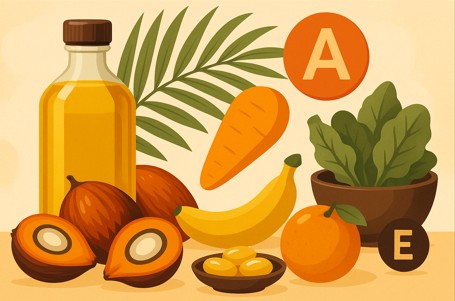
Nutritionally, palm oil contains a balanced mix of saturated, monounsaturated, and polyunsaturated fats. It’s free from trans fats. It’s rich in tocotrienols (a potent form of vitamin E), and red palm oil (the unrefined variety) is packed with beta-carotene, the same antioxidant that gives carrots their orange hue.
When consumed in moderate amounts, palm oil has been shown to support heart health. A study by researchers at Mahidol University found that palm oil helped maintain a healthy cholesterol balance, with no negative impact on cardiovascular risk—placing it on par with many commonly used vegetable oils.
So if you’re asking whether palm oil is bad for you, the answer is: not inherently. It depends on the quality, how it’s used, and like any fat, how much you consume.
The Cooking Advantage Few People Talk About
When it comes to high-heat cooking, not all oils are created equal. Many of the oils marketed as healthy—like flaxseed or sunflower—don’t hold up under heat. Their polyunsaturated fats break down quickly, generating free radicals and losing nutritional value.
Palm oil, particularly palm olein cooking oil, is prized for its stability under high heat and excellent oxidative stability. That means less degradation during cooking, better retention of flavor, and fewer harmful byproducts in your food.
If you’re deep-frying, sautéing, or cooking at high temperatures, this matters. And it’s one reason why chefs and home cooks in Asia and Africa continue to reach for palm oil, even as global trends fluctuate.
The Price and the Power of Palm Oil
In markets across India, Southeast Asia, and Africa, the most practical reason for choosing palm oil is this: it’s affordable. The palm cooking oil price is consistently lower than that of soybean, sunflower, or olive oil, making it a lifeline for millions of families.
But that affordability doesn’t mean compromise. On the contrary, its cost-effectiveness is what allows school meal programs, small businesses, and lower-income households to access cooking oil that’s both versatile and calorie-dense.
Of course, the palm oil price today isn’t always predictable. Weather patterns, export policies, and shifts in global demand; especially in major producing countries like Indonesia, can all influence pricing. That’s why everyone from small retailers to restaurant chains keeps a close eye on market trends. And with growing digital access, many buyers now turn to palm oil online shopping platforms and bulk suppliers to stay ahead.
What About the Environment?
No conversation about palm oil is complete without looking at its environmental footprint. As global demand continues to rise, the way palm oil is produced matters more than ever.
The oil palm is the most land-efficient oil crop on the planet. It produces far more oil per hectare than soy, rapeseed, or sunflower. Replacing it entirely would require much more land, likely resulting in even more deforestation.
The answer isn’t rejection. It’s sustainable palm oil.
Today, efforts are underway across the industry to make palm oil more sustainable. Producers are adopting better land-use practices, investing in traceability, and working to minimize environmental impact without compromising yields. The Rokan Hulu Landscape and Livelihoods Initiative launched in Indonesia is a five-year, public–private collaboration aimed at supporting 5,400 smallholder farmers in transitioning to regenerative agriculture, reducing chemical use, restoring biodiversity, and building climate resilience—all while maintaining scalable palm oil production. This kind of large-scale, collaborative effort shows that palm oil can be produced responsibly while protecting forests, lowering emissions, and uplifting local communities.
As consumers, we can support this shift. Look for products made with certified sustainable palm oil. Choose sustainable palm oil brands. Or even go direct through palm oil online purchase platforms that offer transparency and traceability.
So Where Does Palm Oil Really Belong?
Not in the category of “bad” ingredients and not blindly idolized either. It belongs in the real conversation about oils that are nutritious, versatile, and sustainable when produced and used responsibly.
Palm oil is not the enemy of health. It’s not the destroyer of forests. It’s a high-yield, nutrient-rich oil that, when produced responsibly and consumed in balance, plays a vital role in modern cooking, especially in regions where affordability and nutrition go hand in hand.
And if you’re looking for a place to start, look to the organizations working to lead by example. The Indonesian Palm Oil Association (IPOA) is one such voice championing a future where palm oil is not only essential to food security, but also aligned with sustainability, transparency, and responsible growth. By working closely with producers, policymakers, and researchers, IPOA is helping shift the global conversation from oversimplified criticism to informed progress.
Because what’s on your plate shouldn’t just be good for your body. It should be good for the world that grows it.