A White Paper by the Indonesian Palm Oil Association (IPOA) on Leveraging Palm Oil for Trade Resilience, Sustainable Advantage, and Carbon-Aligned Cooperation
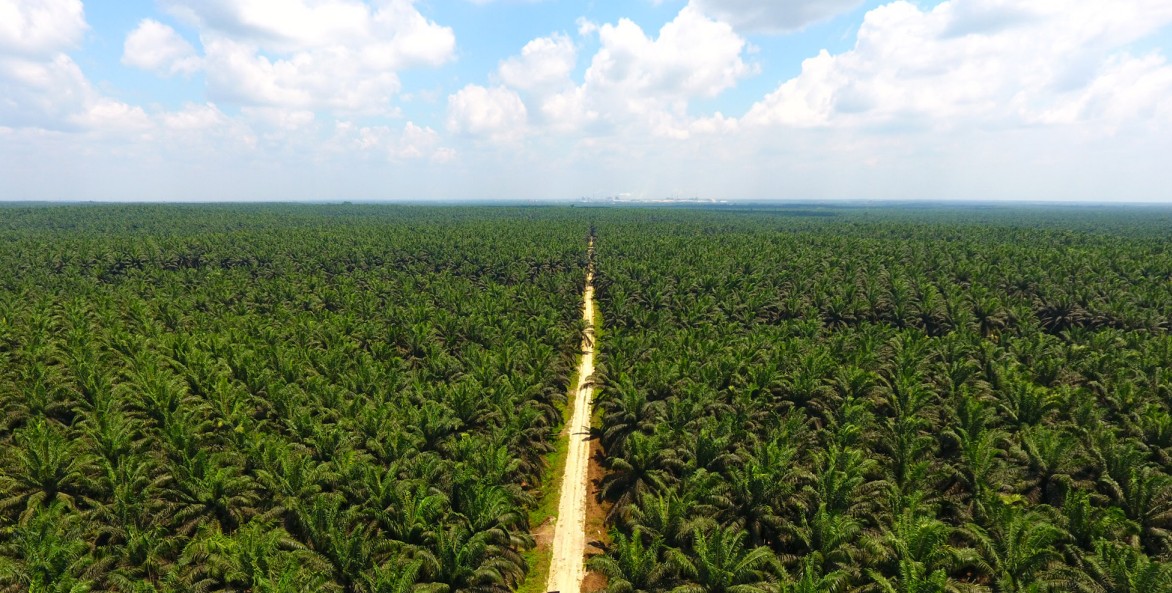
Indonesia’s palm oil sector sits at the intersection of two strategic imperatives: accelerating economic growth through export-led trade and adhering to increasingly strict sustainability and climate commitments. As the world’s largest palm oil producer — accounting for approximately 59% of global output in 2024 (GAPKI, 2025) — Indonesia’s policy and diplomatic choices in this sector have significant implications for global commodity markets, international climate cooperation, and national economic resilience.
The post-pandemic global economy is more fragmented, marked by protectionist trade measures, volatile commodity prices, and a tightening of environmental regulations in key importing markets. The European Union’s Deforestation Regulation (EUDR), for instance, imposes traceability and deforestation-free supply chain requirements on palm oil imports from December 2024 (European Union, 2023). These dynamics demand that Indonesia’s palm oil diplomacy move beyond defensive responses into a proactive framework that positions sustainability as a competitive advantage.
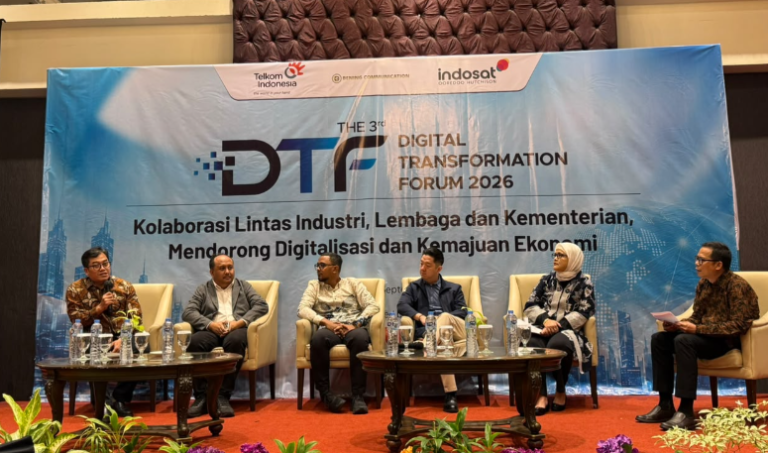
This white paper examines Indonesia’s strategic use of palm oil in economic diplomacy, drawing on the insights of Dr. M. Fadhil Hasan, Senior Economist and Head of Foreign Affairs at IPOA, whose recent keynote at the IVPA Fourth Global RoundTable — Indonesia’s Balancing Act: Sustainability Mandates and Competitive Advantage in Global Markets — reframed sustainability compliance not as a constraint but as a lever for market leadership.
Palm Oil in Indonesia’s Economic Diplomacy
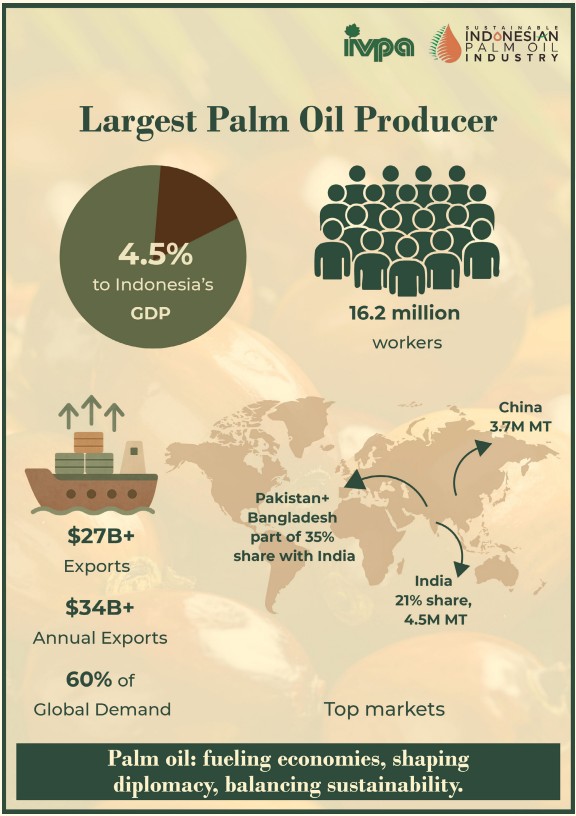
Palm oil is not merely an export commodity for Indonesia — it is a strategic instrument of statecraft, central to the country’s global economic positioning. In 2024, palm oil and its derivatives generated over USD 27.76 billion in export revenue (GAPKI, 2025), maintaining its status as Indonesia’s largest agricultural export. India, Pakistan, and Bangladesh together accounted for about 37% of Indonesia’s palm oil exports in 2023/24, with India consuming 4.5 million metric tons alone (FAS, 2024). This market concentration provides Indonesia with tangible leverage in trade negotiations but also underscores the need for diversification to mitigate geopolitical risks.
Dr. M. Fadhil Hasan has argued that the “strategic value of palm oil lies in its elasticity” — its capacity to serve multiple markets and applications, from food to biofuels to industrial goods. This adaptability enables palm oil to be embedded into broader cooperation frameworks such as renewable energy technology transfers, agricultural R&D partnerships, and even climate finance mechanisms. By bundling palm oil trade agreements with such initiatives, Indonesia amplifies the diplomatic weight of each transaction, converting a single commodity into a multi-sector bargaining chip.
From a geopolitical theory lens, palm oil functions as what political scientist Joseph Nye terms a “hard–soft hybrid” power resource. Its material export value represents “hard” power, while its ability to align with international sustainability norms generates “soft” reputational capital. This duality allows Indonesia to enter negotiations offering not just bulk commodity reliability, but also a climate-aligned and increasingly certified supply chain.
A notable example came when the European Union implemented its Delegated Act restricting biofuels derived from high–ILUC (Indirect Land Use Change) feedstocks. Indonesia’s response was twofold: first, it leveraged its supply dominance to negotiate phased compliance terms, preventing a sudden market shock; second, it used the moment to promote the Indonesian Sustainable Palm Oil (ISPO) certification as a credible alternative to EU schemes (FAS, 2024).
The economic diplomacy of palm oil is equally intertwined with food security diplomacy. Countries such as Bangladesh, Egypt, and Pakistan depend heavily on palm oil for affordable cooking oil, using it to stabilize domestic prices and prevent inflationary spikes. This reliance creates a durable form of “reciprocal political capital” — goodwill that Indonesia can draw upon in unrelated negotiations, from defense cooperation agreements to support in multilateral forums like the WTO and ASEAN-led platforms.
The Indonesia–Bangladesh Preferential Trade Agreement (IB-PTA), for instance, linked palm oil supply guarantees with expanded access for Indonesian manufactured goods, illustrating the cross-sectoral leverage palm oil can provide.
Challenges and Strategic Outlook
Yet, palm oil’s diplomatic utility is not without friction. Trade disputes with the European Union over sustainability criteria, and with the United States over alleged subsidies, expose the sector’s vulnerability to non-tariff barriers. These challenges have pushed Jakarta to invest heavily in traceability technology, satellite monitoring of plantations, and digitalized certification systems to meet the compliance requirements of diverse markets.
At the same time, Indonesia has strengthened South–South cooperation frameworks, particularly with African nations such as Kenya and Nigeria, where palm oil demand is projected to grow annually through 2030 (FAO, 2024).
In sum, palm oil in Indonesia’s economic diplomacy operates at the nexus of trade resilience, geopolitical strategy, and sustainable development narratives. It is a commodity that — through careful policy alignment, targeted bilateral engagement, and strategic market diversification — transforms into a versatile diplomatic instrument capable of advancing both national economic growth and international strategic objectives.
The IPOA–IVPA MoU: Commodity Trade Elevated to Strategic Diplomacy
In 2025, during the Fourth Global RoundTable, the Indonesian Palm Oil Association (IPOA) and the Indian Vegetable Oil Producers’ Association (IVPA) signed a Memorandum of Understanding (MoU) that exemplifies how commodity agreements can transcend transactional trade and become instruments of strategic diplomacy. While the language of “delegation exchange” and “knowledge sharing” is standard in such accords, this agreement is designed with more ambitious goals: it creates a formalized framework for joint advocacy in global policy forums, coordinated research on yield and efficiency improvements, and harmonized sustainability messaging aimed at Western regulatory audiences.
The significance of this MoU is grounded in the structure of global palm oil trade. India is Indonesia’s largest single market, purchasing approximately 21% of total palm oil exports in 2024 (FAS, 2024). By institutionalizing cooperation with IVPA, Indonesia effectively locks in demand stability at a time when Environmental, Social, and Governance (ESG) standards in Europe and North America threaten to narrow market access. For India, the agreement secures continuity of supply, strengthens its role in shaping palm oil’s sustainability narrative, and provides collaborative leverage in setting biofuel blending policies that are economically viable and resistant to protectionist environmental measures.
Whereas, from a geopolitical standpoint, the MoU functions as a hedge against single-market dependence. Should the European Union’s market contract further under the Renewable Energy Directive II (RED II) due to restrictions on high–ILUC feedstocks, the India corridor — now reinforced by a strategic partnership — becomes a stabilizing counterweight (Reuters, 2024). Moreover, the R&D collaboration component positions both countries to jointly define and potentially export industry benchmarks in sustainable oil palm cultivation. If successfully implemented, these standards could gain traction in emerging markets in Africa and the Middle East, regions where palm oil demand is projected to grow steadily over the next decade.
The agreement also reflects a deliberate pivot toward collective market defense. Coordinated promotion of palm oil in third-country markets enables Indonesia and India to counter negative campaigns on palm oil’s environmental footprint with unified, evidence-based messaging. Pooling resources for such advocacy increases its credibility, particularly when paired with traceability initiatives and independent verification schemes.
By blending commercial objectives with environmental commitments, the IPOA–IVPA MoU signals a maturing phase of palm oil diplomacy, where market access, regulatory resilience, and narrative control are pursued in tandem. It represents not just a bilateral trade accord, but a template for commodity-exporting nations to elevate sectoral agreements into platforms of long-term strategic influence.
Balancing Sustainability Mandates with Growth Ambitions
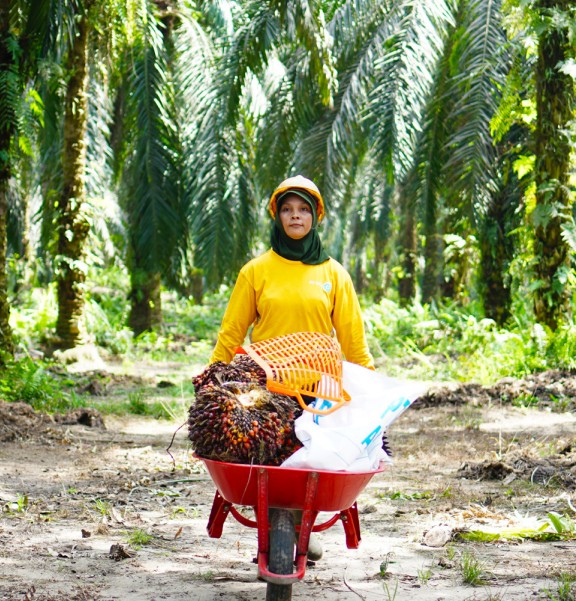 The tension between Indonesia’s growth ambitions and green mandates is most visible in compliance with the EUDR and other sustainability requirements. Roughly 40% of Indonesia’s oil palm plantations are smallholder-operated (INDEF), and the cost of meeting traceability requirements poses a disproportionate burden on them.
Dr. Hasan reframes this challenge: compliance is not simply a hurdle, but a means to secure long-term access to premium markets. He advocates for a tiered compliance support system in which government funds and industry associations help smallholders access geolocation mapping, certification, and sustainable inputs.
This approach aligns with research from the Institute for Development of Economics and Finance (INDEF), which warns that exclusion of smallholders from supply chains due to sustainability costs could undermine rural incomes and trigger social unrest. Moreover, sustainability-aligned practices could unlock climate finance streams.
For example, verified deforestation-free supply chains could qualify for results-based payments under REDD+ frameworks (UNFCCC), creating an additional revenue line for compliant producers.
Palm Oil Statecraft: Country-Level Case Narratives
Indonesia’s palm oil diplomacy operates differently in each major market, tailored to local economic needs, political priorities, and trade sensitivities. In India, the relationship is anchored by both scale and strategic reliability. India imported approximately 4.5 million metric tons of Indonesian palm oil in 2024, representing the largest single destination for the commodity. This trade is not isolated; it has been leveraged in broader negotiations, such as securing more favorable tariff structures for Indonesian agricultural exports and fostering cooperation in food security. The recent IPOA–IVPA MoU has deepened this engagement, creating a framework for joint market promotion, collaborative R&D in sustainable cultivation, and the defense of palm oil’s environmental profile in global discourse.
In China, palm oil imports reached 3.7 million tons in 2024 (IndexBox), but the trade extends beyond pure commodity exchange. Palm oil has become entwined with China–Indonesia renewable energy cooperation, with biofuel technology partnerships emerging as a diplomatic sweetener. These linkages tie palm oil supply stability to broader commitments in climate action and technology transfer, giving Indonesia a stronger hand in negotiations.
For Pakistan, palm oil is a critical element of the bilateral Preferential Trade Agreement (PTA), which reduces duties on palm oil in exchange for increased access for Pakistani textiles in the Indonesian market. This arrangement illustrates palm oil’s use as a reciprocal bargaining tool, where concessions in one sector are traded for gains in another. Beyond tariff structures, palm oil trade has also supported dialogue on food security and industrial cooperation, contributing to a resilient bilateral relationship.
Collectively, these country-specific engagements demonstrate Indonesia’s ability to use palm oil not only as a revenue generator, but as a versatile diplomatic instrument that can be adapted to diverse geopolitical contexts.
Action Agenda for Sustainable Palm Oil Leadership
For Indonesia to sustain its leadership in the global palm oil market while meeting green mandates, policy design must move beyond reactive compliance and toward proactive, structural reform. One priority is the institutionalization of sustainability financing mechanisms.
This could take the form of a blended finance facility, drawing on state budgets, development partner funding, and private sector investment to subsidize smallholder certification, satellite mapping, and low-emission farming techniques. By lowering the cost barrier, such mechanisms would prevent the exclusion of smallholders from global supply chains and align the sector with premium market access requirements.
In parallel, Indonesia should expand South–South sustainability alliances, replicating the IPOA–IVPA model with partners in Africa and the Middle East. These alliances could coordinate joint promotional campaigns, pool technical expertise, and push back collectively against trade barriers disguised as environmental policy. Doing so would create a network of markets less vulnerable to Western regulatory shocks.
A third pathway is the integration of palm oil into climate diplomacy. By embedding palm oil’s traceability systems and verified deforestation-free supply chains into Indonesia’s Nationally Determined Contributions (NDCs) under the Paris Agreement, the sector could gain access to results-based climate finance programs like REDD+. This would transform sustainability from a compliance cost into a revenue source.
This approach is further reinforced by research from the Institute for Development of Economics and Finance (INDEF), which underscores the strategic value of strengthening the Indonesian Sustainable Palm Oil (ISPO) certification system as a tool for both competitiveness and climate alignment. INDEF states that ISPO, when rigorously implemented, can improve legal certainty, elevate production standards, and reduce greenhouse gas emissions — thereby positioning Indonesian palm oil as a premium, climate-compatible commodity in global markets.
Conclusion
Indonesia’s palm oil sector faces a dual mandate: fuel economic growth while adhering to tightening environmental requirements. As Dr. Hasan’s keynote made clear, this is not a zero-sum game. Through strategic diplomacy, innovation in sustainability financing, and targeted bilateral agreements like the IPOA–IVPA MoU, Indonesia can turn the sustainability challenge into a platform for global market leadership.
The coming decade will test whether the country can navigate this balance — but with the right institutional frameworks and diplomatic agility, palm oil can remain not just an economic lifeline, but a flagship of Indonesia’s sustainable growth narrative.