The oil palm (Elaeis guineensis) is an oil plant that produces palm oil, which has a leading position in the global market of vegetable oils. It plays a strategic role in the economic and social development of Indonesia.
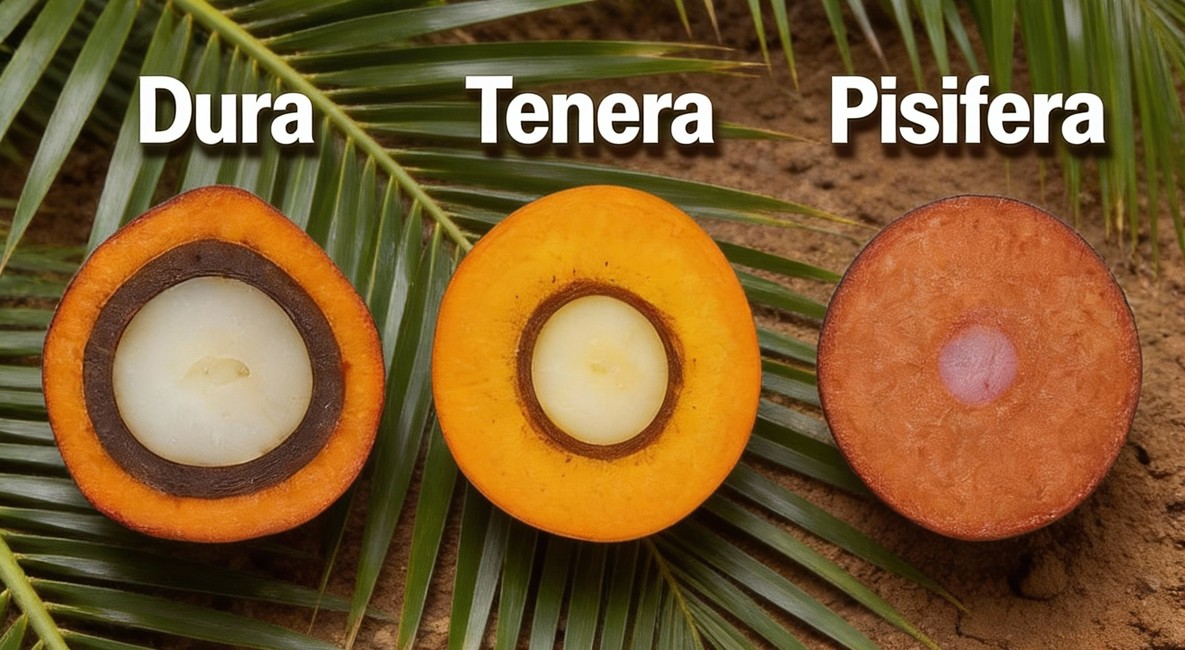
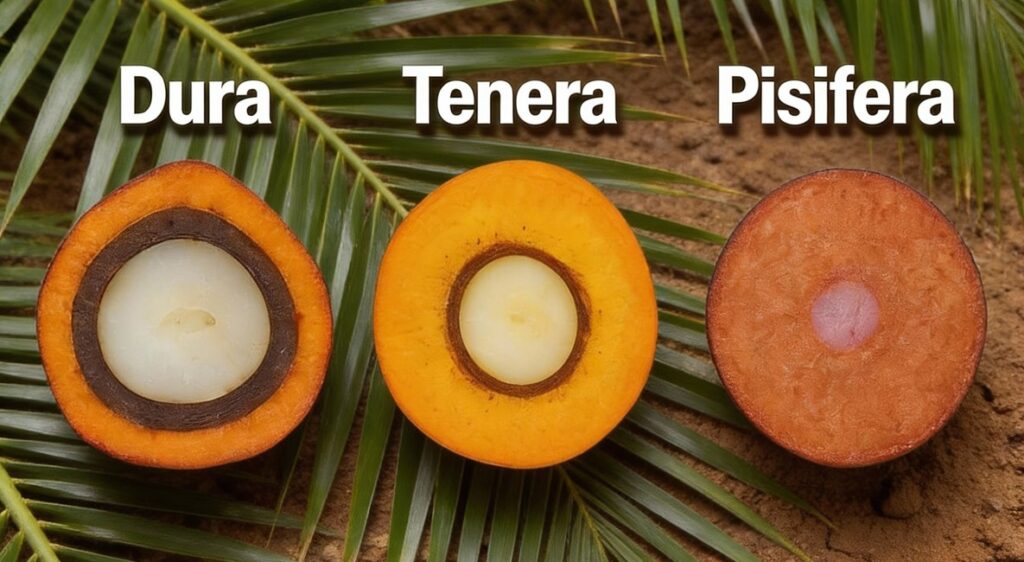
In the Indonesia’s oil palm plantations, there are three main types of oil palm, namely: Dura, Tenera, and Pisifera. Those three can be distinguished by the thickness of their fruit shells.
The three types possess distinct characteristics and serve as the foundation for plant breeding programs aimed at producing superior, high-productivity oil palm seedlings. Currently, almost all commercial oil palm plantations utilize Tenera seedlings, which are the result of a cross between Dura and Pisifera.
What is Dura, Tenera, and Pisifera?
The classification into Dura, Tenera, and Pisifera is based on the thickness of the oil palm fruit shell.
- Dura has a thick shell, approximately 2–5 mm.
- Tenera has a thin shell, approximately 1–2.5 mm.
- Pisifera generally lacks a shell or has only a very thin one.
These characteristic differences directly influence the content of the fruit pulp (mesocarp) and palm kernel, as well as the potential oil yield.
Dura: Oil palm with thick fruit shells
Dura is a type of oil palm characterized by a thick shell and a relatively large kernel. However, this shell thickness results in a lower proportion of fruit pulp compared to other types.
Key characteristics of the Dura type include:
- A thick shell (approximately 2–5 mm).
- A large palm kernel.
- Relatively thin fruit pulp.
- Lower oil yield compared to the Tenera type.
Although its oil productivity is not as high as that of Tenera, Dura plays a crucial role in breeding programs, serving as the female parent crossed with Pisifera to produce superior planting material.
Pisifera: Male Parent in Oil Palm Breeding
Pisifera is a type of oil palm characterized by fruit that generally lacks a shell. The fruit consists primarily of mesocarp with a very small kernel.
Characteristics of the Pisifera type include:
- Absence or near-absence of a shell.
- High pulp content.
- Female flowers that are generally sterile.
- Rarely produces normal fruit bunches.
Due to the sterility of its female flowers, Pisifera is not used for commercial production. However, it is crucial as a male parent—or pollen source—in breeding programs designed to produce the Tenera variety.
Tenera: Superior Dura-Pisifera crossbreed
Tenera is the result of a cross between Dura and Pisifera, yielding a combination of the best traits from both parents.
Tenera features:
- A thin shell.
- Thicker fruit pulp.
- Fertile female flowers.
- Normal fruit bunch production.
- Higher oil yield.
Genetically, shell thickness in oil palms is controlled by a single major gene. Dura has the genotype ShSh and Pisifera has the genotype shsh, while Tenera—the result of crossing the two—has the genotype Shsh.
This genetic combination makes Tenera the most productive and widely cultivated type of oil palm in the world.
Advantages of Tenera in palm oil production
Tenera is known as the oil palm variety with the highest oil productivity. Compared to its two parent varieties, Tenera is capable of producing approximately 30 percent more oil.
Some of Tenera’s advantages include:
- A higher percentage of fruit pulp.
- A greater palm oil yield.
- Higher efficiency of processing at the mill.
- A potential oil content per bunch of around 28 percent.
- Suitability for cultivation on both commercial plantations and smallholder farms.
These advantages have made Tenera the primary standard in the modern palm oil industry.
Why palm oil industry uses Tenera seed?
Almost all commercial oil palm plantations in Indonesia use Tenera seedlings because they deliver higher yields.
In addition to having a higher extraction rate of oil, the thin shells of the Tenera variety are easier to crack during processing at the mill. This enhances the efficiency of the oil extraction process and reduces the risk of equipment damage.
Conversely, using seedlings of uncertain origin carries the risk of producing Dura-type palms with lower productivity, which can diminish plantation profitability in the long run.
The importance of using certified palm seedlings
The productivity of oil palm plantations is determined not only by crop maintenance but also by the quality of the planting material used from the outset.
Certified Tenera seedlings are produced through breeding programs involving selected Dura and Pisifera parent palms. Therefore, the use of official, certified planting material is a crucial factor in ensuring:
- High productivity of Fresh Fruit Bunches (FFB).
- High extraction rate.
- Uniform crop growth.
- More sustainable business profitability.
Conversely, the use of illegal or uncertified seedlings can lead to financial losses due to low productivity and low harvest quality.
Conclusion
Dura, Tenera, and Pisifera are the three main types of oil palm, distinguished by the thickness of their fruit shells. Dura serves as the female parent and Pisifera as the male parent, while Tenera—the result of crossing the two—boasts the highest oil productivity.
Due to its superior oil-yielding capability, Tenera has become the preferred choice for the oil palm plantations, both in Indonesia and in other producing countries across the globe.
Consequently, the use of certified Tenera seedlings is a crucial step toward enhancing the productivity and sustainability of the national palm oil sector. (*)
WikiSawit – Dura, Tenera, dan Pisifera. https://gapki.id/id/wikisawit/knowledge-base/dura-tenera-dan-pisifera/