JAKARTA – The ratification of the draft agrarian reform law into an agrarian law by the house of representatives (DPR) on 22 September 2026 marks an increasingly close alignment between the executives and the legislature. It is reflected from the quick process of ratifying the regulation that has a strategic role in the agrarian sector of Indonesia.
However, the rapid pace of the legislative process raises questions regarding the depth of deliberation. A key issue requiring attention is the extent to which genuine public participation was facilitated and how the interests of affected communities were accommodated. Addressing both aspects is crucial to preventing substantive flaws in the regulation.
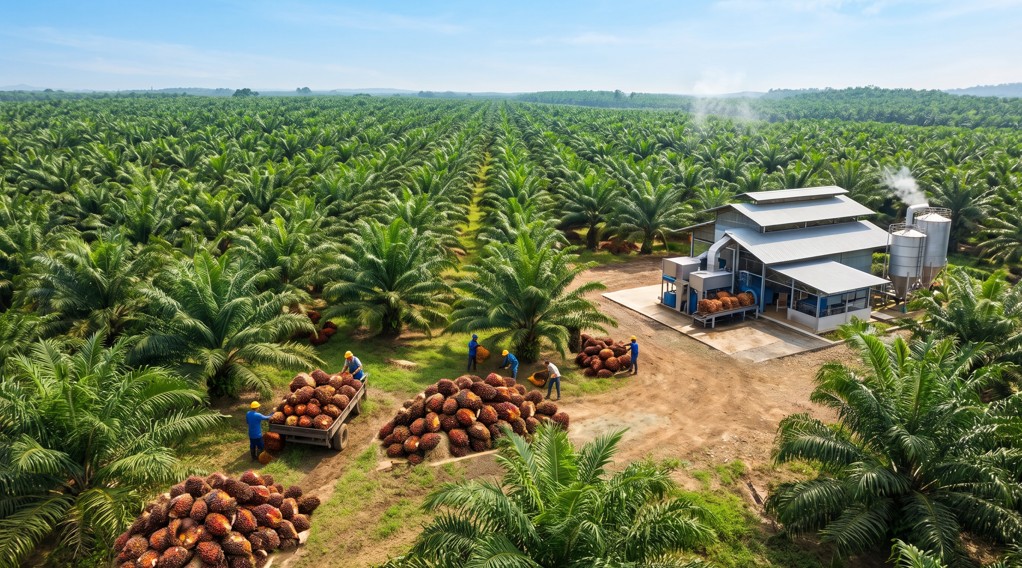
A national agrarian policy governing millions of hectares of land and investments worth trillions of rupiah should not stem from a rushed process. The impact would be felt directly by the palm oil industry—a key pillar of the national economy that generates tens of billions of USA dollars in foreign exchange annually and serves as a livelihood for millions of people across the archipelagic country.
Given its vast scale, the palm oil industry remains highly vulnerable without the backing of certainty on the spatial planning and land use. Its future trajectory depends heavily on the government’s commitment to reforming land governance to ensure fairness and predictability, while also providing certainty for long-term investment. While earlier legislative discussions offered hope for resolving various ambiguities, significant gaps remain.
From the perspectives of governance and budget efficiency, the legislators’ decision to scrap the plan for establishing the Agrarian Reform Implementing Agency (LPRA)—originally conceived as the National Agrarian Reform Agency (BRAN)—along with its supervisory board, can be viewed as a move to avoid expanding bureaucratic structures.
However, delegating the establishment of the LPRA to a Presidential Regulation (Perpres) introduces its own legal vulnerabilities.
An agency established via Presidential Regulation possesses relatively more limited institutional legitimacy, executive authority, and budgetary certainty compared to one established through a formal statute (Act of Parliament). Consequently, the governance of agrarian reform is potentially more susceptible to the influence of shifting political cycles, rather than being anchored in a permanent institution with a robust legal foundation and the authority to resolve cross-ministerial issues.
On the other hand, there have been positive developments in the mechanism for designating priority areas for agrarian reform. The burden of verification no longer rests entirely on local communities as the state has been now required to systematically identify and verify land data.
This shift is crucial for protecting independent smallholders who—despite managing the majority of the nation’s oil palm plantations—often struggle to access formal supply chains due to administrative hurdles or unilateral state designations of forest areas.
Nevertheless, the new legislation carries the potential for regulatory friction, as it is not yet fully harmonized with several existing legal frameworks. These include the 1960 Basic Agrarian Law (UUPA), the Forestry Law, the Plantation Law, and land-related provisions within the Job Creation Law.
Without clearly defined boundaries of authority between technical ministries and the new regulatory instruments, the rules risk prolonging land disputes on the ground rather than resolving them.
First, certainty on hierarchy of land rights and conservation
Legally, Freehold Titles (SHM) held by the community prior to the issuance of a Right to Cultivate (HGU) must be recognized as rights possessing full legal force. Conversely, an HGU validly issued before the emergence of conflicting claims must also secure an equally strong legal standing that is not easily challenged.
Furthermore, High Conservation Value (HCV) and High Carbon Stock (HCS) areas located within concession zones need to be explicitly excluded from classification as “abandoned land.” This ensures that a company’s commitment to preserving conservation areas does not result in administrative sanctions from the state.
Second, equal protection and dispute resolution mechanisms
The principle of equality before the law must serve as the foundation. Both legitimate holders of Cultivation Rights (HGU) and community members holding land rights require protection against illegal land occupation.
Any land dispute should be resolved through formal judicial mechanisms or authorized mediation bodies, rather than through discretionary administrative decisions.
Third, flexible limits of operations
Restrictions on plantation area size should avoid the application of rigid, uniform limits across all regions. While such limits must remain consistent with statutory regulations, they should also take into account economies of scale, regional agro-climatic variations, and the level of investment already committed to downstream infrastructure development.
This approach is crucial to ensure that land policies do not overlook the specific nature of the plantation industry, which requires long-term investment and a certain operational scale to maintain efficiency.
Fourth, non-retroactivity principle and partnership consistency
To maintain investors’ confidence, new provisions must strictly respect the principle of non-retroactivity—meaning new rules cannot be applied retroactively to rights or investments legally acquired under previous regulations.
Regarding the obligation to facilitate community-managed plantations covering 20 percent of the area, the regulatory framework must be closely aligned with the productive partnership model stipulated in the Plantation Law.
Ultimately, the successful implementation of the Agrarian Reform Law hinges on the integration of an open, transparent, and unified land administration system.
Without a reliable “One Map” system, overlapping boundaries between plantation concessions, conservation areas, and indigenous lands will remain a persistent issue.
Agrarian reform should not be reduced to a mere exercise in land distribution. Rather, it must serve as the foundation for an equitable economic transformation by reconciling community welfare with the sustainability of business operations.
Given the rapid pace at which regulations are being ratified, rigorous public and legislative oversight of the implementing rules is crucial. On-the-ground implementation will determine whether these regulations can truly resolve long-standing agrarian issues.
The national palm oil industry requires long-term legal certainty. This certainty must protect the rights of smallholders while safeguarding strategic investments against recurring disputes.
Striking a balance between these two interests will be a critical test for Indonesia’s agrarian governance and will determine the state’s capacity to foster sustainable and inclusive economic growth. (Edi Suhardi, Palm Oil Sustainability Analyst)