Oil Palm? The Easiest Explanation of Oil Palm
Oil palm is a tropical plant whose fruit is processed into palm oil. This oil is not only used for cooking oil, but is also found in **instant noodles, biscuits, chocolate, soap, shampoo, cosmetics, and even biofuel**.
Oil palm belongs to the genus Elaeis and the family Arecaceae (palms). Although often confused with coconut, oil palm has different characteristics and functions.
The Origins of Oil Palm
Naturally, oil palm is not native to Indonesia. Worldwide, there are two main species of oil palm:
Elaeis guineensis
This species originates from West Africa, but has actually become the most widely cultivated type of oil palm in the world. Today, Elaeis guineensis is the main source of global palm oil, mainly because it is developed on a massive scale in Indonesia and Malaysia.
Elaeis oleifera
This species originates from Central and South America. Its production is lower and it is still cultivated on a limited scale, but it is important for research and the development of future oil palm varieties.
Even though oil palm is not native to Indonesia, Indonesia has actually become the world’s largest producer of palm oil4. Indonesia is not its place of origin, but it became the main player thanks to suitable tropical conditions and intensive cultivation development.
The Shape and Characteristics of the Oil Palm Tree
Oil palm is a tall tree-shaped plant that can grow up to 2024 meters5. Its main characteristics:
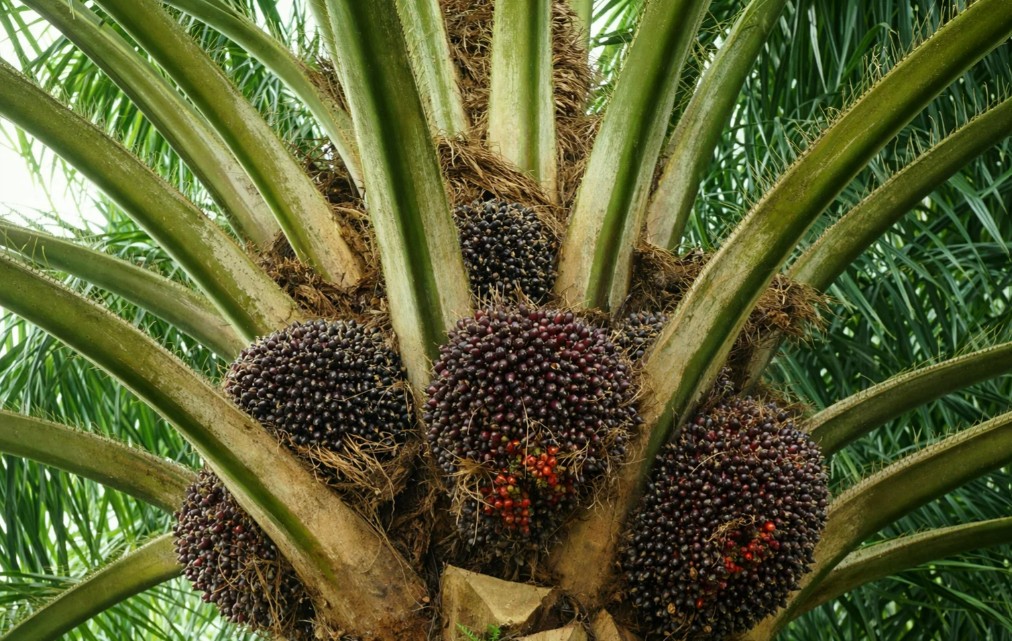
- Single, upright trunk
- Long, pinnate leaves (similar to coconut)
- Strong fibrous roots
- Fruit grows in clusters within large bunches
Although the fruits are small, a single oil palm bunch can be very heavy and rich in oil.
What Is Inside an Oil Palm Fruit?
The oil palm fruit consists of three main layers6:
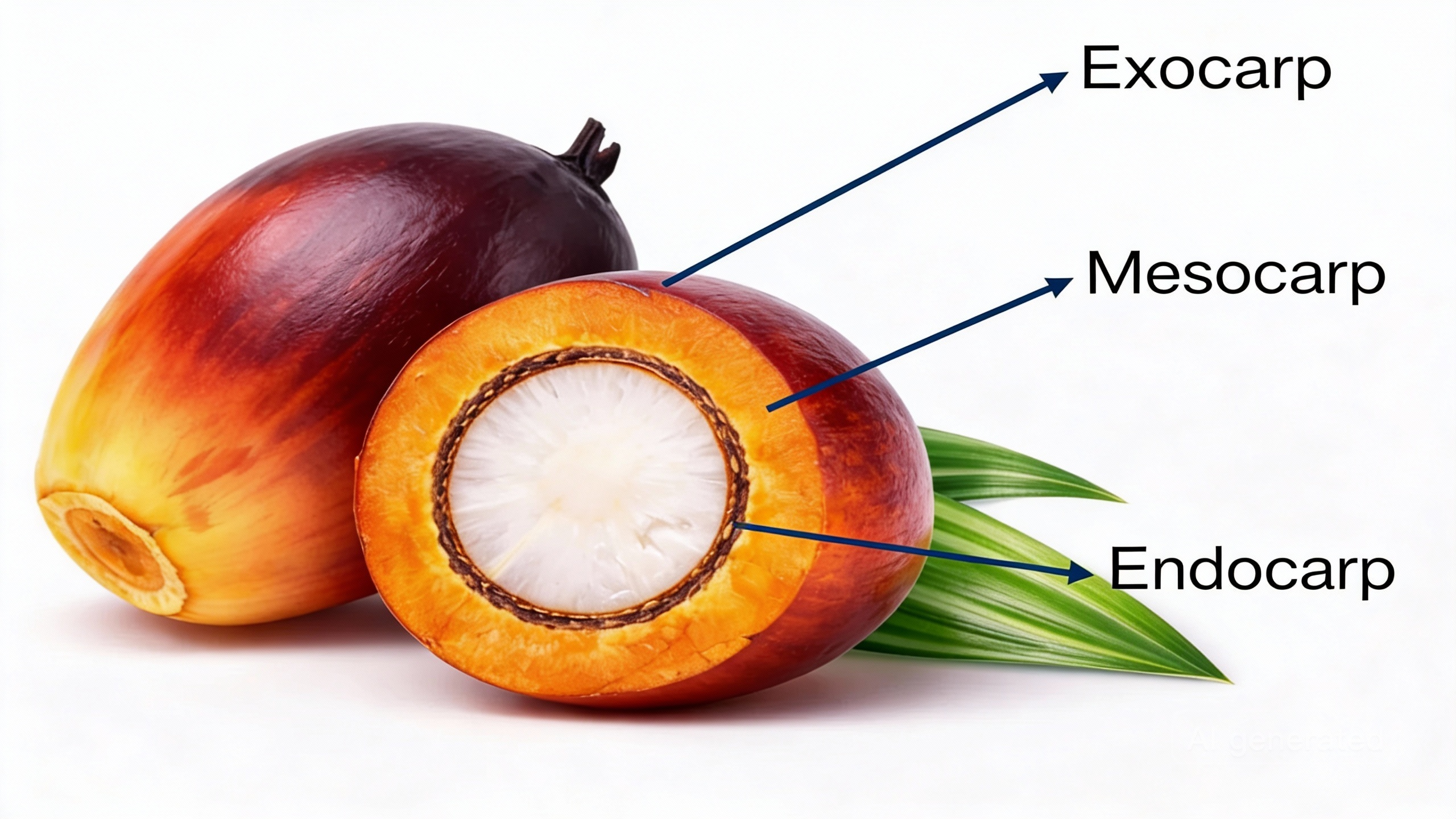
- Exocarp ? the outer skin, smooth and reddish in color
- Mesocarp ? the fibrous fruit flesh, the main source of palm oil
- Endocarp ? the hard shell protecting the seed
Inside the shell is the seed (kernel), which is also processed into palm kernel oil, different from the palm oil derived from the fruit flesh.
Types of Oil Palm
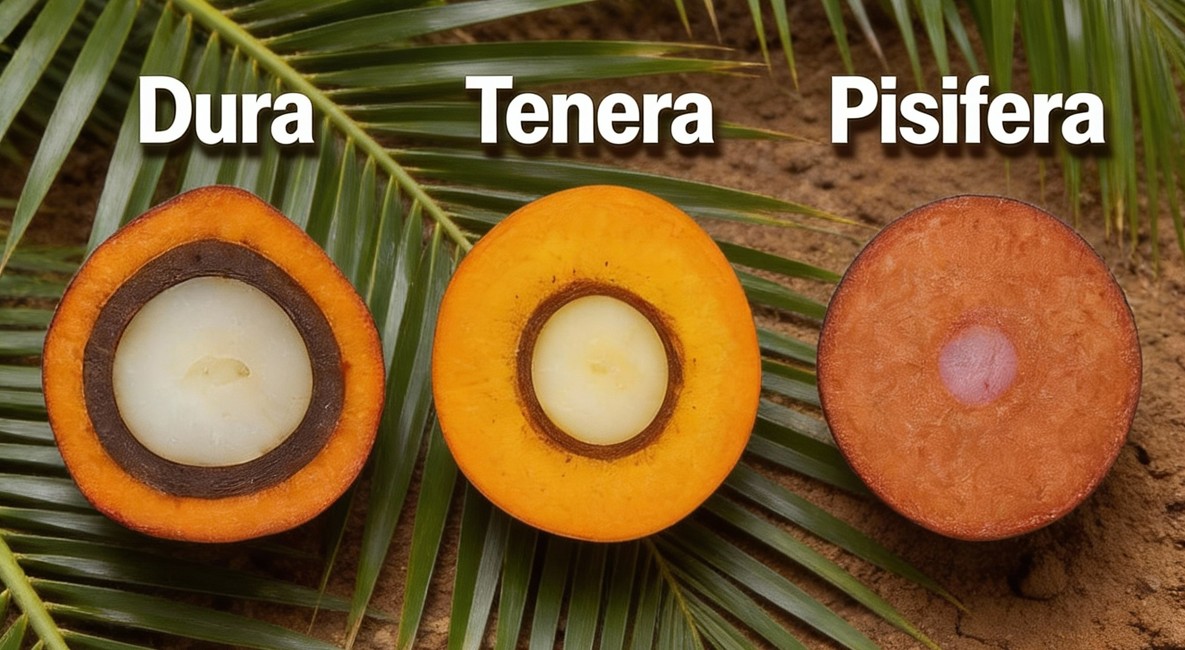
Based on shell thickness, oil palm is divided into7:
-
Dura ? thick shell
-
Pisifera ? almost no shell and rarely bears fruit
-
Tenera ? a cross between Dura Pisifera
Tenera is the type most widely used in modern plantations because its oil production is the highest.
Why Is Oil Palm Suitable for Indonesia?
Oil palm grows optimally in tropical areas with conditions8:
-
Temperature of 2428 C
-
High rainfall (1,5004,000 mm/year)
-
Adequate sunlight (57 hours/day)
-
Fertile soil
For this reason, oil palm is widely cultivated in Sumatra, Kalimantan, and Sulawesi.
Why Is Oil Palm Important?
Oil palm plays a major role because?:
- Its oil production is the most efficient compared to other oil crops
- It is used in thousands of everyday products
- It can be a renewable energy source (biofuel)
- It absorbs a large amount of labor
- It is an important export commodity for Indonesia
Oil palm is not just about plantations or big industry. This plant is very close to our daily lives, often without us even realizing it.
From waking up, bathing, and eating to riding a vehiclethere is a good chance that all of it bears the trace of oil palm.
References
Directorate General of Plantations, Ministry of Agriculture RI. (2024). Indonesian Plantation Statistics: Oil Palm. https://ditjenbun.pertanian.go.id/
Brawijaya University. (2015). Botanical Study and Utilization of Oil Palm. https://repository.ub.ac.id/10885
UIN Sultan Syarif Kasim Riau. (2018). Morphological Study and Classification of Oil Palm. https://repository.uin-suska.ac.id/15043
4 Indonesian Palm Oil Association (GAPKI). (2024). Data and Publications of the Palm Oil Industry. https://gapki.id/en/
5 University of Lampung. (2013). Morphology and Growing Requirements of Oil Palm. https://digilib.unila.ac.id/3517
6 Muhammadiyah University of Yogyakarta. (2019). Morphology and Fruit Structure of Oil Palm. https://repository.umy.ac.id/handle/123456789/30077
7 UIN Sultan Syarif Kasim Riau. (2018). Oil Palm Varieties: Dura, Pisifera, and Tenera. https://repository.uin-suska.ac.id/16582
8 University of Lampung. (2013). Growing Requirements of Oil Palm. https://digilib.unila.ac.id/3517
? Labuhan Batu University. (2017). Botany of the Oil Palm Plant. https://repository.ulb.ac.id/1057