What is PKM (Palm Kernel Meal)?
PKM (Palm Kernel Meal), also known as palm kernel cake (BIS), is a by-product of the palm kernel oil extraction process produced from oil palm kernels whose oil (CPKO) has been removed through pressing or solvent extraction. Despite its by-product status, PKM has high economic value because it is widely used as animal feed.
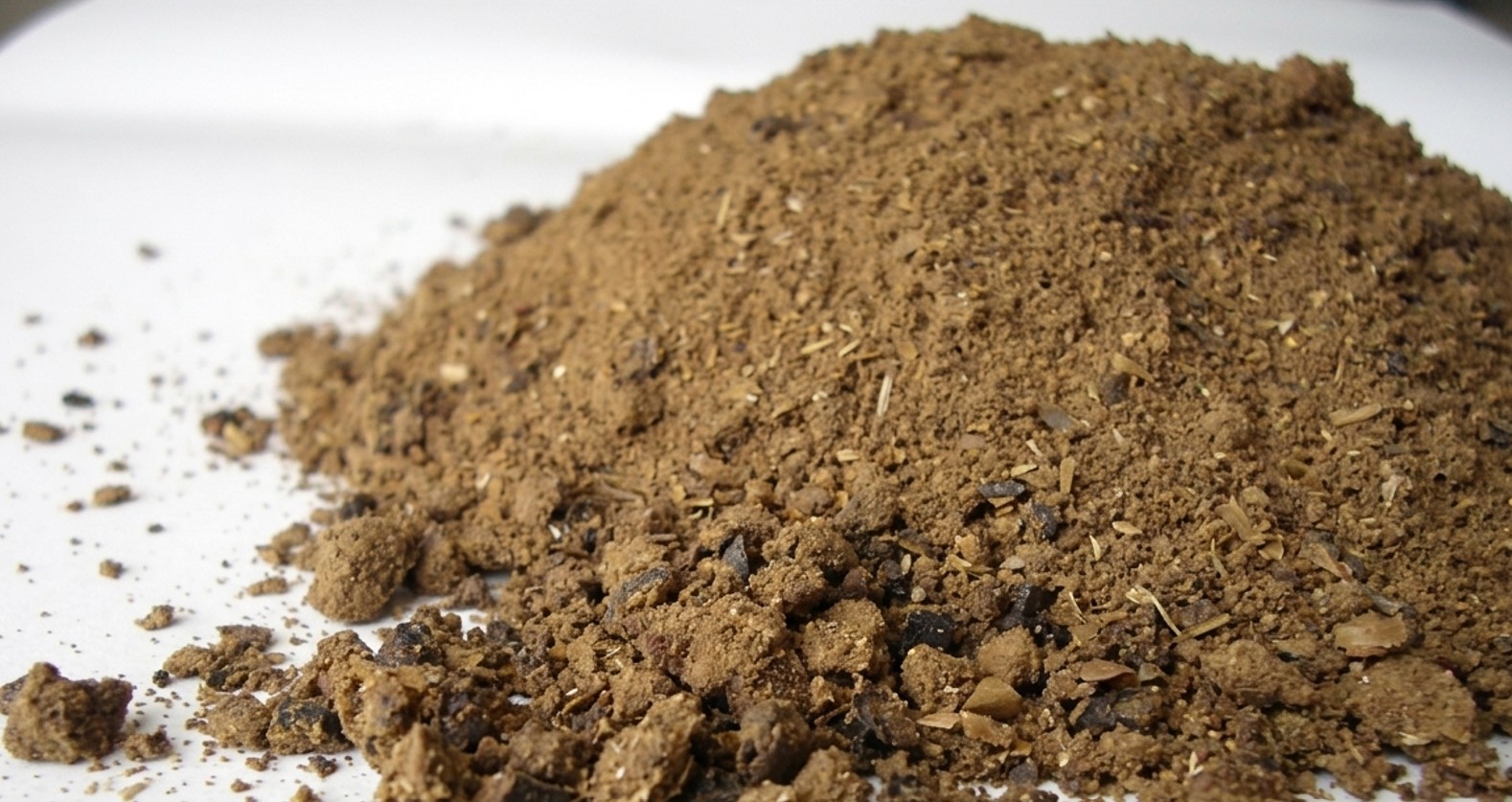
PKM vs PKE: What’s the Difference?
PKM is often compared with (and even considered the same as) PKE (Palm Kernel Expeller), but in fact the difference lies in the oil extraction method:
- Mechanical extraction (expeller press) uses mechanical pressure to remove the oil. The resulting cake (PKE) usually still retains about 812% oil, making it richer in energy.
- Solvent extraction (solvent extraction) uses chemical solvents to draw out almost all of the oil content. The resulting cake (PKM) has a far lower residual oil content, but is more concentrated in protein and fiber.
Nutritional Content
PKM contains about 1418% crude protein and a fairly high crude fiber content, making it an economical source of energy and protein for various types of livestock. Its metabolizable energy content ranges from 1,7002,200 kcal/kg for poultry, and 2,5002,900 kcal/kg for ruminants (cattle, goats, sheep). PKM is also rich in minerals, especially phosphorus, potassium, and magnesium.
One of the limiting factors in the use of PKM is its high fiber content, with mannose as the dominant component, which can reach 56.4% of its total cell wall.4 On the other hand, this high mannan content also has the potential to be utilized as a functional feed additive, such as a prebiotic that can improve livestock health.4
Uses of PKM
PKM is widely used as an alternative feed ingredient for various types of livestock:4 5
- Poultry (broiler chickens, ducks) as a partial substitute for corn in feed formulations
- Ruminants (dairy/beef cattle, goats, sheep) as an additional source of protein and fiber in concentrates
- Fish and shrimp feed in certain formulations
A number of studies also show that adding enzymes to PKM can reduce its crude fiber content, thereby improving the quality and digestibility of the resulting feed rations.6
Opportunities for Quality Improvement
Because it is so abundantly available in Indonesia, various innovations continue to be developed to increase the added value of PKM for example, by improving its total solubility and protein solubility, so that PKM can become a more optimal functional feed ingredient as a source of energy and protein, while also having the potential to replace imported feed ingredients such as corn, corn gluten meal (CGM), soybean meal (SBM), and distillers dried grains with solubles (DDGS), which are far more expensive.4
Relevance to the Indonesian Palm Oil Industry
As the world’s largest palm oil producer, Indonesia has an abundant supply of PKM, which has the potential to be a strategic solution for reducing the national livestock industry’s dependence on imported feed ingredients. The use of PKM is also a tangible embodiment of the zero waste principle in the palm oil industry turning the by-products of CPKO processing into feed ingredients of high economic value for the livestock sector.
References
STA, “Palm Kernel Meal”, https://www.sta.co.id/page/palm-kernel-meal/id
Makmur Amanah Sejahtera Group, “Palm Kernel Cake for Animal Feed: The Best Guide of 2026”, https://makmuramanah.co.id/2026/04/17/bungkil-sawit-untuk-pakan-ternak/
Makmur Amanah Sejahtera Group, “Palm Kernel Cake for Animal Feed: The Best Guide of 2026”, https://makmuramanah.co.id/2026/04/17/bungkil-sawit-untuk-pakan-ternak/
4 Agropustaka, “Processed Palm Kernel Cake, an Alternative Solution for Domestic Feed Raw Materials”, https://www.agropustaka.id/kabar/bungkil-inti-sawit-terolah-solusi-alternatif-bahan-baku-pakan-domestik/
5 FeedBiz Vision, “The Potential of Palm Kernel Meal in Feed”, https://www.feedbizvision.com/pentingnya-palm-kernel-meal-dalam-pakan/
6 Brawijaya University Repository, “Effect of Using Palm Kernel Meal (PKM) as a Corn Substitute with Different Enzyme Forms on the Chemical Quality of Broiler Chicken Meat”, http://repository.ub.ac.id/5014/